Tell us about the job
Takes about a minute. No obligation.
Sizing a heat pump for a Skagit County home starts with what the house demands at the coldest outdoor temperatures, not with the square footage on a listing sheet. Homes in Skagit County, WA run heat about eleven months a year, from September through July. A heat pump's output drops as the temperature falls, so a unit that looks adequate on paper can leave the backup resistance coils carrying most of the load all winter. A contractor has to run the numbers for this specific envelope, this insulation level, this exposure, before a model number means anything. Get that wrong on the install and the homeowner pays for it in electric bills and worn backup elements, not in a single dramatic failure.
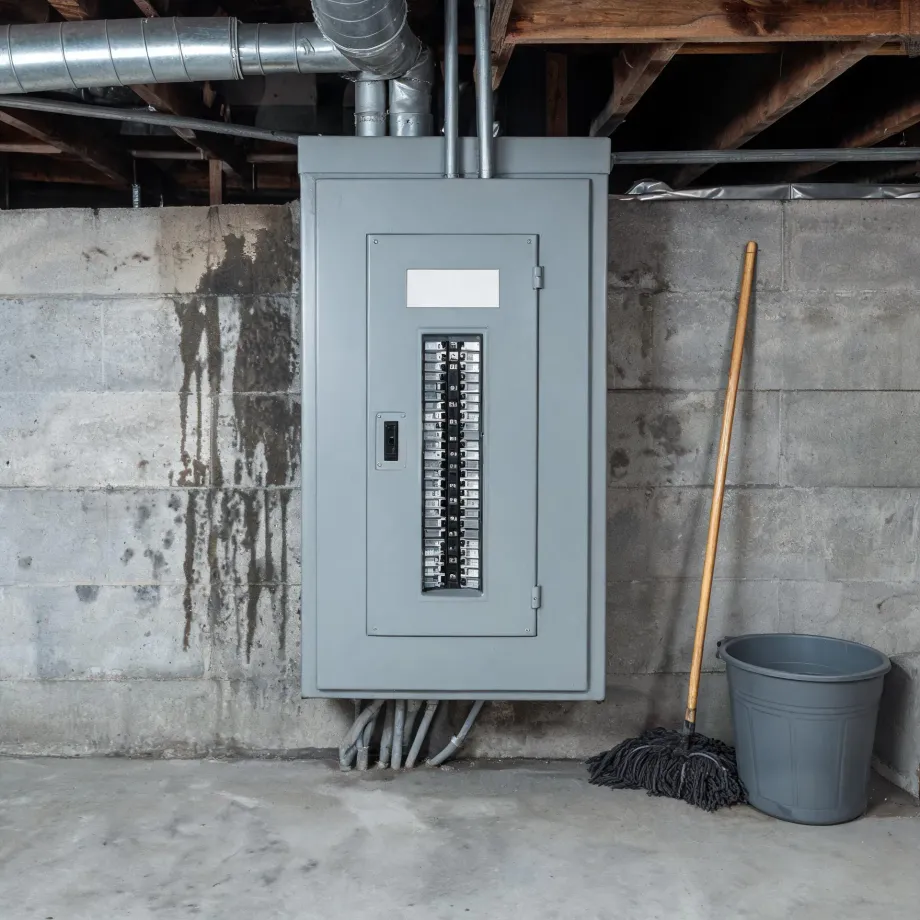
Ductwork routed for an older furnace does not always translate cleanly to a heat pump, and in Skagit County that gap is where installations get complicated. Half the homes in Skagit County, Washington were built in 1986 or earlier (2020-2024 ACS 5-year). A house whose ducts were sized for a different kind of system may need sections rerun, supply registers repositioned, or return air added before a new unit can deliver what it is rated for. The electrical panel is a separate question, and a contractor prices both before the equipment goes on order.
What Gets Installed With a New Heat Pump
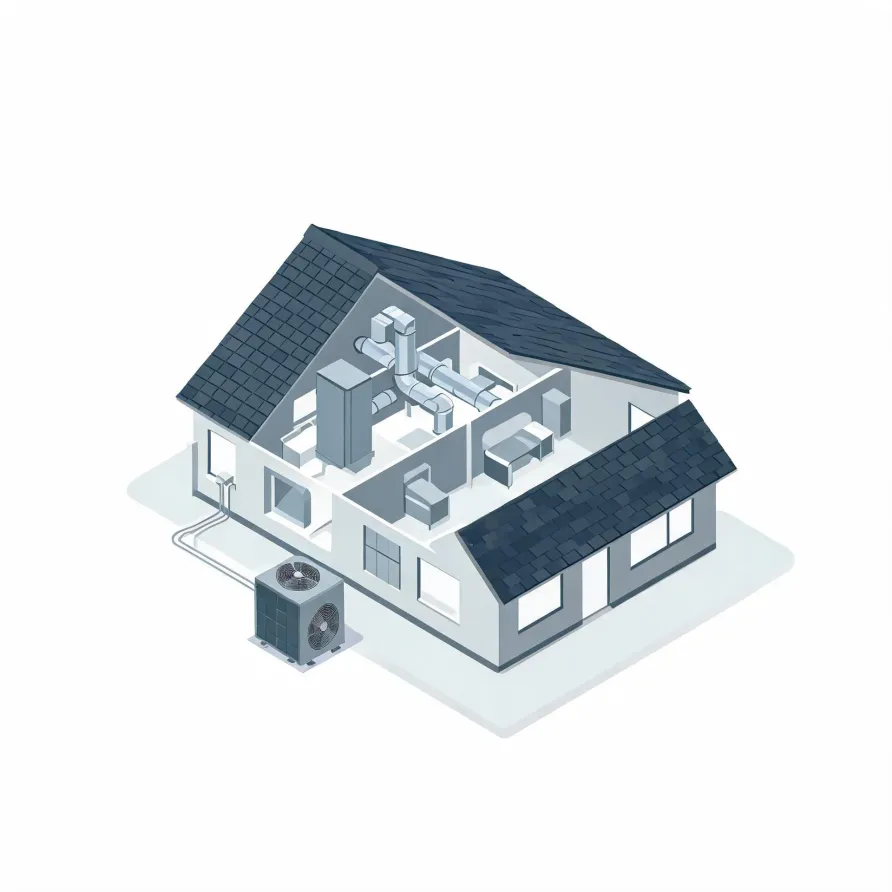
The outdoor unit is the piece most homeowners notice first. It sits on a pad beside the house and holds the compressor and the condenser coil, which are the components that do the heaviest work in the system. Inside, the air handler mounts in a utility space, closet, or attic and pushes conditioned air through the home.
A refrigerant line set runs between the outdoor unit and the air handler, connecting the two halves of the system through the wall or floor. A thermostat goes on an interior wall and gives the homeowner control over the whole system. The contractor also installs a disconnect box near the outdoor unit as part of the electrical connection.
The drawing shows a typical layout, and a licensed contractor determines exactly how each piece is positioned and connected in your specific home.
Get matched in Skagit CountySkagit County, by the numbers
Half the homes in Skagit County, Washington were built in 1986 or earlier (2020-2024 ACS 5-year).
U.S. Census Bureau, 2020-2024 American Community Survey 5-Year EstimatesSkagit County, Washington holds 57,050 housing units (2020-2024 ACS 5-year).
U.S. Census Bureau, 2020-2024 American Community Survey 5-Year EstimatesOwners occupy 70.1% of the occupied homes in Skagit County, Washington (2020-2024 ACS 5-year).
U.S. Census Bureau, 2020-2024 American Community Survey 5-Year EstimatesHeat Pump Installation Rules for Skagit County, Washington1 sourced rules and standards
Licensing and Legal Requirements in Skagit County, Washington
Washington requires contractor registration rather than an HVAC licence: every contractor must register with the Department of Labor and Industries, and advertising, bidding or working as a contractor without that registration is a gross misdemeanour.