Tell us about the job
Takes about a minute. No obligation.
Sizing a heat pump for this county means settling a question most climates let installers skip: how far outdoor temperatures fall before the refrigerant cycle loses enough capacity that the system leans on backup heat to make up the difference. Homes in Spokane County, WA run heat about ten months a year, from September through June. A contractor quoting an install here has to establish that floor before they can set equipment capacity, because a unit matched to a mild shoulder-season load undershoots on the coldest days and runs its resistance strips to compensate. Those strips are expensive to operate, and they run silently, so a homeowner often does not know the system is working harder than it should. Getting the sizing right at install is what prevents that pattern from starting.
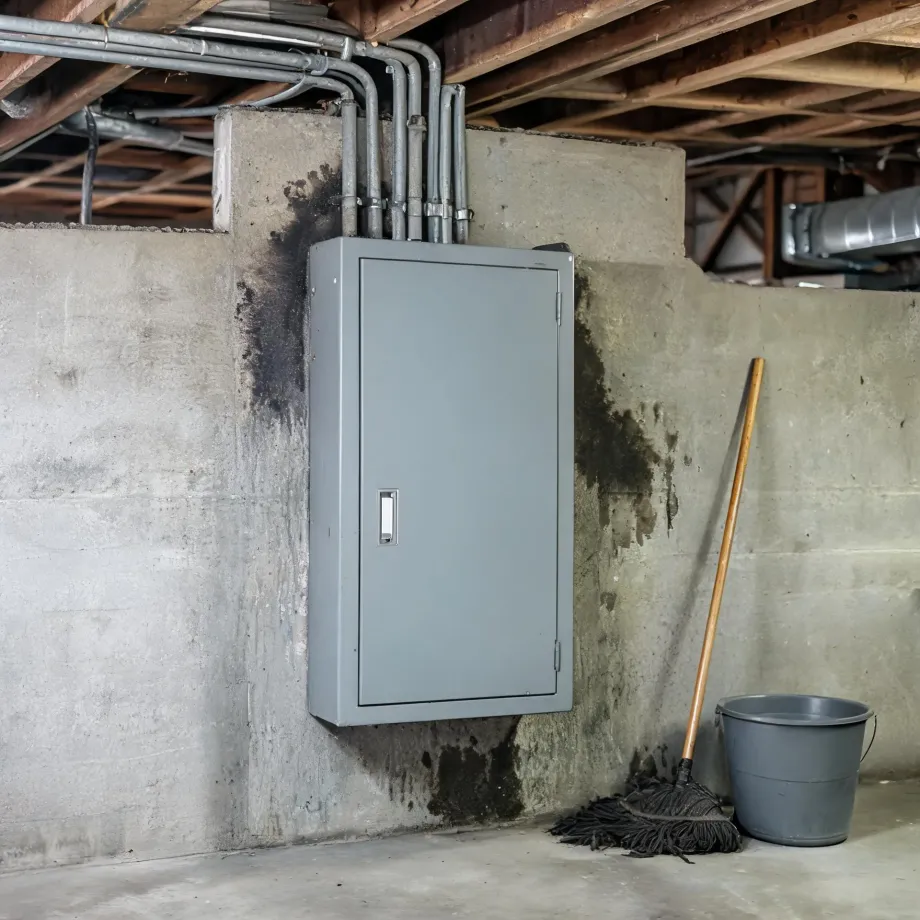
Ductwork sized and routed for an older forced-air system does not automatically carry a heat pump's airflow the way the original equipment did, and in Spokane County that gap is what a contractor has to measure before a quote means anything. Half the homes in Spokane County, Washington were built in 1978 or earlier (2020-2024 ACS 5-year). That puts the duct runs, not the outdoor unit, at the center of an installation assessment. A contractor who skips the duct evaluation and prices only the equipment is working from an incomplete picture of the house.
What Gets Installed With a New Heat Pump
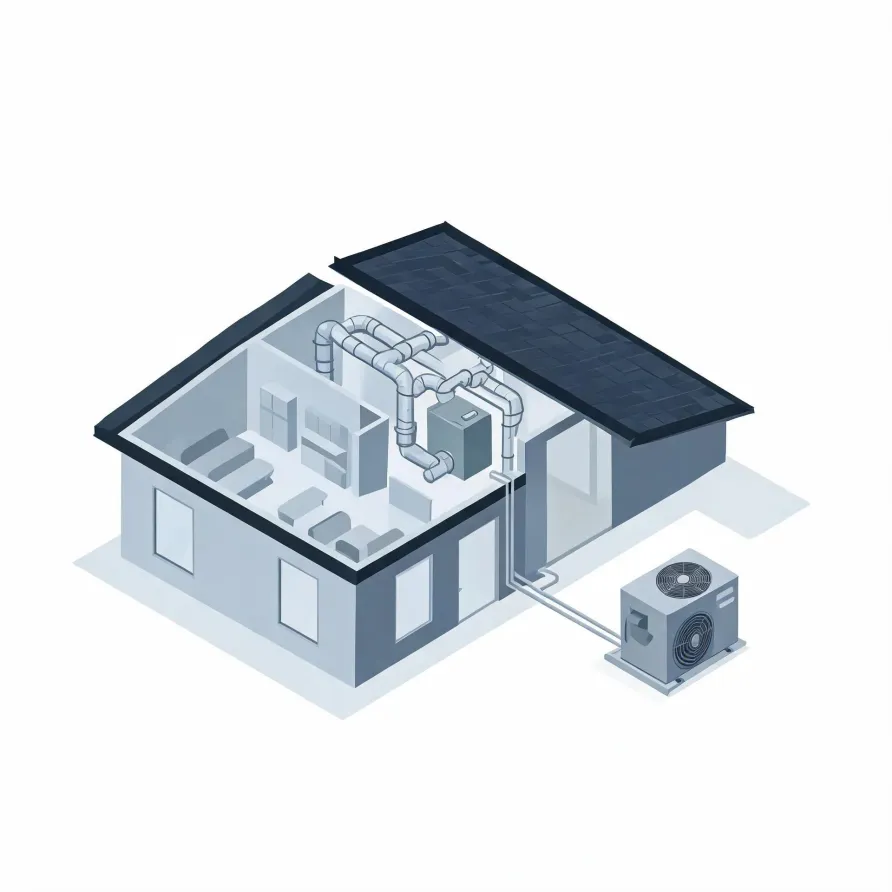
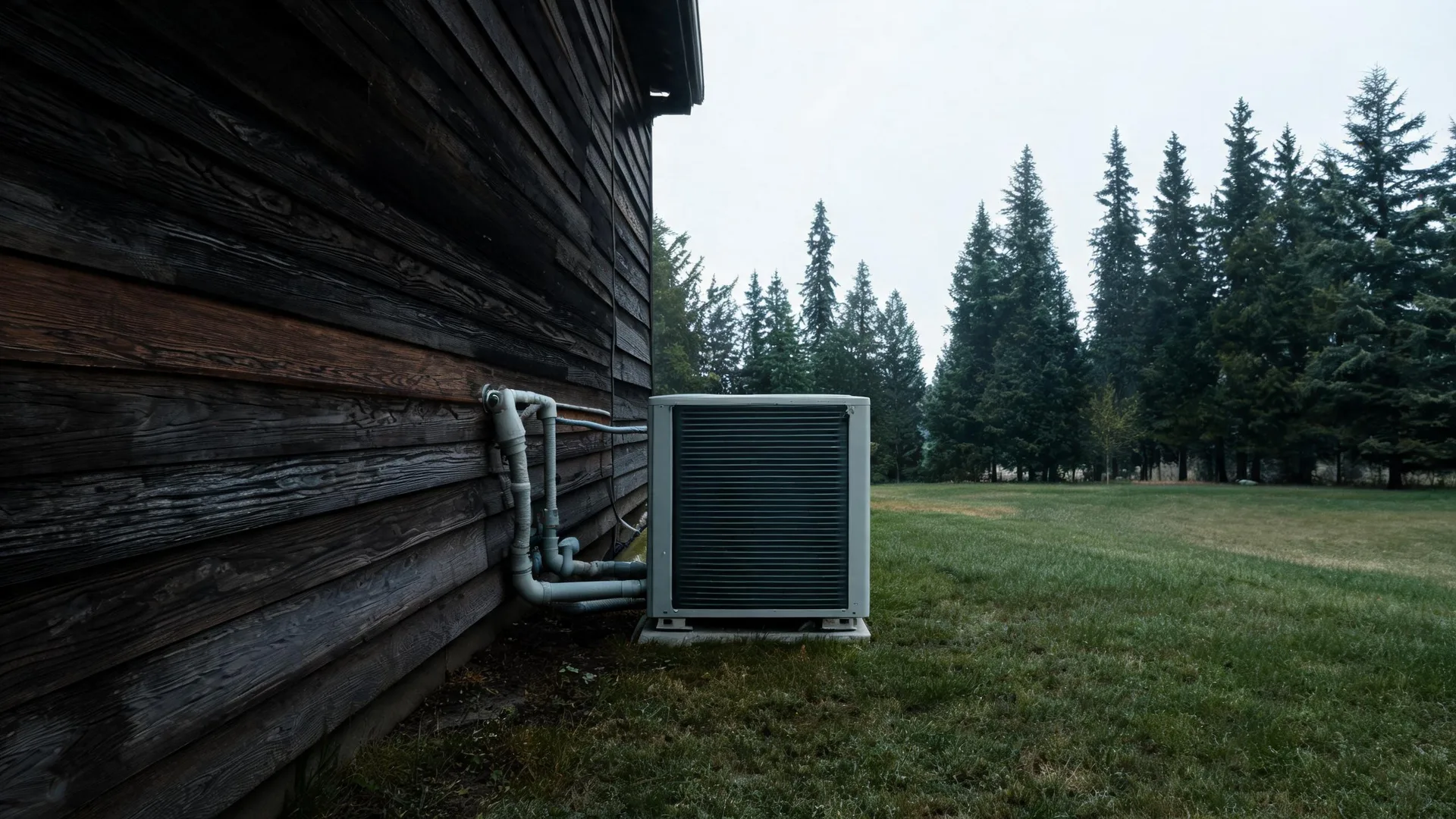
The outdoor unit is the piece most homeowners notice first. It sits on a pad or brackets outside the house and holds the compressor and the condenser coil, which are the core components that do the heavy lifting. Inside, the air handler mounts in a utility space, closet, or attic and moves conditioned air through the home.
A refrigerant line set runs between the two units, connecting the outdoor and indoor sides through the wall or crawlspace. The thermostat goes on an interior wall and gives the homeowner control over the whole system. Some installations also include a disconnect box mounted near the outdoor unit, which allows a contractor to safely cut power at the equipment.
The drawing shows a typical layout, and a licensed contractor determines exactly how each piece fits into this particular house.
Get matched in Spokane CountySpokane County, by the data
663 severe weather events were recorded in Spokane County, Washington between 2015 and 2024.
NOAA National Centers for Environmental Information, Storm Events Database, bulk CSV export, events 2015-01-01 through 2024-12-31.Half the homes in Spokane County, Washington were built in 1978 or earlier (2020-2024 ACS 5-year).
U.S. Census Bureau, 2020-2024 American Community Survey 5-Year EstimatesSpokane County, Washington holds 231,205 housing units (2020-2024 ACS 5-year).
U.S. Census Bureau, 2020-2024 American Community Survey 5-Year EstimatesOwners occupy 64.5% of the occupied homes in Spokane County, Washington (2020-2024 ACS 5-year).
U.S. Census Bureau, 2020-2024 American Community Survey 5-Year EstimatesHeat Pump Installation Rules for Spokane County, Washington1 codes, standards, and licensing rules
Licensing Rules for HVAC Work in Spokane County, Washington
Washington requires contractor registration rather than an HVAC licence: every contractor must register with the Department of Labor and Industries, and advertising, bidding or working as a contractor without that registration is a gross misdemeanour.
Severe Weather Events in Spokane County
Spokane County's climate puts real demands on heating and cooling equipment, and those demands vary with how hard the weather hits in a given year. A heat pump sized and installed for local conditions handles that variability better than one specified without it.
663 severe weather events, 2015–2024. Source: NOAA National Centers for Environmental Information, Storm Events Database.