Tell us about the job
Takes about a minute. No obligation.
A heat pump running a long heating season puts its hardest miles on the compressor and the reversing valve, the two components that cycle through every cold day rather than sitting dormant. Homes in Columbia County, WA run heat about ten months a year, from September through June. A contractor quoting a repair here has to account for that accumulated load before pricing parts, because a refrigerant leak or a failing contactor in a system this worked reads differently than the same fault in a machine that runs half as long. Outdoor coil condition and refrigerant charge get checked first.
Half the homes in Columbia County, Washington were built in 1953 or earlier (2020-2024 ACS 5-year). That tells a contractor something specific about what they are likely to find once a heat pump is opened: a unit that is not the original system in the house, running in ductwork shaped around whatever came before it. The repair question is rarely just whether a component has failed. It is whether the replacement part for that particular unit is still in production, and what the ductwork condition means for how the repaired system will actually perform.
The Parts of a Heat Pump a Contractor Checks First
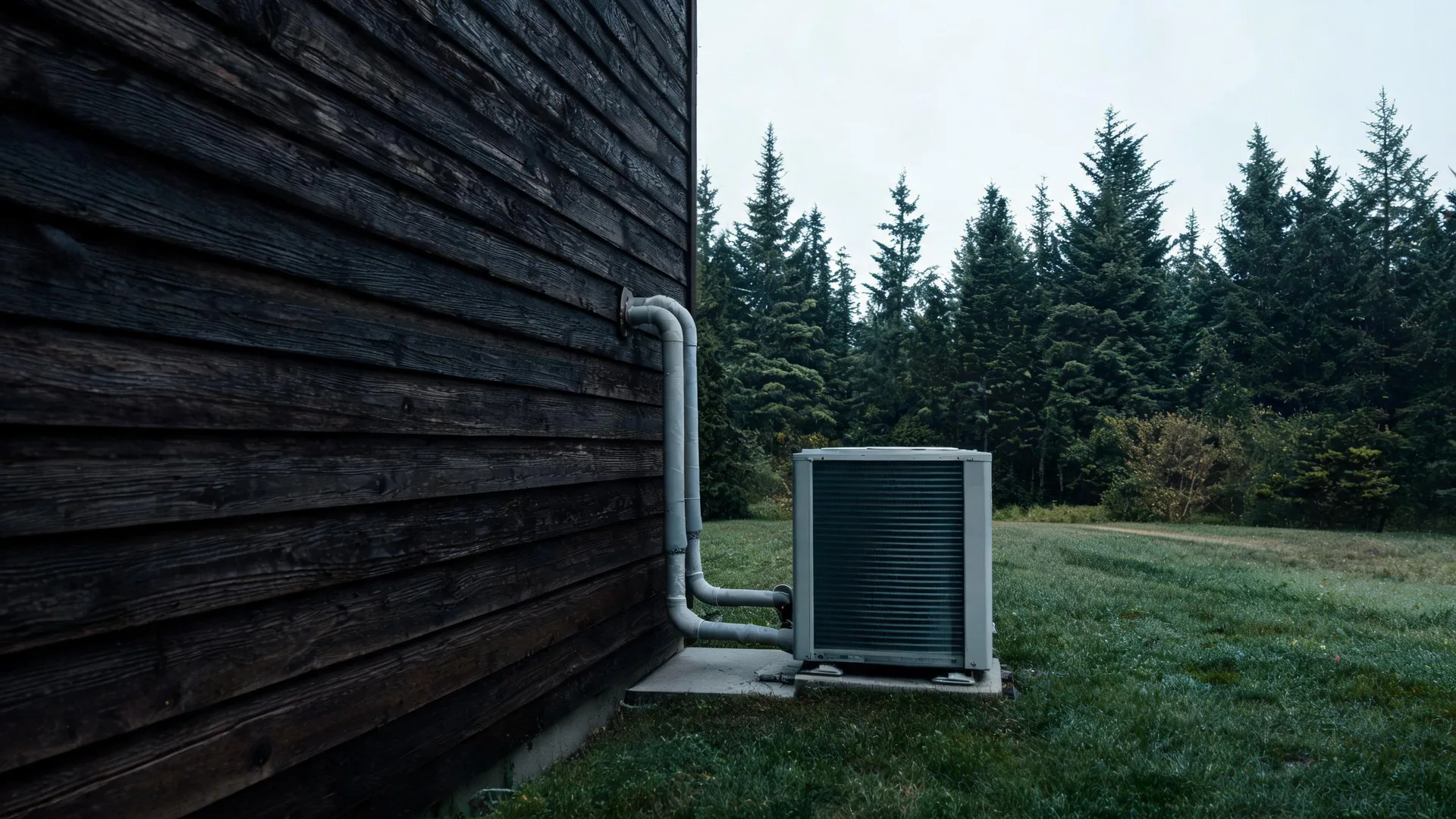
The outdoor unit sits on a pad beside the house and holds the compressor and condenser coil, the two components a contractor reaches for first when a heat pump stops moving heat properly. The compressor pressurizes the refrigerant; the condenser coil either releases or absorbs heat depending on the season. When either one is the problem, the symptoms are hard to miss: the system runs but the air coming out is wrong.
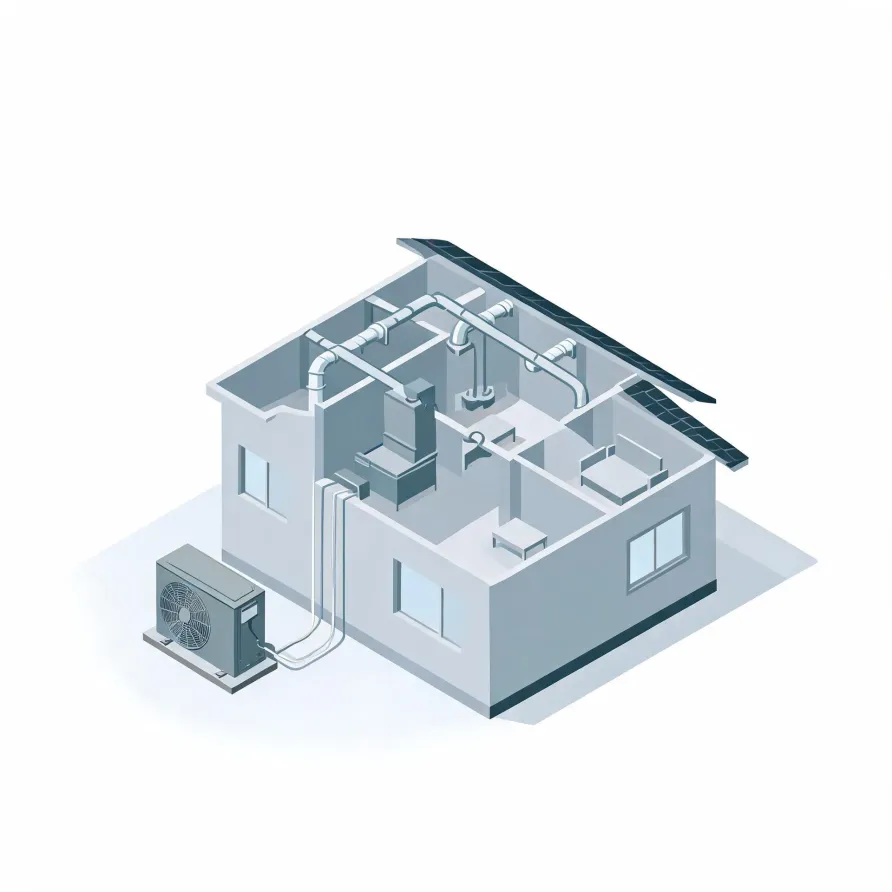
Inside the house, the air handler holds the evaporator coil and the blower, and it is usually in a utility closet, attic, or basement. The blower moves conditioned air through the home; the evaporator coil is where refrigerant does its work on that air. Connecting the two units is the refrigerant line set, and the reversing valve inside the outdoor unit is what lets the system shift between heating and cooling. A contractor checks the valve when the heat pump works in one mode but not the other.
The drawing shows a typical layout, and a licensed contractor determines which components apply to your specific system and what work each one needs.
Get matched in Columbia CountyColumbia County, Washington, by the numbers
67 severe weather events were recorded in Columbia County, Washington between 2015 and 2024.
NOAA National Centers for Environmental Information, Storm Events Database, bulk CSV export, events 2015-01-01 through 2024-12-31.Half the homes in Columbia County, Washington were built in 1953 or earlier (2020-2024 ACS 5-year).
U.S. Census Bureau, 2020-2024 American Community Survey 5-Year EstimatesColumbia County, Washington holds 2,217 housing units (2020-2024 ACS 5-year).
U.S. Census Bureau, 2020-2024 American Community Survey 5-Year EstimatesOwners occupy 77.7% of the occupied homes in Columbia County, Washington (2020-2024 ACS 5-year).
U.S. Census Bureau, 2020-2024 American Community Survey 5-Year EstimatesCodes & Standards Governing Heat Pump Repair in Columbia County, Washington1 sourced rules & standards
What Columbia County, Washington Requires for HVAC Repair Work
Washington requires contractor registration rather than an HVAC licence: every contractor must register with the Department of Labor and Industries, and advertising, bidding or working as a contractor without that registration is a gross misdemeanour.
Severe Weather Events in Columbia County
Weather puts a load on heat pumps that steady indoor temperatures cannot account for. How hard that equipment has to work, and how often it needs repair, is shaped by what the climate does outside.
67 severe weather events, 2015–2024. Source: NOAA National Centers for Environmental Information, Storm Events Database.