

Is a heat pump worth it with cheap power in Washington
Get in touch with a local installer about a new heat pump.
Get my matchIs a heat pump worth it when power is cheap here?
You're paying a low electric rate already, so it's fair to wonder whether swapping to a heat pump actually changes anything or just adds a system to maintain. Most homes in Washington heat with electricity as it is, so this isn't about switching off gas. It's about whether a heat pump beats whatever electric heat is running now, and whether that still holds when the power itself is cheap.
Yes, because it moves heat instead of making it
A heat pump moves heat from the outside air into your home instead of generating it with resistance coils, the way baseboard heat or an electric furnace does. That difference holds no matter what you pay per kilowatt hour. For the same amount of power, a heat pump puts out several times more heat, so a cheap rate stretches even further than it does running straight electric heat. In Washington, with mild winters and summers that stay comfortable without heavy humidity, a heat pump also covers your cooling with the same equipment. You're not paying for two systems to cover the two jobs, and you're not asking resistance coils to do work a heat pump does for less.




Electric Heat vs. Heat Pump
Electric furnace or baseboard
- Every unit of electricity you use turns into one unit of heat, so the rate you pay is the whole story.
- There's no outdoor unit to maintain and nothing to break down when it's cold out.
- Install cost is usually lower than a heat pump since there's no outdoor compressor or refrigerant lines.
- You get no cooling in summer, though Washington summers are mild enough that many homes get by without it.
- Baseboard heat warms a room unevenly, with the air near the unit warmer than the air across the room.
Heat pump
- A heat pump moves heat instead of generating it, so it can put out more heat than the electricity it uses.
- The same system cools the house in summer, which an electric furnace or baseboard can't do at all.
- Install cost runs higher upfront because it adds an outdoor unit and a refrigerant line to the house.
- Output drops as the outside temperature drops, so performance on the coldest nights depends on the unit's rating.
- An outdoor unit means a coil and a fan that need clearing of leaves, ice, and debris to run right.
- Even at a low electric rate, moving heat instead of making it from scratch uses less electricity to produce the same warmth.
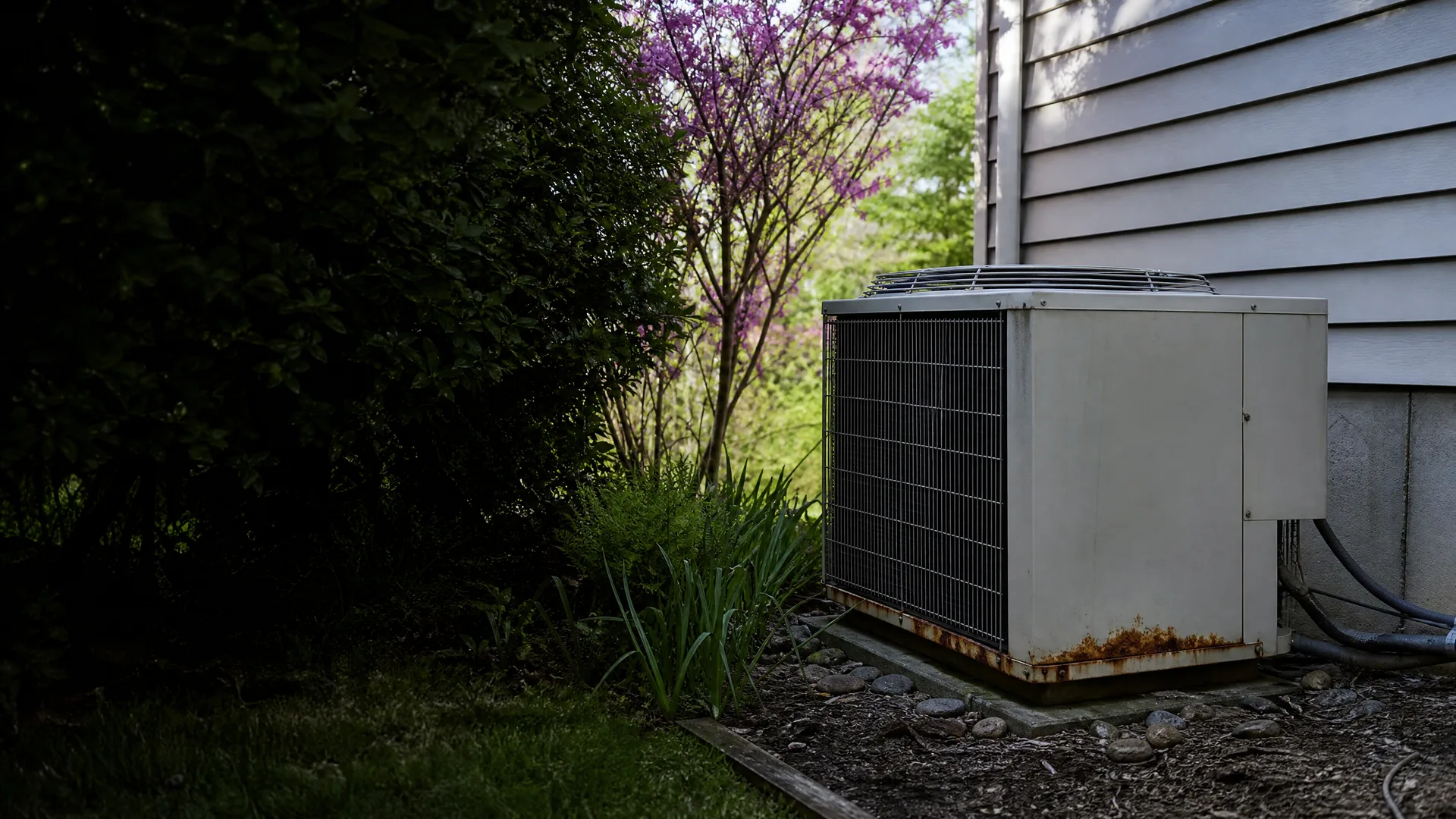
You're out pulling weeds along the side yard in the first warm week of spring when you notice it. The old heat pump sitting there, rust creeping up along the base where the casing meets the pad. It's been running through every winter for years, keeping the house warm while your power bill stayed low, and it shows. You crouch down and look closer, wondering how much longer it has in it, whether it's still pulling the same heat out of the cold air it used to. A local contractor who works on these units every season would know just by looking at the base and the coil behind it what's wear and what's trouble.
Get the right pro for your heat pump
Your request goes to one pro, not a list of companies.
No charge to send it. You decide if you hire them.
Why a heat pump still wins
A heat pump moves heat instead of making it, so it delivers more heat per dollar of electricity than an electric furnace or baseboard ever can. Baseboard and furnace heat run at roughly one unit of heat for one unit of power. A heat pump moves two to three units of heat for that same unit of power, because it's pulling warmth from outside air rather than generating it from scratch. That difference holds whether your rate is high or low. Cheap power lowers what you pay either way, but it doesn't close the gap between the two systems. The heat pump is still doing less work to produce the same warmth in your house.
Where the summer side pays off
The same unit that heats your house in January cools it in July, and that's where a heat pump earns part of its keep somewhere other homes don't see. Summers here don't push the heavy, humid heat that forces a system to work hard for hours at a stretch. A heat pump sized for your house can cycle efficiently through those milder stretches instead of straining. If your current setup pairs electric heat with a separate window unit or nothing at all for cooling, a heat pump replaces both jobs with one system, running on the same low rate you already pay for heat.
Power costs 13.17 cents per kilowatt-hour statewide
At 13.17 cents a kilowatt-hour, every unit of heat your pump moves instead of makes costs less than it would in most other states. That gap is what makes the switch pay off here, even with power already priced low.
EIA-861 2025 statewide residential average
A heat pump is worth it in Washington because it moves heat instead of making it, and cheap power only makes that advantage go further. The math holds up whether you're replacing baseboard, an electric furnace, or a heat pump that's finally giving out after years in the weather. What matters now is getting the install done by someone who knows how these units hold up here, through the wet winters and the mild summers, and what tends to fail first on the ones that don't. You'll be matched with one licensed local contractor, not a handful competing for your callback, someone who works on heat pumps in this area all year and already knows what to check before they show up. That's a better way to get an answer than guessing from a spec sheet.

Heat Pump Installation
A pro who works on heat pumps

- Say what's going on with your heat pump, and a pro who works on them reaches out.
- A local pro who knows heat pumps gets your details and gets in touch.

- Send the form and the search for an installer is over.
- One request and the search for a pro is handled.

- Describe the project once instead of to every installer.
- Skip collecting and comparing quotes for the new heat pump.
- The pro who reaches out is licensed in Washington.
- Only one pro gets your request, so you hear from one company.