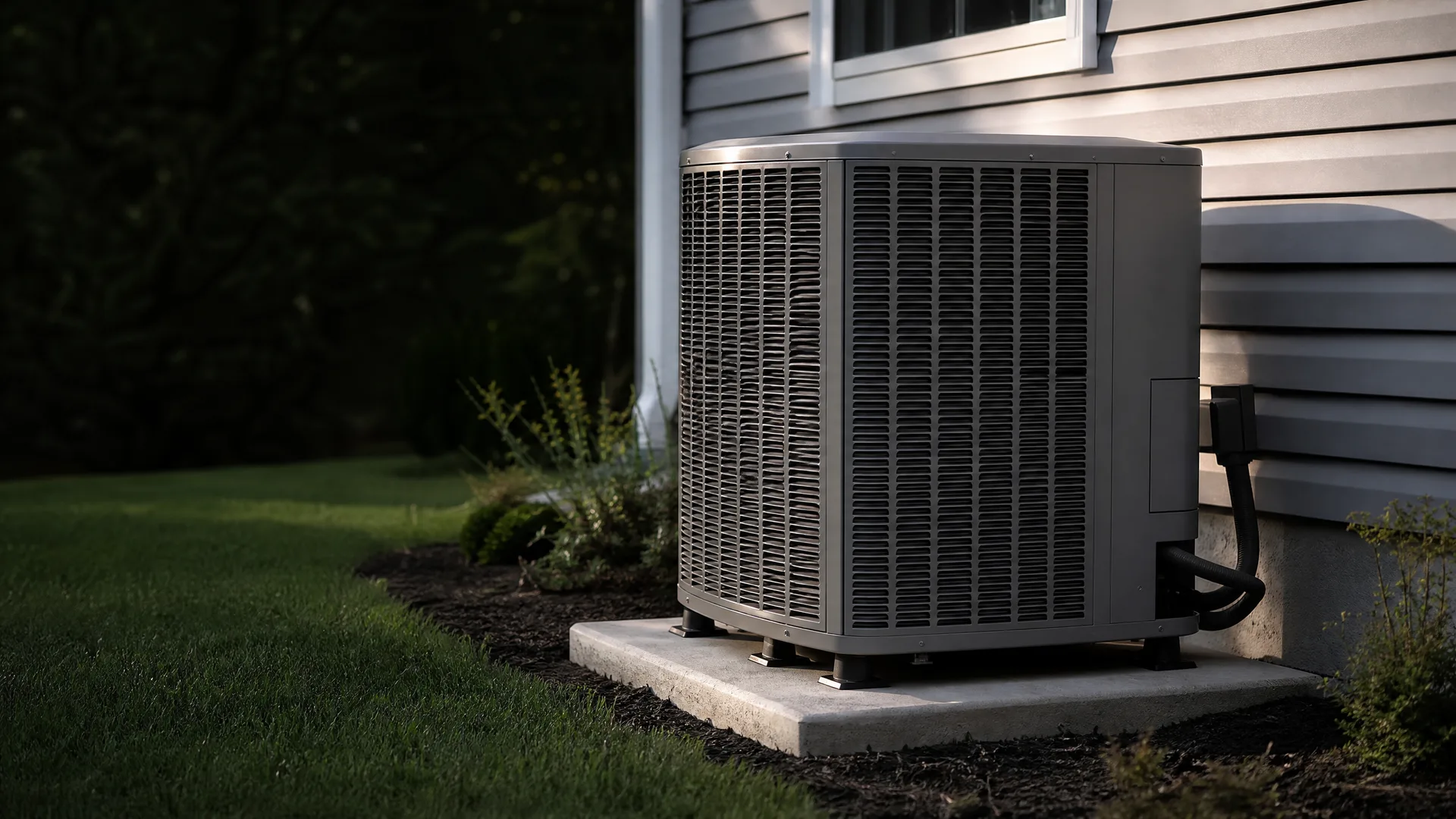
What auxiliary heat means on a Washington heat pump
Answer a few questions instead of calling shop after shop.
Auxiliary heat is the backup heat strip in your air handler. It kicks in when the heat pump alone can't keep up, usually on the coldest days, or when the system is trying to recover a few degrees fast after you've bumped the thermostat up. You'll see "AUX" or "EM HEAT" light up on the thermostat when it's running. That's normal in cold weather. What's not normal is when it runs all the time, even on mild days, or when your electric bill jumps and you know it.
If auxiliary heat is running more than it should, something is making the heat pump work harder than it needs to. A low refrigerant charge, a failing defrost sensor, a dirty outdoor coil, a reversing valve that's stuck. These are all things a heat pump technician checks for, and most of them aren't something you can see by looking at the unit.
Finding the right person for that isn't always simple. You could search around, call a few companies, explain what the thermostat's been doing to each one, then sit on quotes trying to figure out who actually knows heat pumps instead of just furnaces. That takes time you may not have, especially if the house is cold while you're doing it.
This page connects you with a licensed contractor near you in Washington who works on heat pumps regularly, the kind of person who's seen this exact thermostat behavior before and knows what usually causes it in homes around here. You explain the problem once. One contractor, not a stack of calls to sort through.
From there, the button below starts that.
Why does my heat pump keep switching to aux heat?
Your thermostat shows AUX more than you expected, and the furnace side of your system seems to be carrying more of the load than you thought a heat pump would. You're not sure if that's the system working as designed or a sign something is wrong, especially with power rates what they are and electric heat being the main way most homes here stay warm.
It's likely doing its job, but a system that leans on aux heat too often may have a problem
A heat pump switches to aux heat whenever outdoor temperatures drop low enough that it can't pull enough heat from the outside air on its own. In Washington that's usually only on the coldest nights of the year, not most of the winter. Aux heat also kicks in for a few minutes after you raise the thermostat several degrees at once, since the heat pump alone would take too long to catch up. If you're seeing AUX during mild weather, or it stays on for hours at a time, that points to something else: low refrigerant, a failing compressor, or a thermostat set wrong for your system. A contractor who works on heat pumps regularly can tell which one it is.
Why aux heat costs more
The heat pump moves heat from the air outside into your house. Electric resistance heat, the kind in the strip, makes heat directly from electricity instead. That takes more power to produce the same warmth. On a cold morning when aux heat runs for an hour to recover those few degrees, it's pulling a lot more from the panel than the heat pump would pulling the same heat from the outdoor air.
What a stuck aux signal looks like
The thermostat should show AUX for short stretches, then drop back to the heat pump alone once the house catches up. If AUX stays lit for hours, or comes on when it's 50 degrees out, something is telling the system the heat pump isn't keeping pace when it should be able to. That can trace back to a stuck contactor, a low charge, or a thermostat setting that calls for aux too soon.
Why is the AUX light on so often this winter
You notice the thermostat showing AUX most mornings, not just when it's near freezing outside. The air coming out of the vents feels warmer than usual for a heat pump, almost like a furnace running. Your power bill has climbed more than it used to for the same stretch of cold. Some rooms take longer to come up to temperature even with AUX on, or the system runs long stretches without shutting off. None of that means the heat pump is broken. But if AUX is carrying the house instead of backing it up, something is keeping the heat pump from doing its job, and left alone that means higher bills all winter and more wear on the heat strip than it was built for.
Your request goes to one pro, not a list of companies.
Sending the form costs nothing.
Power costs 13.17 cents per kilowatt-hour statewide
At 13.17 cents per kilowatt-hour, running the strip costs more but it's not the shock it would be in a state with pricier power. A short aux cycle on a cold morning won't wreck your bill. Aux heat staying on for hours, day after day, is what adds up.
EIA-861 2025 statewide residential average
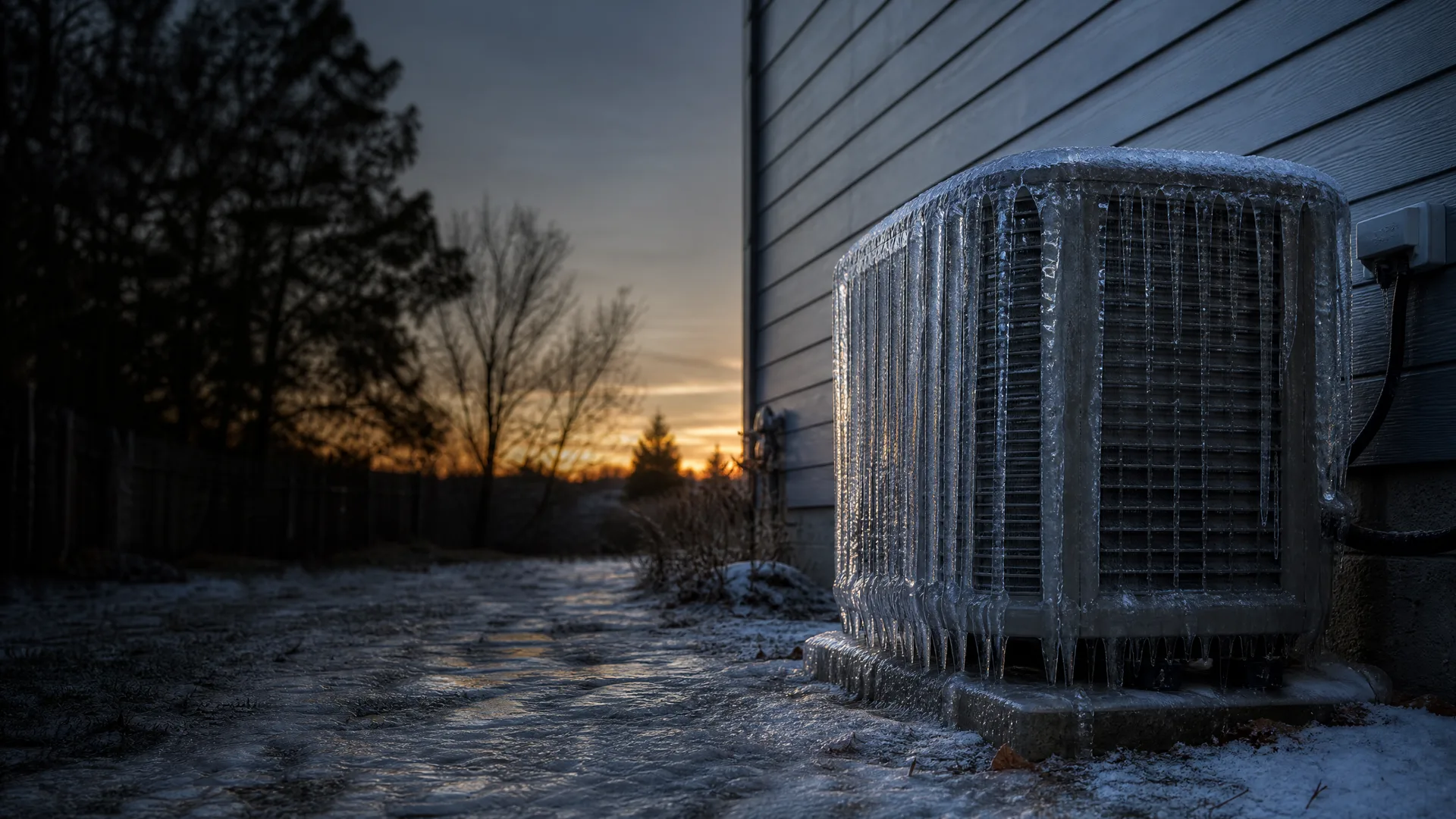
Before sunrise, the ice has already set in. The outdoor unit sits against the side of the house with a hard shell of frost across the coils, thick enough to close off the gaps between the fins. The fan isn't turning. Inside, the thermostat reads AUX, and it's held there since before you woke up. You go out in the dark to look at it because something about the quiet from that corner of the yard caught your attention. No hum, no defrost steam, just the shape of the unit under ice and the porch light catching it. It's January, and the cold settled in overnight and stayed.
What's supposed to happen when aux heat kicks on
A heat pump that's working right goes into defrost a few times during a cold stretch, and the controller brings on the strip for the few minutes that takes, then drops it again once the outdoor coil clears. That's normal and it happens in every home with a heat pump in this state. The strip is also supposed to fill in when the thermostat calls for a big jump, like after you've turned it down overnight. Short bursts, then back to the compressor doing the work.
What's not normal is the strip carrying the load for hours, or coming on when it's 45 degrees out and there's no reason the compressor couldn't handle it alone. That points to something else: low refrigerant, a stuck reversing valve, a thermostat set up wrong for the system, or a compressor that's lost capacity. Figuring out which one takes someone who works on heat pumps regularly in this area, not a guess over the phone. A local contractor licensed to work on this equipment can check the charge, the valve and the defrost board in one visit instead of you calling around to find someone who'll even look at a heat pump instead of just a furnace.
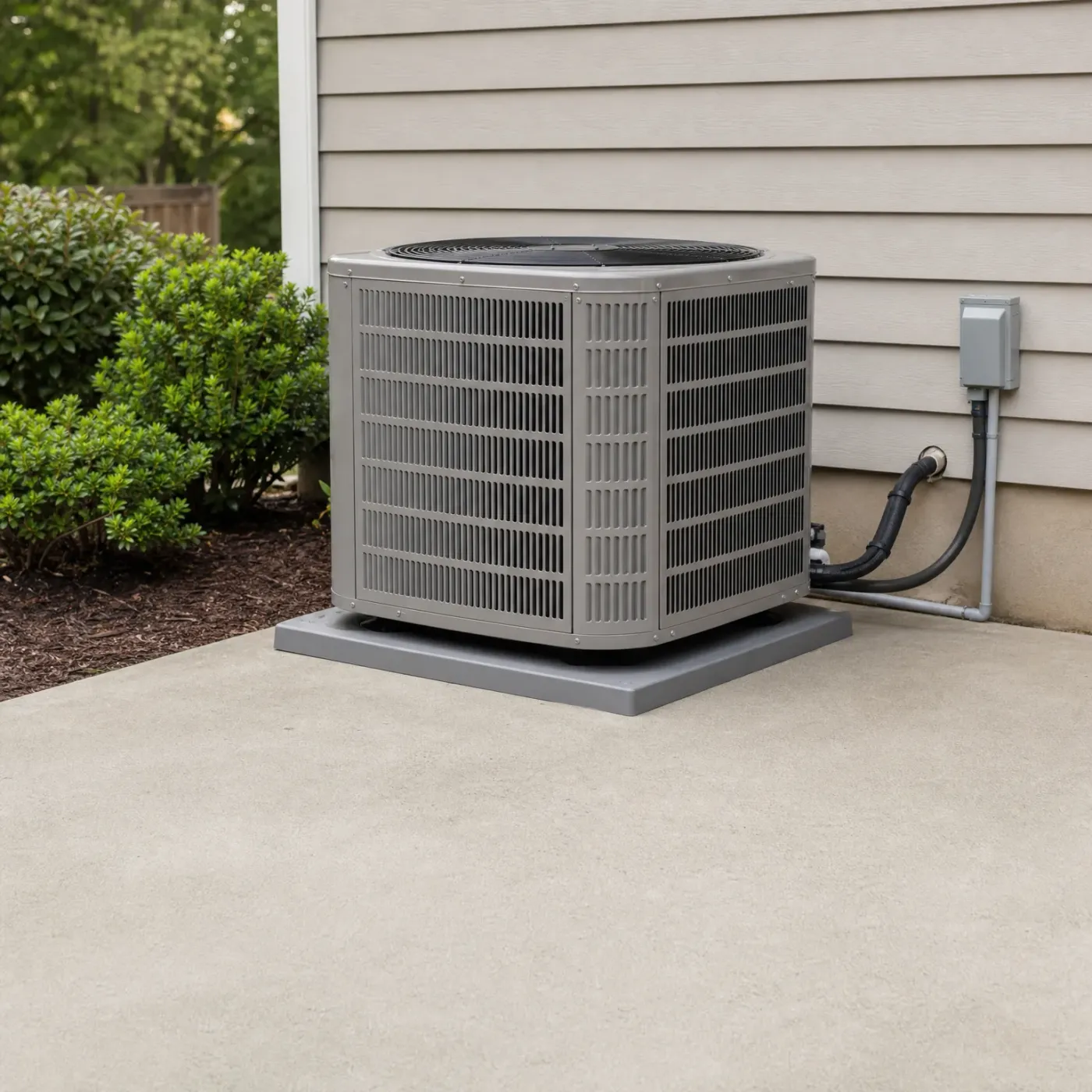
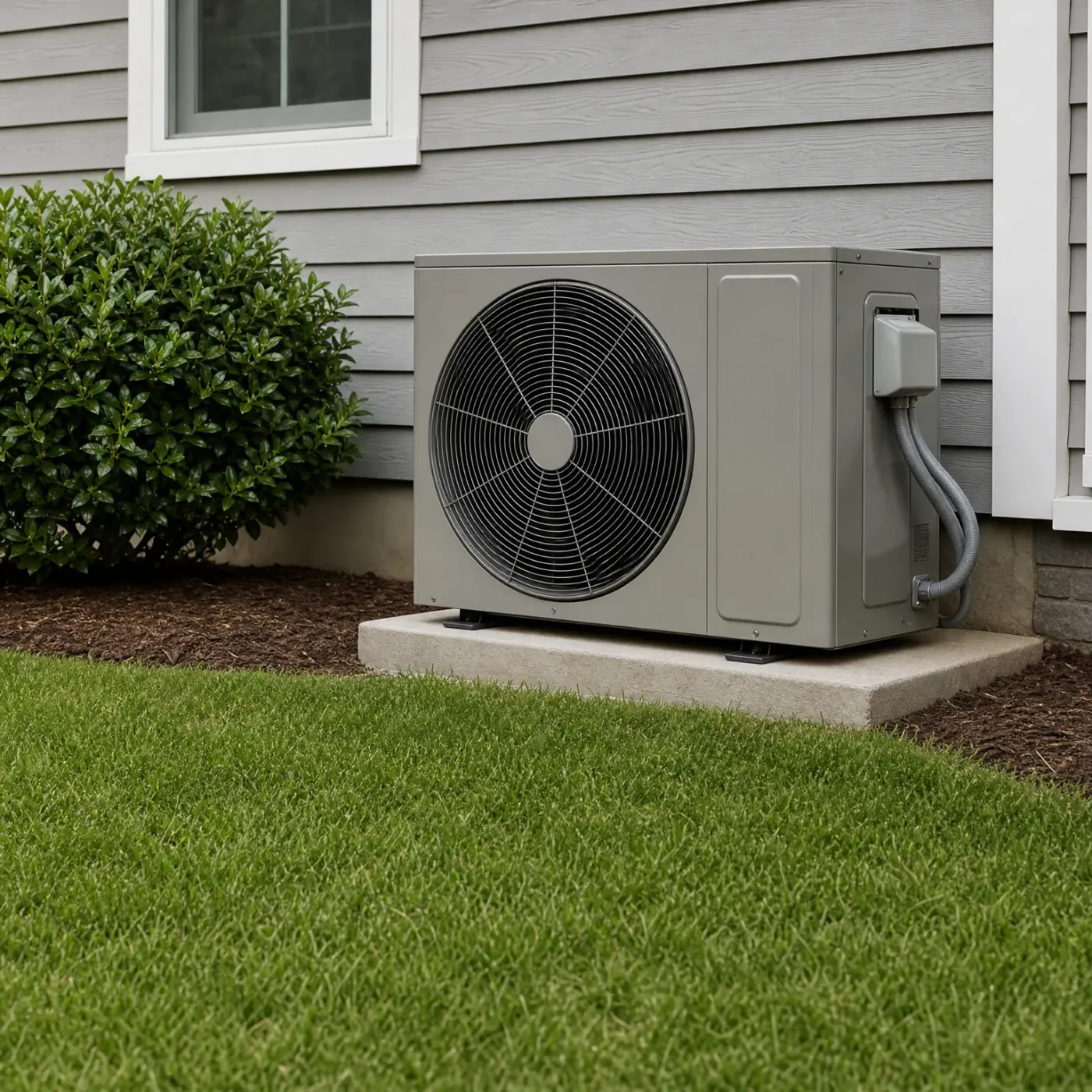
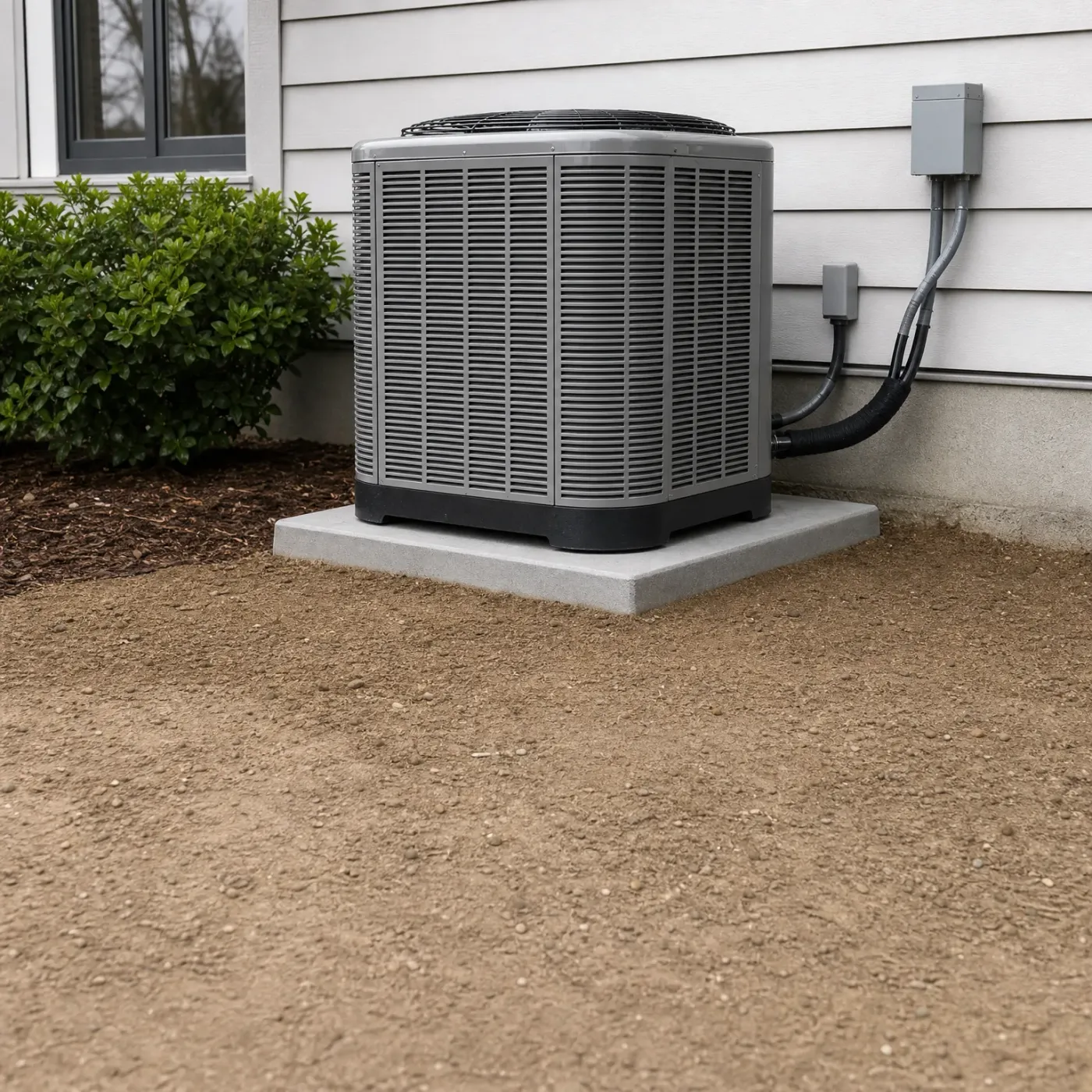
The outdoor coil clear, the fan turning
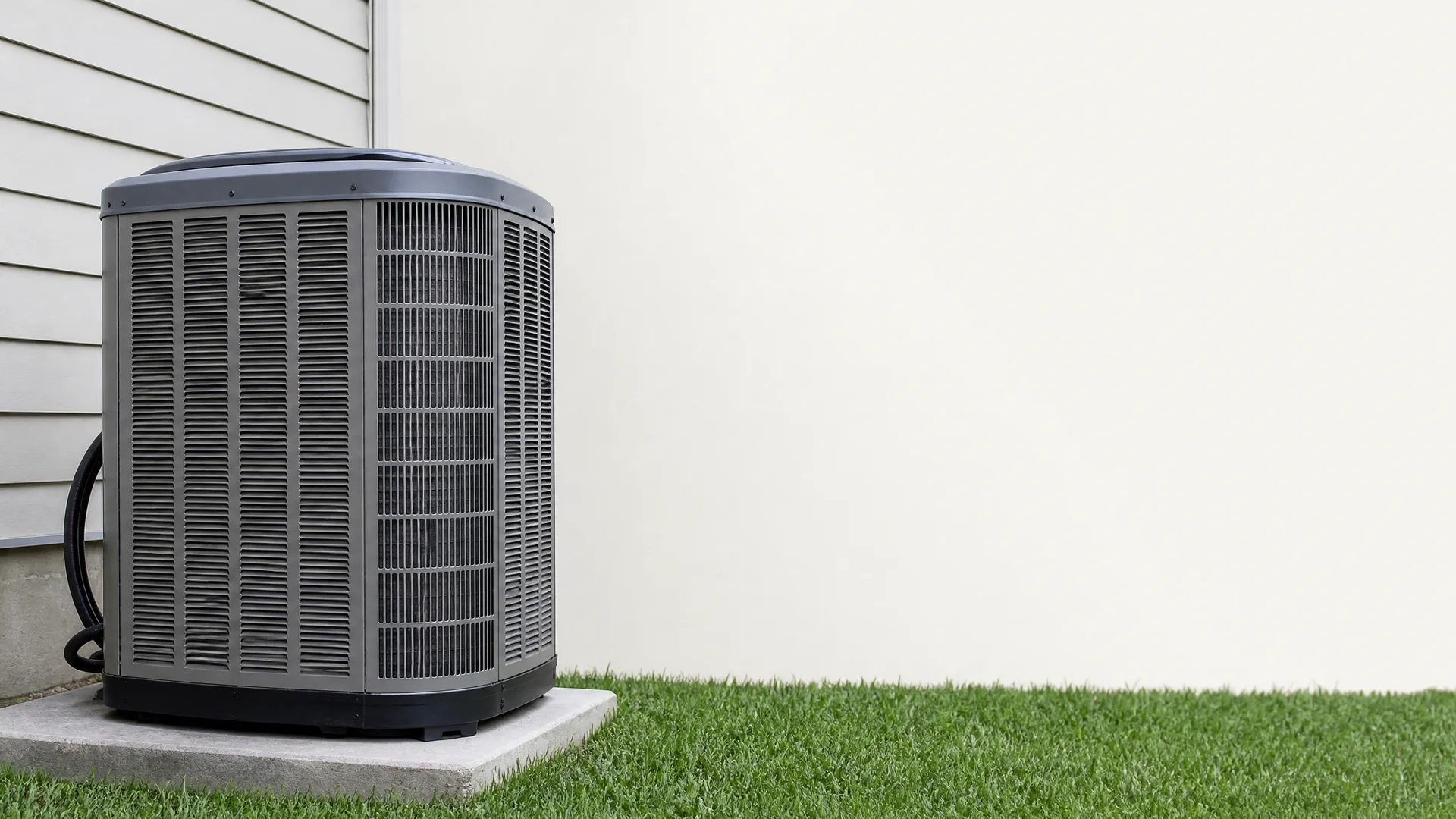
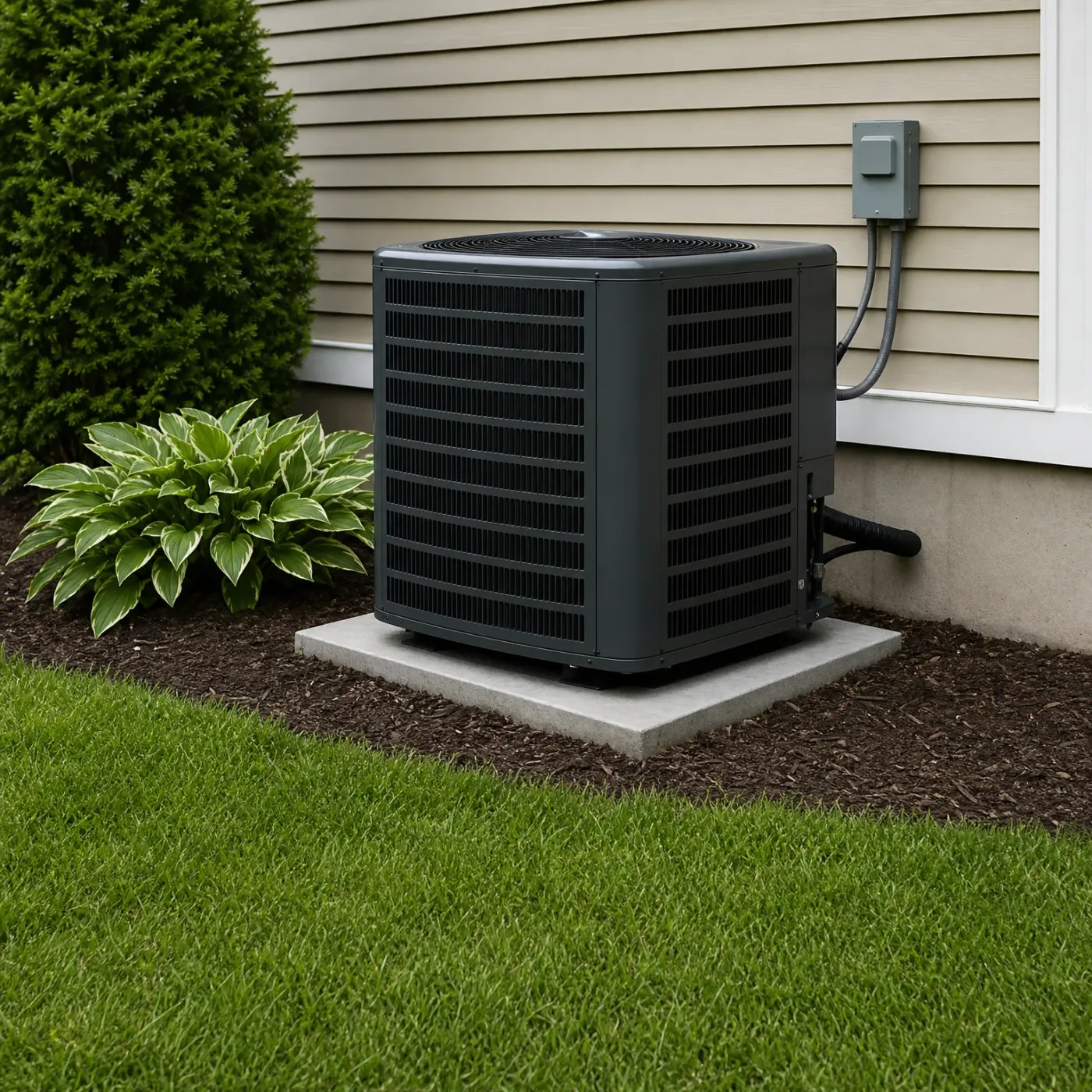
This is what a heat pump looks like when it can carry the load on its own. Clean fins, a clear disconnect, nothing blocking airflow around the pad. Aux heat still comes on in a cold snap, but it drops off again once the unit catches up.
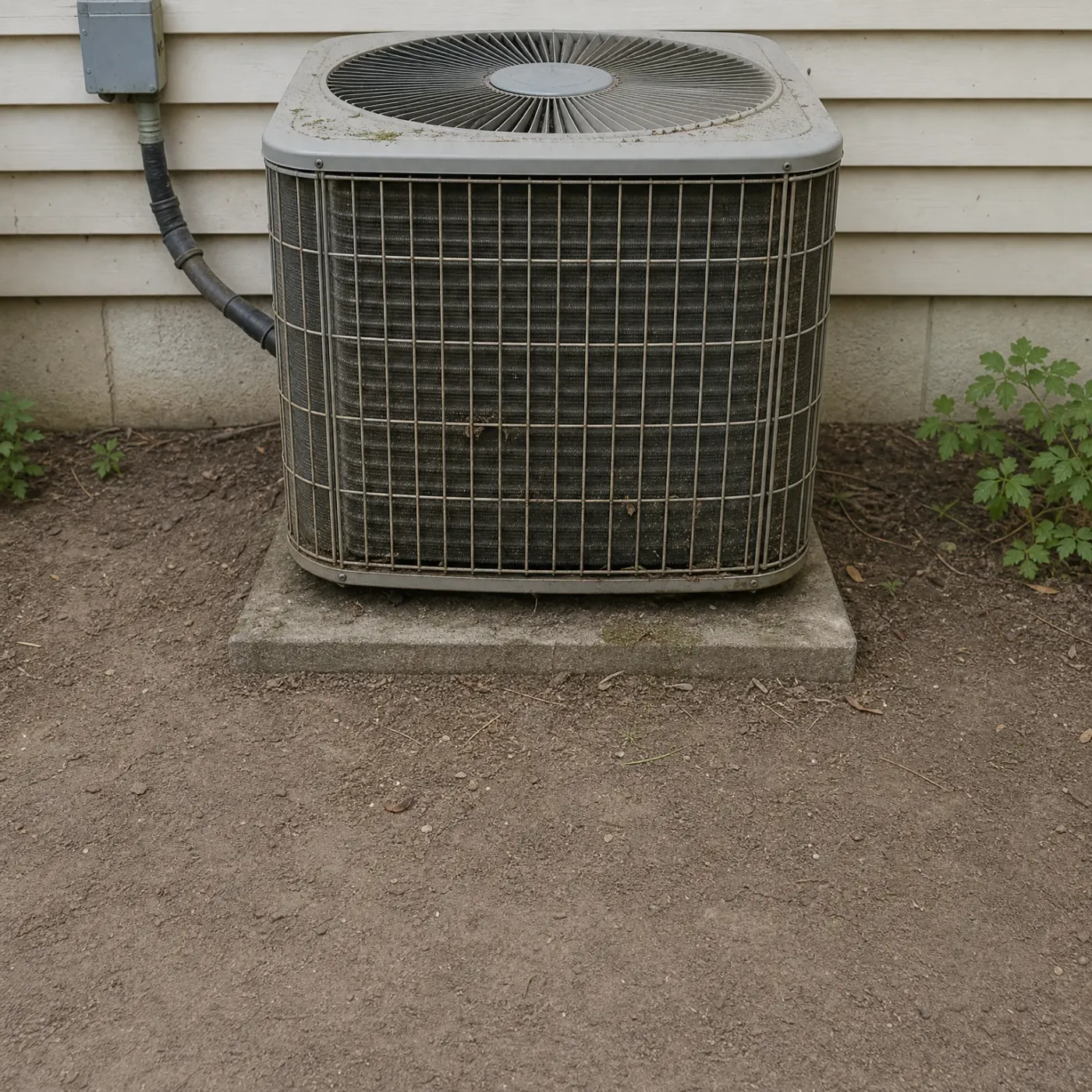
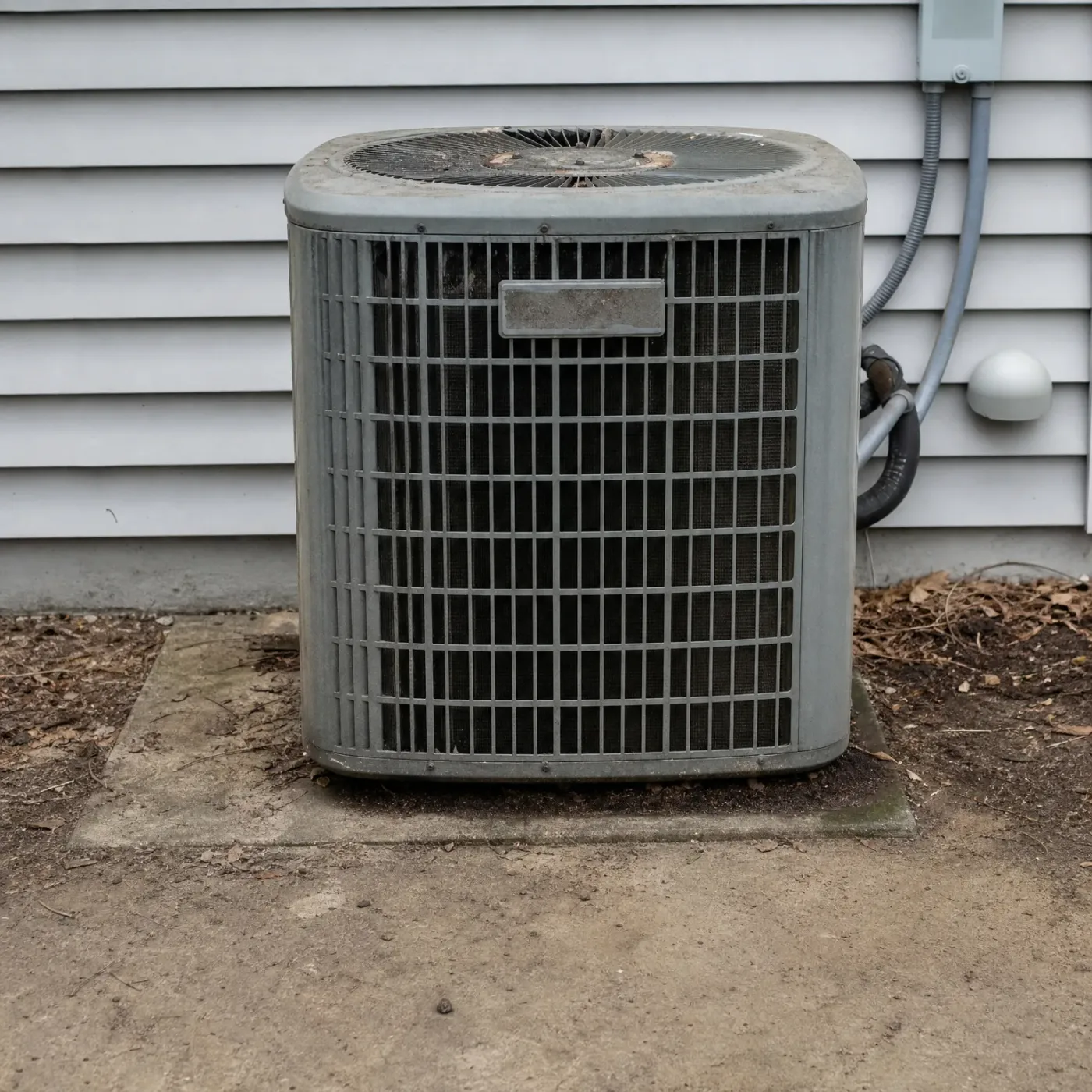
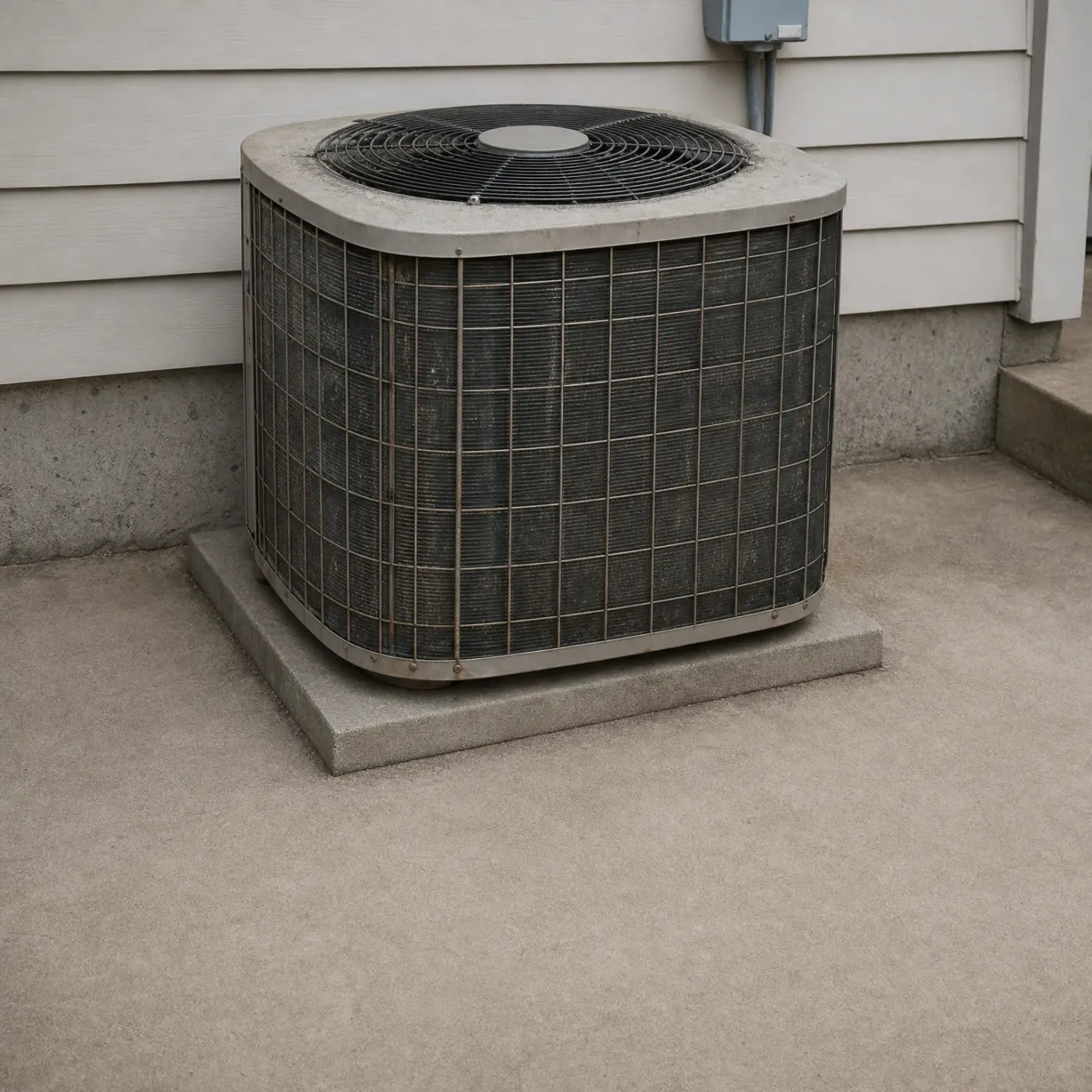
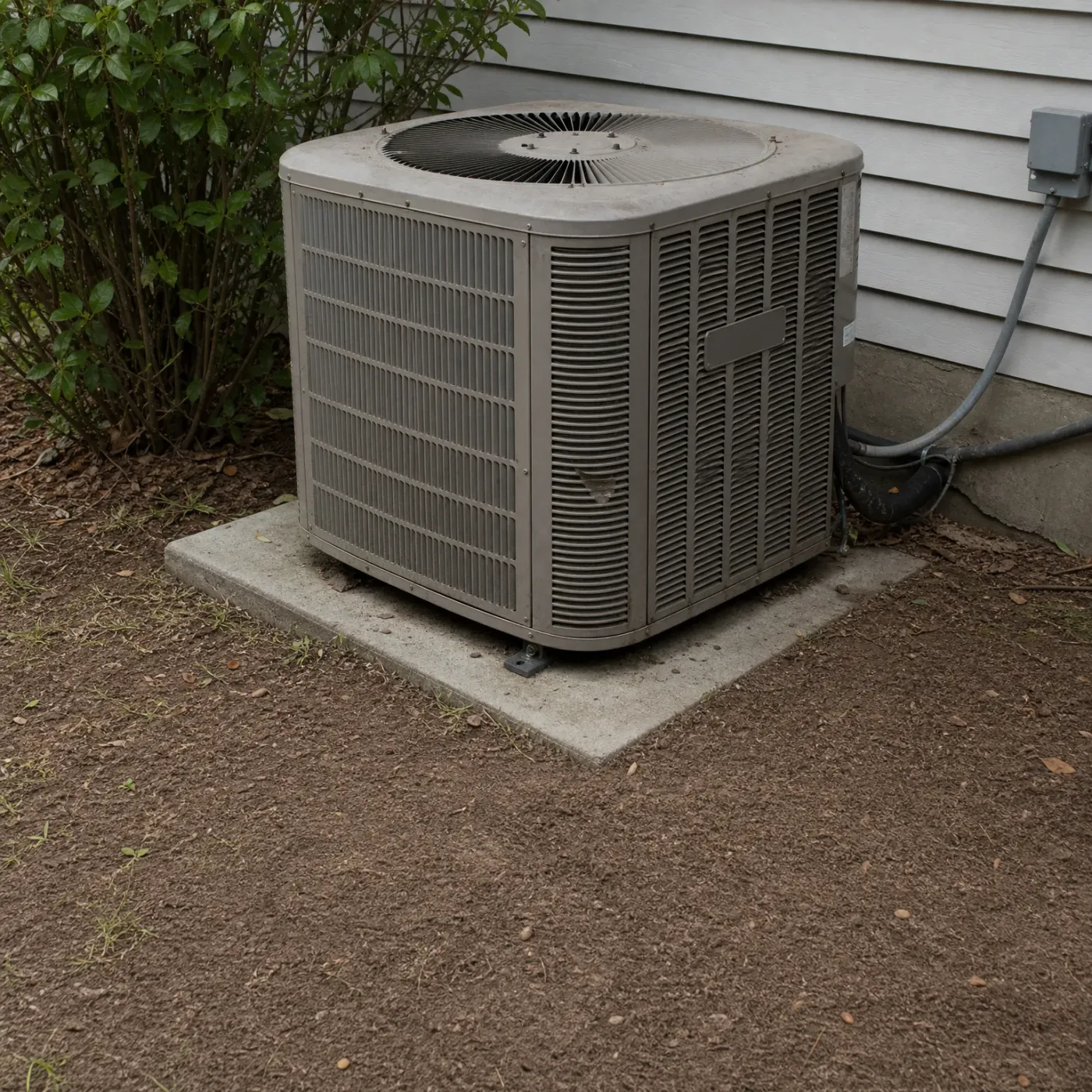
Grime on the fins, a coil losing ground
Dust and buildup like this cut down how much heat the coil can pull from the air outside. The heat pump works harder for less, and aux heat ends up carrying more of the house than it should. A local contractor who services this equipment all year can tell you if that's the cause or something else is going on.
Before you get your heat pump repairAfter you get your heat pump repair
Heat pump carrying the load
Clean coil, clear fan, nothing blocking the pad. Aux kicks on in a cold snap and drops off again once the outdoor unit catches up. You might see AUX for a few minutes some mornings, not for hours, and not on a mild one.
Coil fouled, aux doing the work
Dust and debris have built up across the fins so the unit can't pull heat from the outside air like it should. The strip ends up carrying more of the load than it's meant to, and a contractor who services this equipment all year can tell you if that's what's happening at your house.
Is Your Aux Heat Normal or Not
Normal aux use
Aux comes on for a few minutes during defrost, then shuts off once the outdoor coil clears.
You might catch AUX on the thermostat during a hard freeze, but not on a mild morning in the 40s.
The outdoor unit's fan is turning and the coil is clear, so the heat pump is doing most of the work.
Your power bill moves some in the coldest stretches but settles back down once temperatures lift.
A thermostat bump of a degree or two brings aux on briefly to help recover, then it steps back off.
Aux running too much
AUX shows up on mornings that aren't especially cold, not just during a hard freeze.
The strip stays on for hours at a stretch instead of a few minutes during defrost.
Air from the vents feels like a furnace running, warmer than a heat pump typically delivers.
The outdoor coil has frost that isn't clearing, or the fan outside isn't turning at all.
Your power bill has climbed in a way that doesn't match the weather you've actually had.
A licensed contractor who works on heat pumps all winter can tell you whether that's the defrost cycle doing its job or something failing.
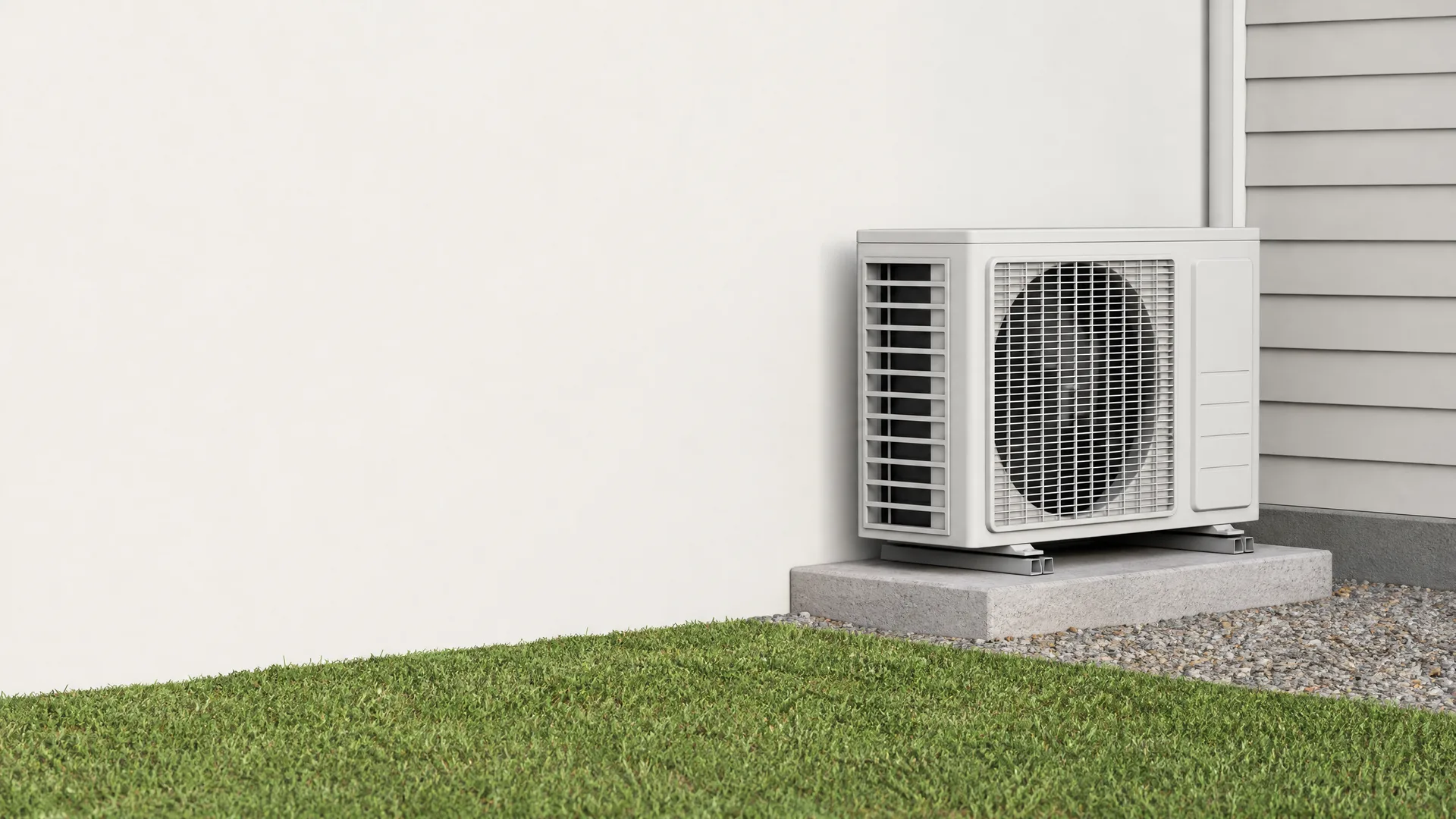
The coil is clear and the fan is spinning, moving outside air across clean fins without any blockage at the pad.
A thick collar of ice has built up across the coil, closing the gaps between the fins while the fan sits still.
Summer here doesn't lean on your heat pump the way winter does. Averaged across Washington homes, the dew point in June, July and August sits at 53°F, courtesy of NOAA climate data, which is dry air by most standards. Your system isn't fighting heavy moisture to cool the house, so the compressor isn't running as long or as often to pull humidity out along with heat. It's winter that tells you something about this system. When the outdoor coil has to work the hardest, against cold instead of damp, is when you'll see AUX on the thermostat and learn what your heat pump is actually up against.
NASA POWER T2MDEW county cells weighted by homes
Aux heat that runs a few minutes during a defrost cycle is doing what it's built to do. Aux heat that runs for hours, on mornings that aren't even that cold, usually means the heat pump can't carry the load it used to and something needs to be checked: a frozen coil, a stuck reversing valve, a low charge. A contractor who works on heat pumps through a Washington winter has likely seen that exact pattern on plenty of other systems like yours, and knows where to look first instead of guessing. You'd be connected with one licensed contractor local to you, not a handful of companies competing for the job, and not a list you have to sort through yourself. No more checking the thermostat each morning and wondering if what you're seeing is normal or a sign the system is struggling.