What emergency heat means on a Washington heat pump
Send the request today and let a heat pump pro reach out to you.
That little flame icon lit up on your thermostat, and the air coming out feels cooler than usual. Nothing is broken by design. Emergency heat is a backup setting that runs electric resistance heat strips instead of the heat pump itself. It's meant for when the heat pump can't do its job, usually because the outdoor unit has iced over and isn't defrosting, or because the system has stopped moving heat the way it should.
The problem is what it costs you to leave it running. Resistance heat uses a lot more electricity than a heat pump does for the same warmth. Power is cheap here, but that setting left on for days will still show up on the bill, and it's not fixing whatever made the heat pump switch over in the first place.
If this is your first cold snap since the system went in, or you're not sure whether your thermostat even has this switch, that's worth sorting out before you're guessing at 10pm with the house getting cold.
Most people in this spot don't want a project. You want to know why the light is on, whether it's safe to leave it there overnight, and who can get out and look at the outdoor unit. Normally that means calling around, explaining the same thing three or four times, waiting on quotes, trying to tell which contractor actually works on heat pumps versus furnaces.
Send the form below and that part is done. You're not left searching for someone who answers, or waiting to hear back on a quote before you can even get a date on the calendar. A contractor who works on heat pumps gets your information and takes it from there. You go back to your day instead of running the search again.
Emergency heat means your thermostat has switched off the heat pump and is running electric resistance strips instead to heat the house. You either flipped that switch yourself, or the system did it automatically because the outdoor unit can't pull heat from the air right now, usually because it's iced over or has stopped running altogether. On a heat pump, that strip heat is the backup, not the main source, and it costs more to run than the heat pump does. If you switched it on because of ice or cold and the outdoor unit comes back clean and running, you can usually switch back to normal heat. If the heat pump isn't running at all, or the ice keeps coming back, emergency heat is covering for a problem that needs a look, not a setting you should leave on for the rest of the season.
When this is normal
Your heat pump pulls heat from outside air, and below a certain outdoor temperature it can't pull enough to keep up. That's when the backup strips are supposed to take over, either because you set the thermostat to emergency heat or because the system did it on its own. If it's genuinely cold out and the flame icon came on with it, the system is doing what it was built to do. Check the thermostat setting against the thermometer. If the two line up, this is the equipment working as designed, not a failure.
When it's covering a problem
If the flame icon is on and it isn't particularly cold outside, something in the heat pump itself likely stopped working. A frozen outdoor coil, a dead compressor, a tripped breaker on the outdoor unit, any of these will force the system onto strips full time because the heat pump side can't run at all. Electric strips can heat the whole house by themselves, so you won't necessarily notice right away beyond the higher bill and the icon staying lit. That's the difference worth knowing: weather explains it, or a broken part does.
If that flame has been on for more than a day and the house still isn't warm, something is stopping the heat pump from doing its job, and the strips are carrying a load they weren't meant to carry alone. Electric resistance heat costs more to run than the heat pump, and power here is cheap, but it still adds up over days instead of hours. Left alone, you're paying for backup heat indefinitely while whatever tripped the switch, a bad sensor, a stuck reversing valve, low refrigerant, goes unfixed. Finding out which it is means someone who can check the outdoor unit, not guesswork from the thermostat. You could spend the next hour calling around, explaining the flame icon and the cold air to one contractor after another, or you could send this once and let the matching happen without you. Either way the heat pump needs a look. Only one of those ways gets it looked at without costing you the afternoon.
A summer dew point averaging 53°F, the Northwest River Forecast Center's figure for homes across Washington, is low. That's dry air by most standards, the kind that doesn't ask much of a heat pump running in cooling mode. But emergency heat is a winter concern, and it's the outdoor temperature that matters then, not the summer dew point. Dry summer air just means your heat pump isn't working hard to pull moisture out of the house from June through August. Come winter, that same outdoor unit is pulling heat instead of moisture, and that's a different job entirely. A mild, dry summer here tells you nothing about how the heat pump will handle a cold snap.
NASA POWER T2MDEW county cells weighted by homes
Why has that flame been on for days?
If the flame on your thermostat has stayed lit since last week and your power bill is the reason you're reading this, that's the strips doing all the work alone. You'd notice the house still heats fine, because electric resistance heat always will. What you'd notice instead is the bill, since those strips pull far more power than the heat pump ever does to produce the same warmth. You might also notice the outdoor unit sitting quiet, no fan turning, no hum, while the house stays warm anyway. That's the heat pump sitting out of the job entirely. Left running this way through a stretch of cold weeks, you're paying electric-furnace rates for as long as it continues, with nothing in the house telling you to stop it except the bill itself.
The heat pump running on its own
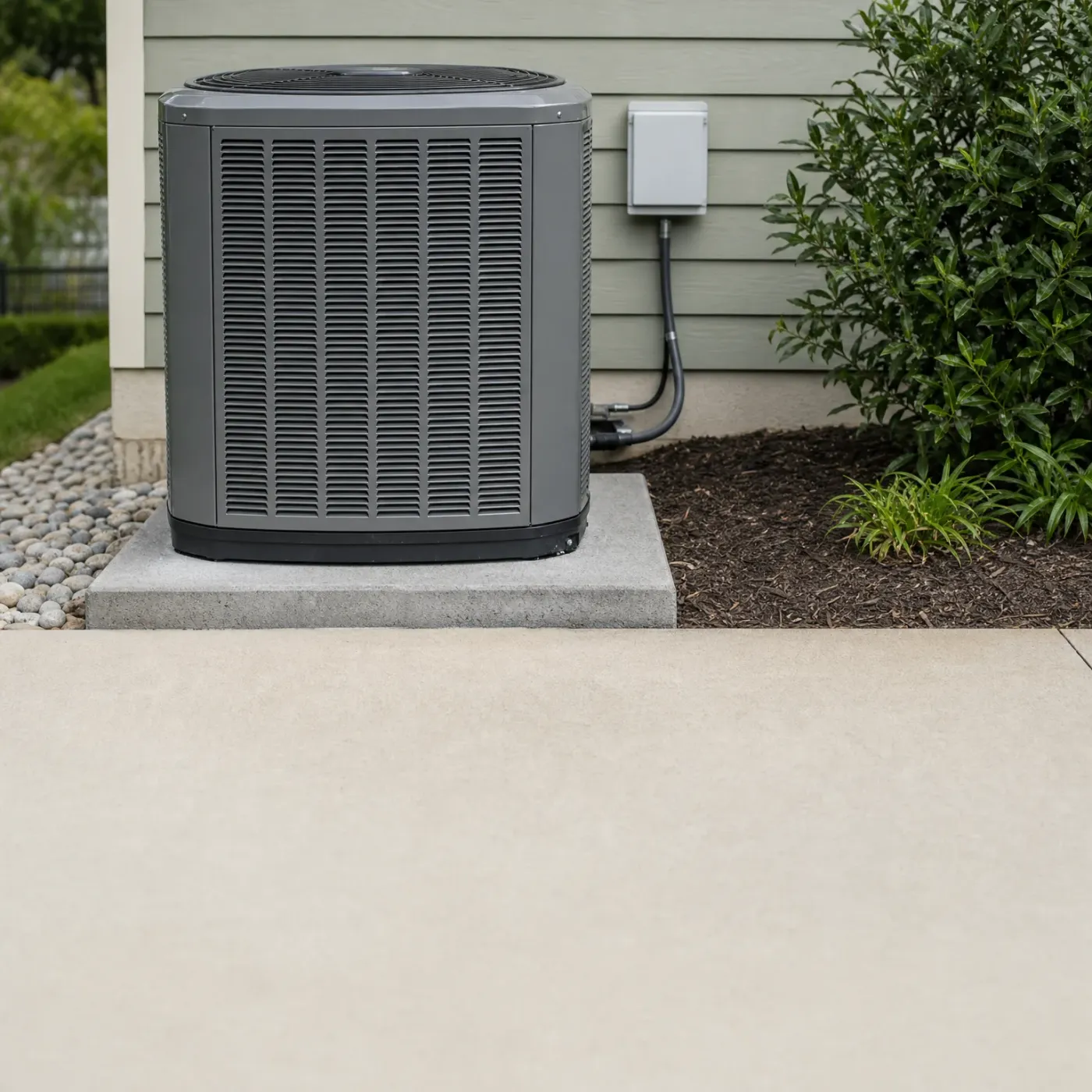
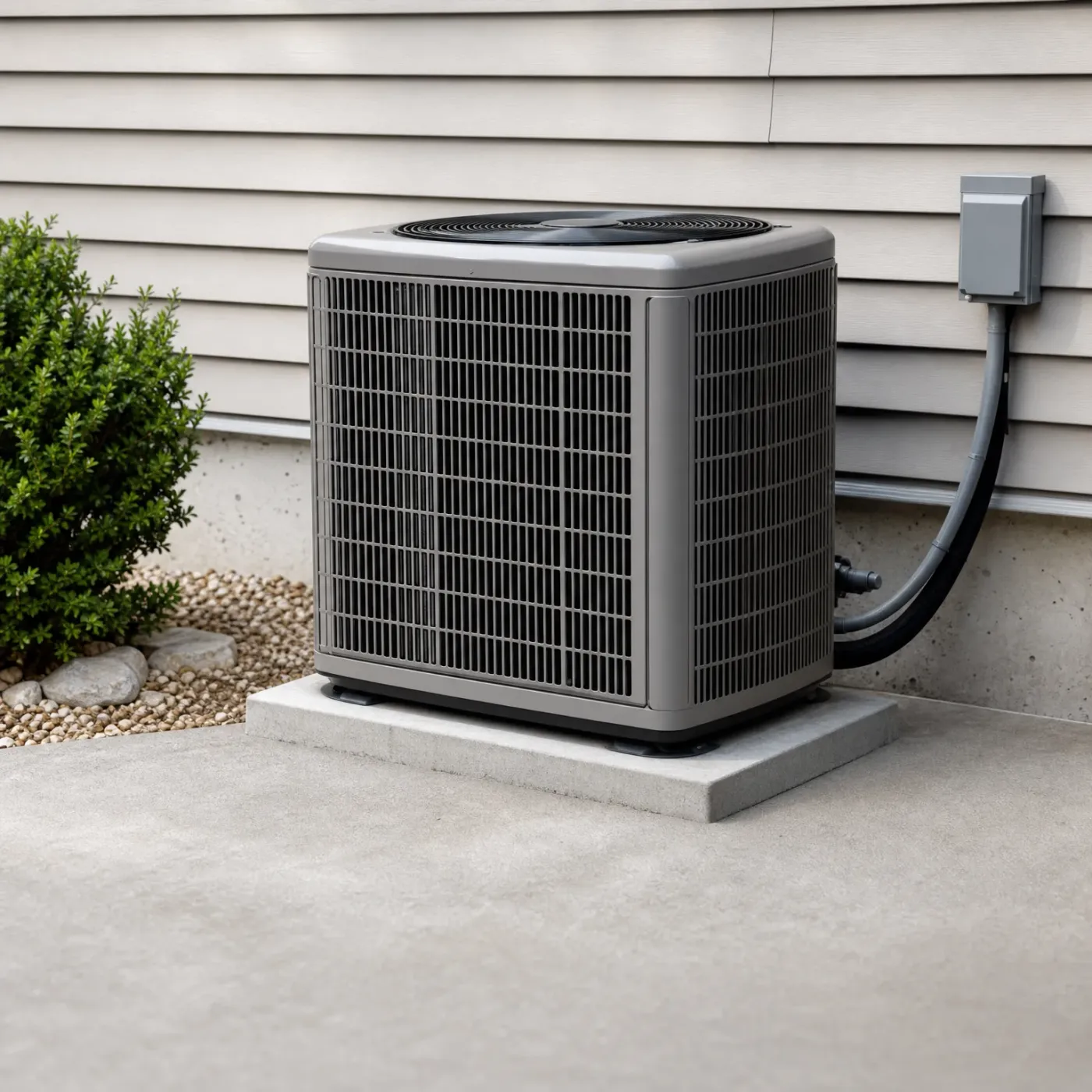
When it's working right, the outdoor unit sits there doing the job quietly, pulling heat from the air and sending it inside. No flame icon lit, no strips kicking in. The coils stay clear and the lines run clean into the house.
The heat pump that's lost the fight
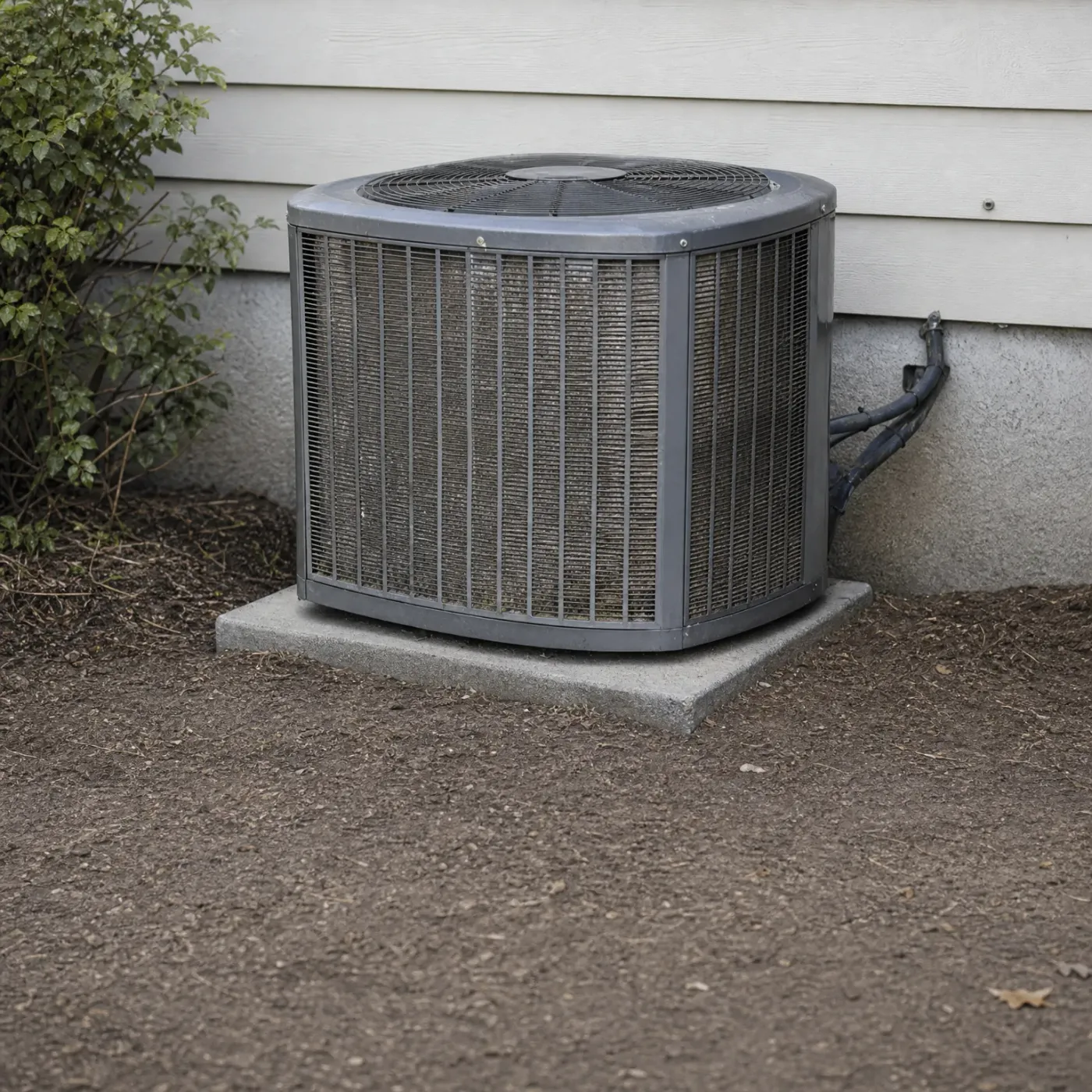
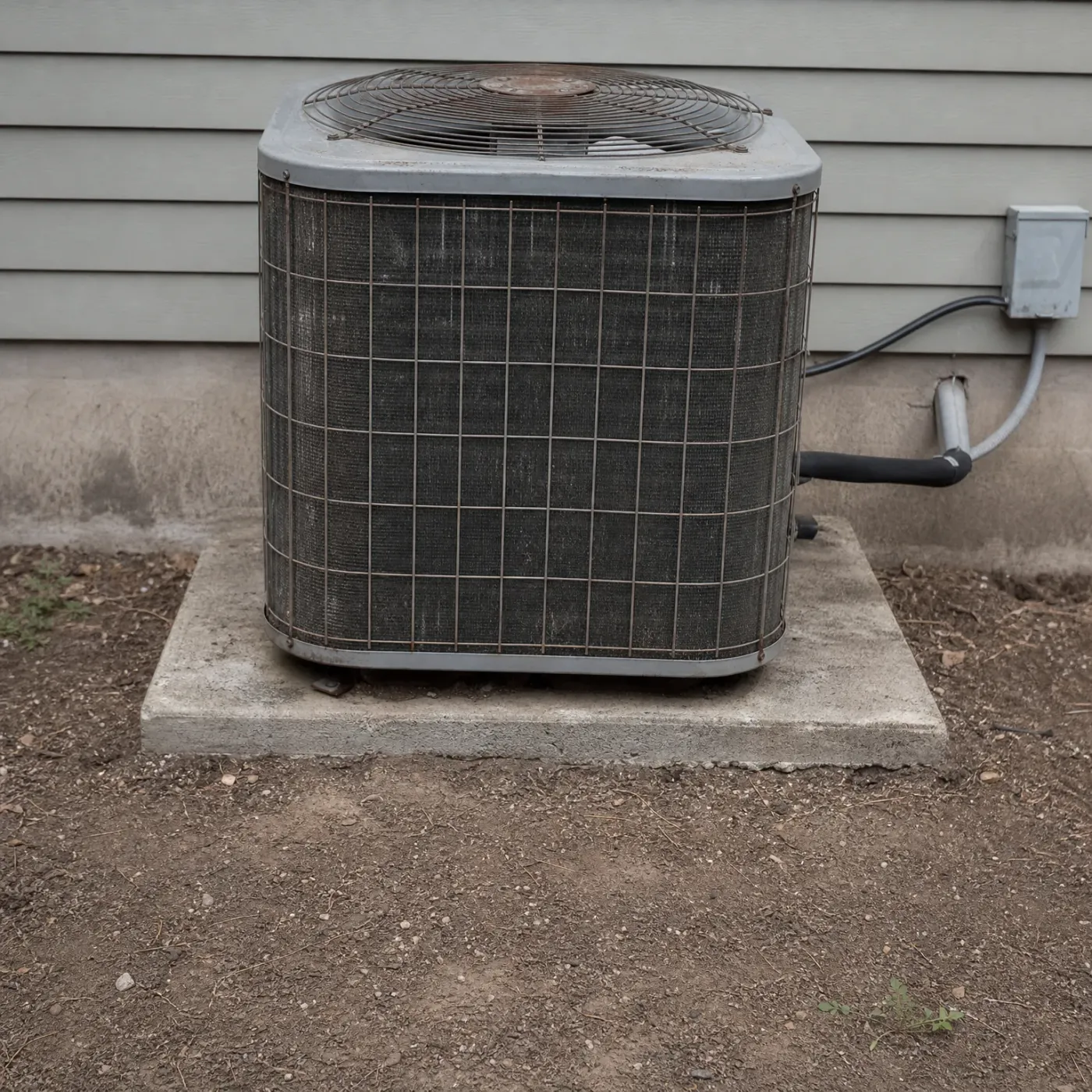
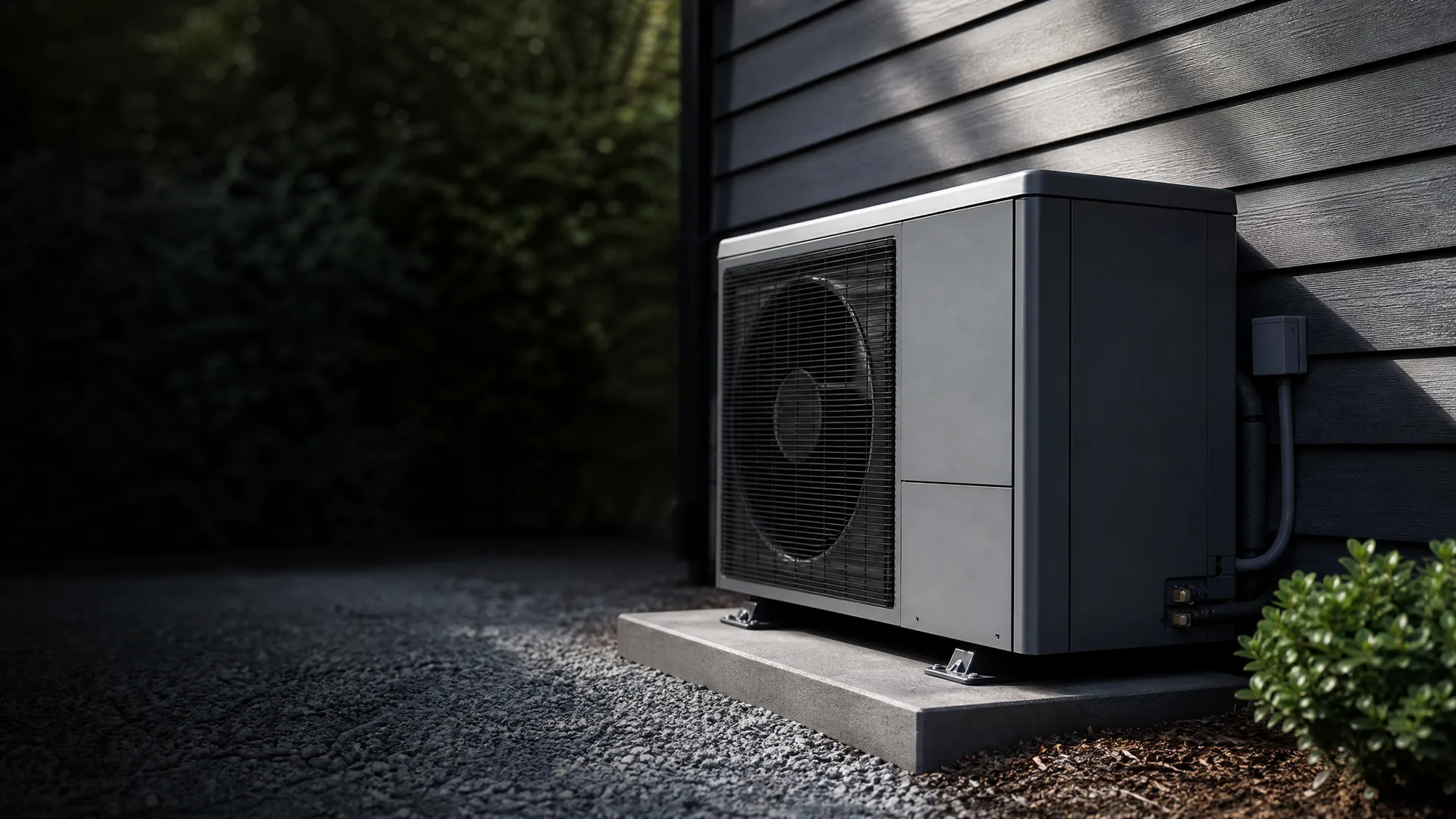
Coils caked with debris can't pull heat the way they should, so the system leans harder on the strips or gives up and hands the job to them. If that's what's behind your flame icon, the fix is cleaning or repairing the unit outside, not just the thermostat setting.
Power costs 13.17 cents per kilowatt-hour statewide
At 13.17 cents a kilowatt-hour, running the strips for days adds up fast, since resistance heat pulls far more power than the heat pump does for the same warmth. A flame that won't go off is a bill you'll see before you see the cause.
EIA-861 2025 statewide residential average
You decide to leave it alone for now. The flame stays lit, the house stays warm, and the bill climbs in a way you won't see until it arrives, because the strips are carrying heat the pump should be carrying.
You get someone out to look at it. They find why the pump handed off to the strips, fix that, and the flame goes off on its own once the pump can carry the load again.
Before you get your heat pump repairAfter you get your heat pump repair
Waiting on your own
You're calling around, explaining the flame icon and the bill twice, maybe three times, and still sorting through quotes while the strips keep running.
Emergency heat on a Washington heat pump means the strips are carrying the house, not the pump. For a day, in a cold snap, that's the system doing what it's supposed to do. Past that, with power this cheap and the flame still lit, it's worth asking why the pump stepped aside and hasn't stepped back in.
You don't have to figure out which part is at fault or who's free to come look at it. That's calling two or three contractors, repeating the same description of the flame and the bill each time, then sitting with quotes trying to tell them apart. Send the details once and that part of it is done. Someone licensed to work on it takes it from there.