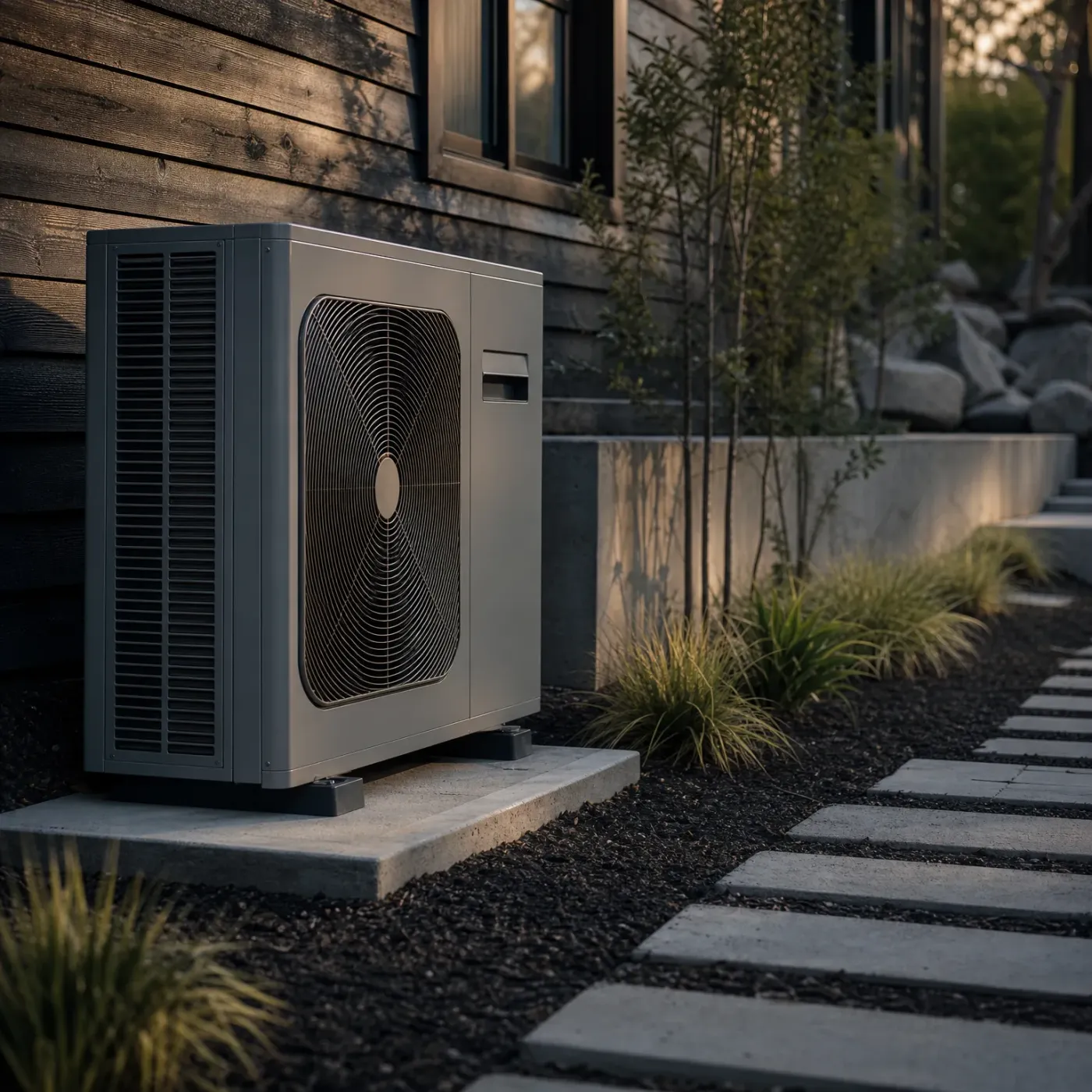
A gray outdoor heat pump unit with a circular fan grille sits on a concrete pad beside a dark wood-clad house, next to a gravel bed with ornamental grasses and a stepping-stone path.

Get your heat pump to the right pro

Why your heat pump bill jumps in a Washington winter

Power is cheap here, so a jump in your heat pump bill usually means the unit is working harder than it should, not that rates went up. Cold snaps push it into backup heat strips, and a system that's low on charge or icing over leans on those strips more than it should. This page gets into what drives the cost up and what to check, and can connect you with a contractor who can look at your system directly.

Find my pro

A heat pump loses efficiency as the outside air gets colder, because there's less heat in that air to move indoors. Below freezing, most heat pumps lean on backup electric strips to keep up, and those strips use far more power than the heat pump itself. A few cold weeks can push your bill up even though you kept the thermostat right where it always sits. If the jump is bigger than the weather explains, or it lasts after a cold snap passes, something else is going on. A system low on refrigerant or icing over on the outdoor coil will call on those backup strips more often than it should, even on milder days. That's not a rate problem. It's the equipment working harder to do the same job.

A smiling man in a dark navy sweater sits on a light sofa in a living room, with a glass bowl of popcorn on a wooden coffee table and bookshelves behind him.
A smiling man in a dark green sweater sits on a tan leather sofa in a dimly lit living room, with a bowl of popcorn in the foreground and a kitchen area blurred behind him.
A smiling middle-aged man in a dark shirt sits on a gray sofa in a living room, with a bowl of popcorn on a side table and shelves, a window and kitchen area behind him.
A smiling bearded man in a dark gray t-shirt sits on a gray couch in a living room, with a large glass bowl of popcorn on a wooden table in the foreground.
  1. Outside air temperature drops, so the refrigerant absorbs less heat.

  2. The compressor runs longer to pull the same warmth indoors.

  3. A thermostat senses it can't hit the set temperature on heat pump alone.

  4. Backup electric strips kick in to cover the gap.

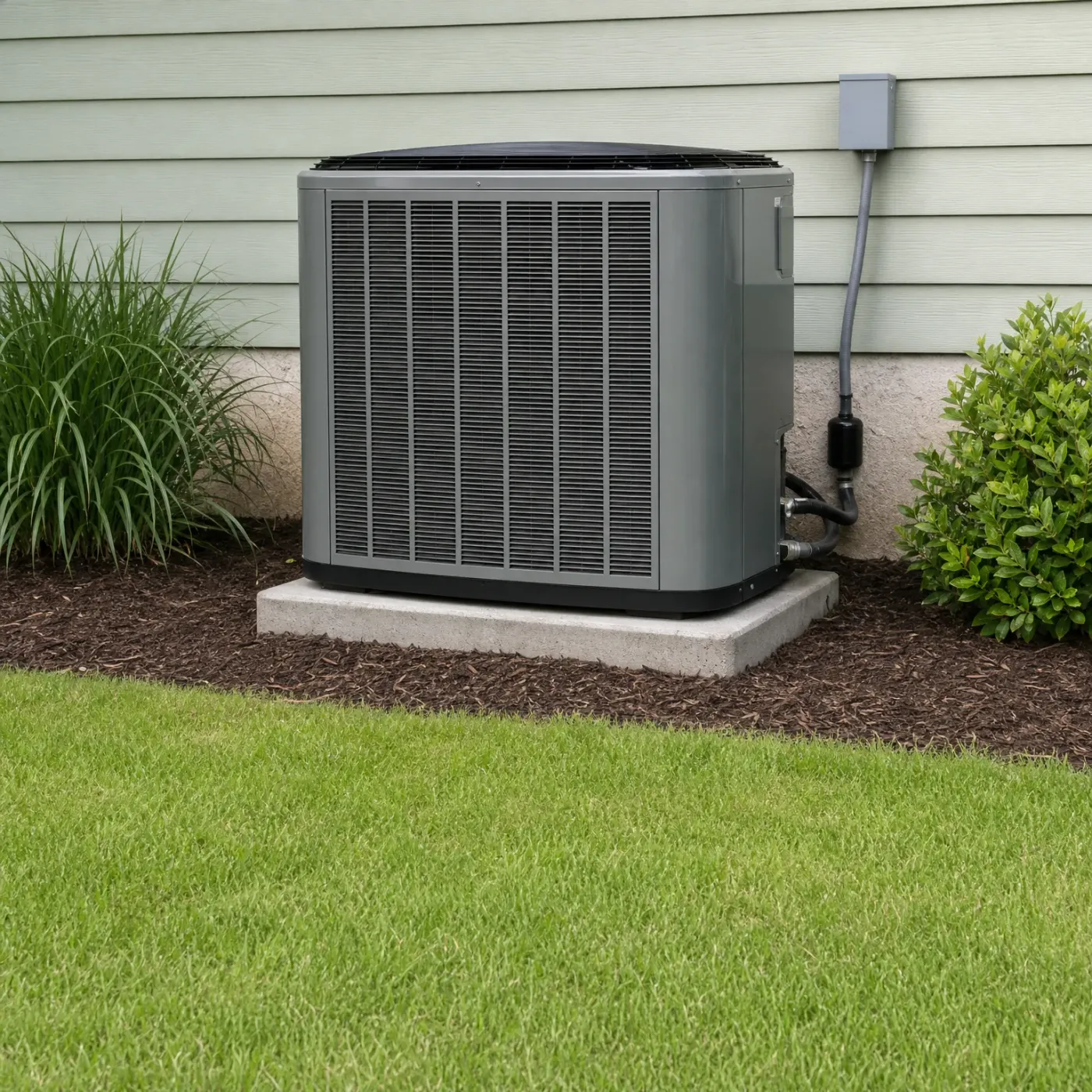
A gray outdoor condenser unit on a concrete pad beside a light-green sided house, surrounded by mulch, ornamental grasses and a shrub, with mowed lawn in the foreground.
A heat pump that only needs its normal cycle to hold temperature is moving heat, not making it, so the bill stays in line with what you expect.
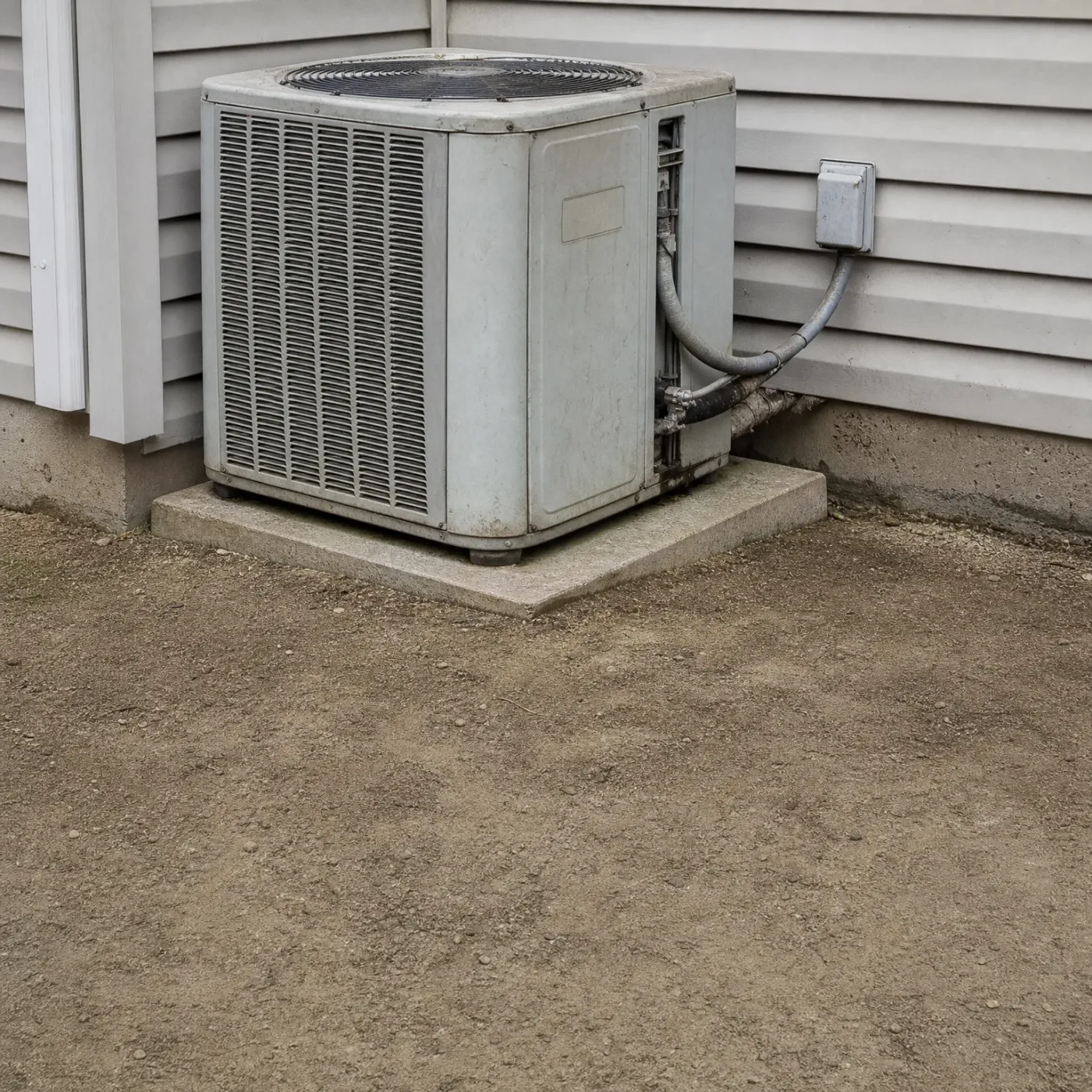
An outdoor condenser unit on a concrete pad beside a horizontal-sided house, with insulated refrigerant lines running to a wall-mounted box, surrounded by bare dirt.
A weathered unit like this one often has to lean on its backup strips just to keep up, and that's where the extra cost comes from.
A dimly lit bedroom at dusk with a made bed, a table lamp on a nightstand, and a condensation-covered sash window with a dark curtain.

Outside it's in the thirties, that gray cold that sits over the Sound for days at a stretch. You're in the kitchen around six, still in your coat, and you check the thermostat out of habit more than need. Seventy-one, same as you left it. You glance at the utility app instead, and the number for this week makes you stop with your hand still on your coat zipper. Through the window the porch light shows your breath. Down in the utility closet the unit is running, and it doesn't sound different, doesn't sound like anything is wrong. It's just been running since before you got home, and it hasn't stopped since.

How do I know if my heat pump is stuck on backup heat strips?

You've noticed your bill climbing and you're wondering if the strips are the reason, but there's no gauge on the thermostat that tells you that outright. What you can do is watch how the system runs. A heat pump leaning on strips acts differently than one just doing its normal cycle, and the signs show up at the vents and on the thermostat itself if you know where to look.

Check the air at the vents and how long the system runs to recover

Air from a heat pump running normally feels warm but not hot, somewhere around body temperature. Air from the backup strips feels noticeably hotter, closer to what a space heater puts out. If you stand at a vent and it feels like a hair dryer, the strips are on. Another sign is recovery time. If you bump the thermostat up a few degrees and it climbs fast, strips are doing the work, since a heat pump alone moves heat more slowly. Some thermostats also show an "aux heat" or "emergency heat" light when strips are running. If that light is on most mornings rather than just during a cold snap, the system is leaning on strips more than it should.

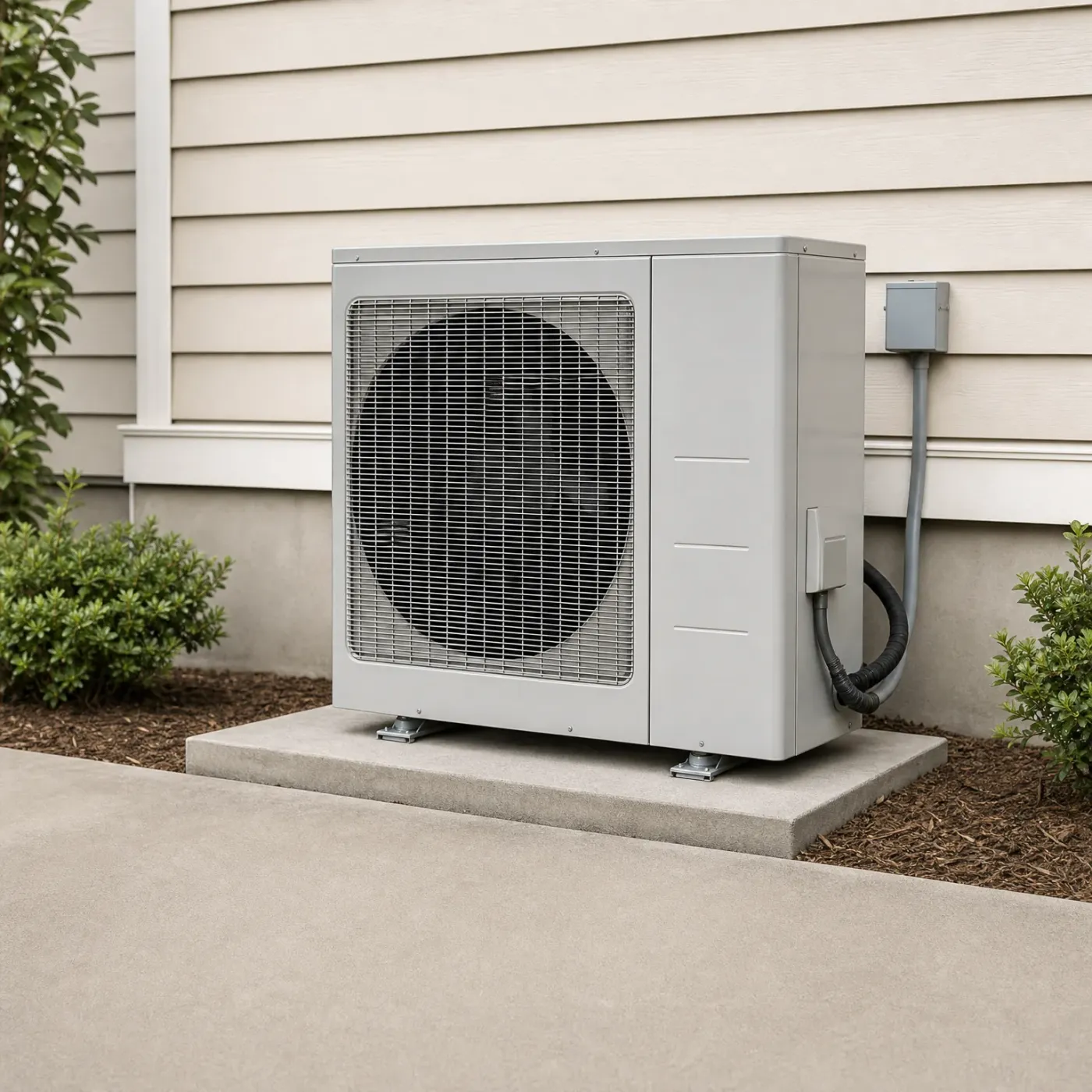
A gray outdoor heat pump unit on a concrete pad beside a house with horizontal lap siding, connected by conduit and a flexible line to a wall-mounted disconnect box, with low shrubs and mulch nearby.

Running the way it should

This one cycles on, holds the house at temperature, and shuts off. The pad is clean, the lines are intact, and nothing around the unit looks strained. A system working like this stays inside its normal draw even when it's thirty-five outside.

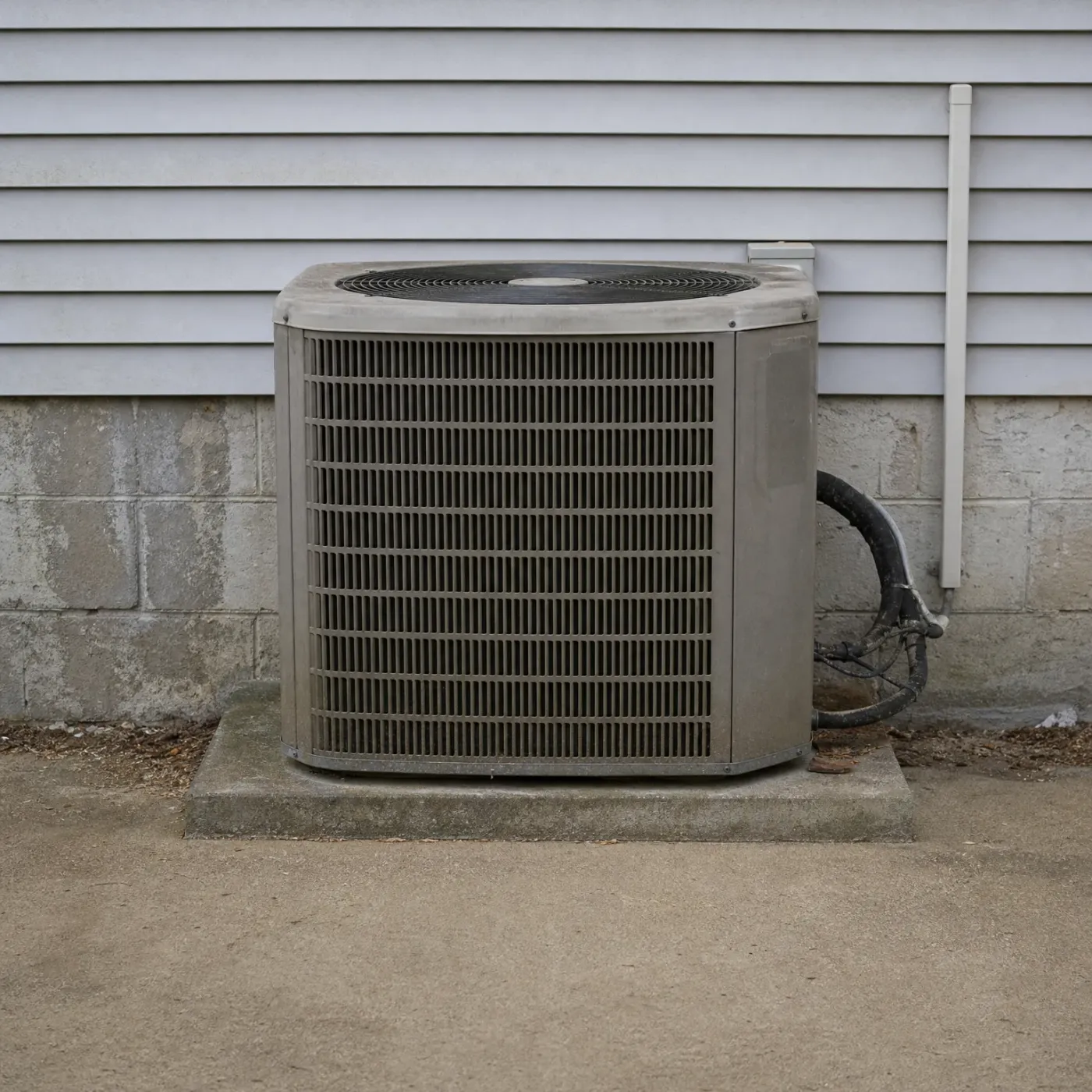
An outdoor air conditioner condenser unit on a concrete pad beside a house with horizontal siding above a concrete block foundation, with insulated refrigerant lines and a vertical white pipe on the wall.

Leaning on backup heat

This unit has been through a lot of winters. The lines run along an old block foundation, the cabinet shows rust and wear, and a unit in this shape often can't pull enough heat from the air on its own. When it falls short, the strips take over, and that's what shows up on the bill.

A woman with dark hair in a bun reclines on a sofa with her eyes closed, wrapped in a cream fleece blanket, a closed blue hardcover book resting in front of her, with a lit lamp and a vase of dried flowers in the background.
A smiling bearded man in a navy sweater sits at a candlelit dinner table with a glass of red wine, a bowl of salad, and plates of food in the foreground.

The right pro for this job

A heat pump that's low on refrigerant or has a coil caked with ice can't pull enough heat from the air, so the thermostat calls on the strips more than it should, and you end up paying for backup heat on days that shouldn't need it. That gap between what the system is doing and what it's supposed to be doing is hard to see from inside the house. You can hear it, maybe, or feel a vent that's not as warm as it used to be, but you can't look at the coil or check the charge yourself. A contractor can. Getting someone out to look at the unit while it's still cold out means whatever's driving those strips gets caught before another month of bills reflects it. Once this is out of your hands, there's nothing left to track down or figure out on your own.

What the defrost cycle costs you

When frost builds on the outdoor coil, a heat pump reverses itself for a few minutes to melt it off, and during that reversal it isn't heating your house at all. Most units bring the strips on during defrost just to keep the air from the vents going cold. One or two defrost cycles an hour is normal in damp, near-freezing weather. A coil that's dirty or a system that's low on charge frosts up faster and defrosts more often, so the strips end up running on a schedule instead of only when it's genuinely cold out.

Why the strips alone can cost so much

A heat pump moves heat, so it can put out three or four times the warmth it draws in electricity. Strip heat doesn't move anything. It's resistance heat, the same principle as a toaster, and every watt it uses turns straight into warmth at a one-to-one rate. That's why a few hours leaning on strips shows up on the bill the way days of normal heat pump operation wouldn't. The strips aren't a flaw in the system. They're meant for the coldest snaps, not for carrying the house on their own.

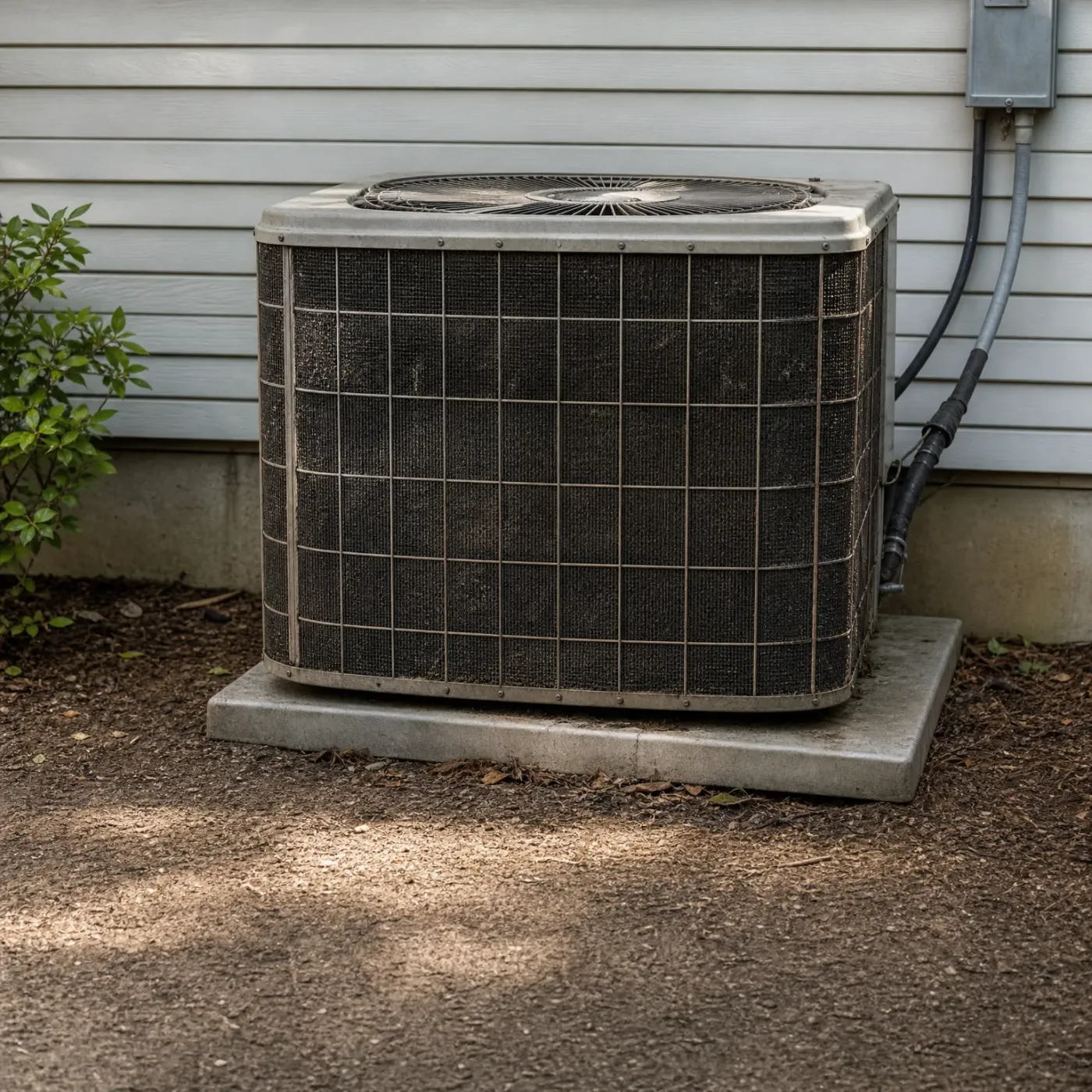
An outdoor air conditioning condenser unit with dusty coils sits on a concrete pad against light horizontal siding, with an electrical disconnect box and refrigerant lines on the wall and a shrub and mulch at left.
Before you get your heat pump repair
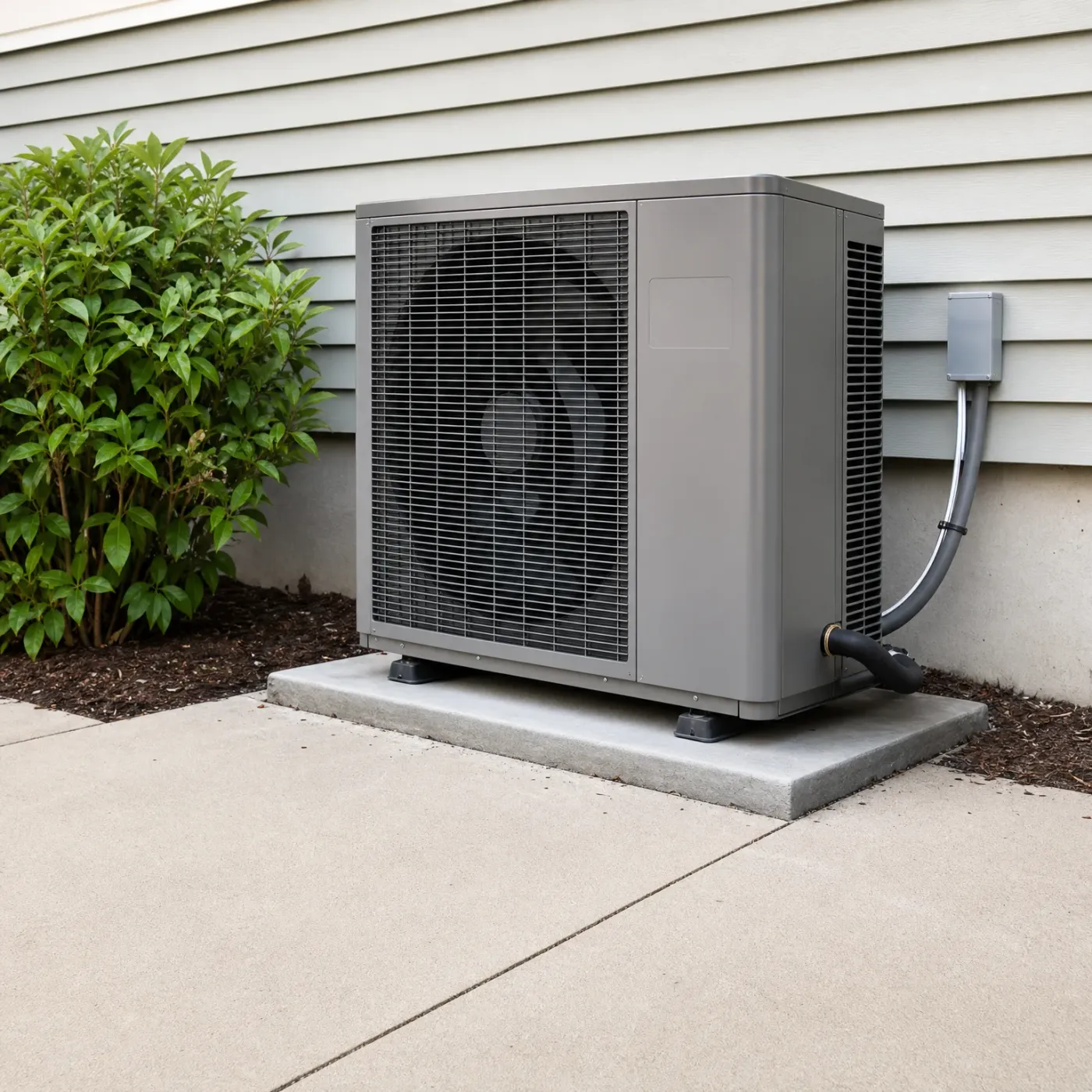
A gray outdoor heat pump unit on a concrete pad beside a house with horizontal lap siding, with a conduit running to a wall-mounted disconnect box and a green shrub to the left.
After you get your heat pump repair

Power costs 13.17 cents per kilowatt-hour statewide

At 13.17 cents per kilowatt-hour, running the heat pump itself stays affordable most nights. The jump shows up when backup strips take over, since they pull far more power for the same hour of heat. That's the gap worth checking before you accept a higher bill as normal.

EIA-861 2025 statewide residential average

What's Driving Your Bill

  • A heat pump running a normal cycle costs about what you'd expect at 13.17 cents per kilowatt-hour.
  • The jump in your bill almost always traces back to the backup strips, not the rate you're paying.
  • Ice on the coil, a low charge, or long defrost cycles all push the system toward those strips more often.
  • A contractor can check charge and airflow and tell you whether the strips are covering for a problem.
  • Once you're matched, someone reaches out to take it from there, so you're not the one chasing it down.
  • Fixing what's making the unit lean on backup heat is usually the cheaper path than living with the bill.

Your heat pump bill climbs because of how the system is running, not what you're paying for power. At 13.17 cents per kilowatt-hour, a heat pump moving heat the normal way doesn't cost much to run even on a cold night. The strips are a different story. They heat directly instead of moving heat from outside, and they pull far more power to do it. So the question isn't your rate. It's how often the thermostat is calling on those strips, and why.

A coil caked with ice can't pull heat from the air the way it should. A system low on refrigerant runs longer and still falls short. Either one leaves the thermostat no choice but to lean on backup heat to hold the temperature you set, and that's the part showing up on your bill. Long or frequent defrost cycles push it further, since the unit isn't heating your house while it's defrosting itself.

A contractor can check the charge, look at the coil, and see how the system is actually cycling, then tell you if the strips are covering for a problem that's fixable. Once you send the form, a contractor reaches out to you, and finding someone to look at it stops being something you have to manage. Most of the time, fixing what's pushing the unit toward backup heat costs less over a winter than paying for all that backup heat.

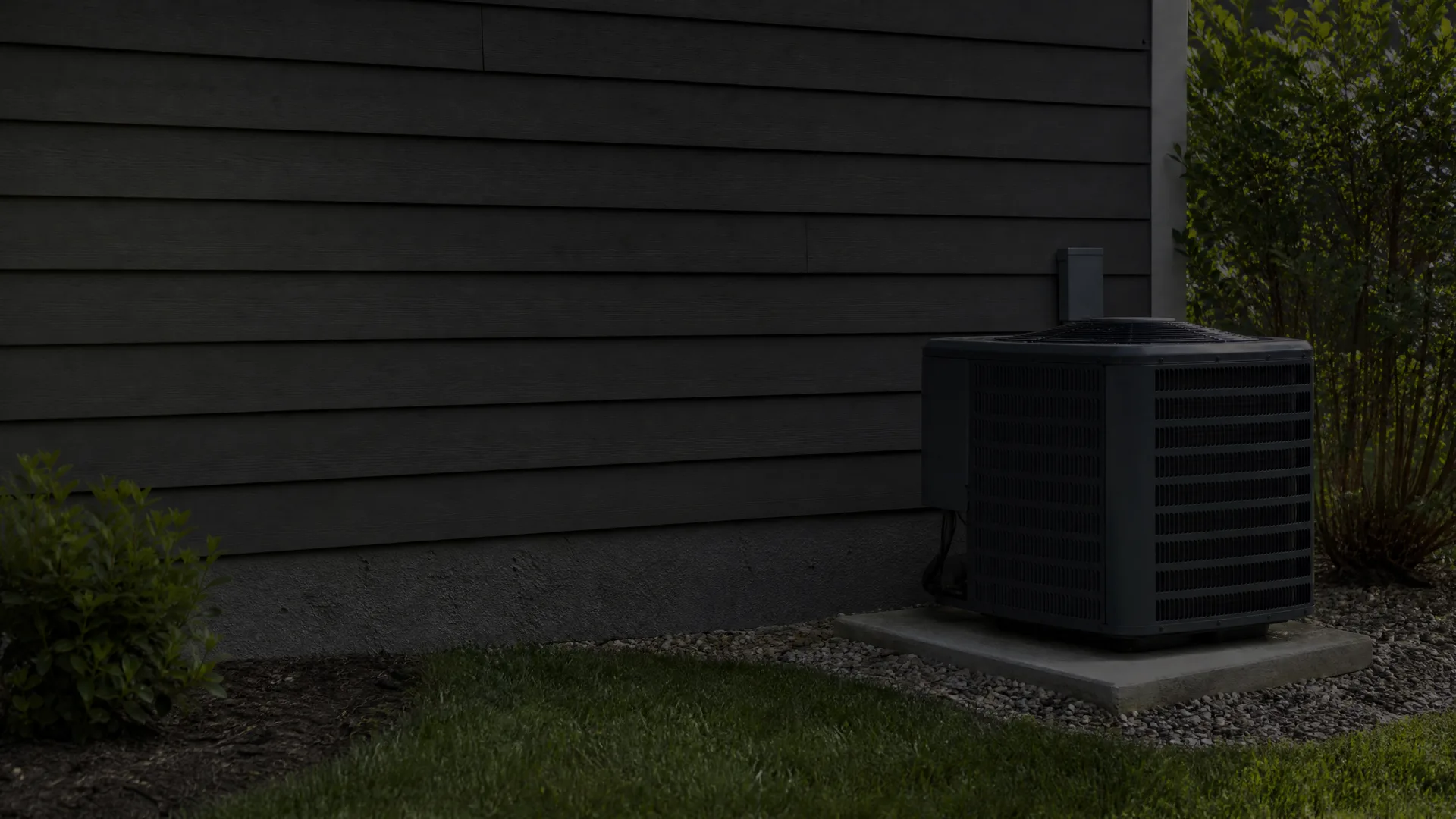
An outdoor air conditioning or heat pump condenser unit sits on a concrete pad surrounded by gravel beside a dark horizontal-sided house, with grass and shrubs nearby.

Matched to your heat pump job

After this form, you can stop searching for a heat pump pro.

Step 1 of 3: Equipment