Why your heat pump won't turn on in Washington

Step 1 of 3: Equipment

A heat pump that won't turn on is usually stuck on a safety switch or dead at the thermostat, not broken outright. Check the breaker first. Heat pumps pull a lot of current on startup, and a tripped breaker is the most common reason for a unit that just sits silent. If the breaker's fine, look at the thermostat. A dead battery or a setting left on the wrong mode will keep the system from calling for heat at all. Outside, the outdoor unit has a disconnect box nearby, usually a pull-out block or a switch, and if that's off or loose the indoor unit has no way to start the compressor. Since most homes here heat with electricity, this is the system carrying your whole house through the cold months, so a unit that won't start isn't something to leave for later. If the basics check out and it still won't run, the problem is likely inside the control board or the compressor itself, and that calls for someone who works on these year-round.

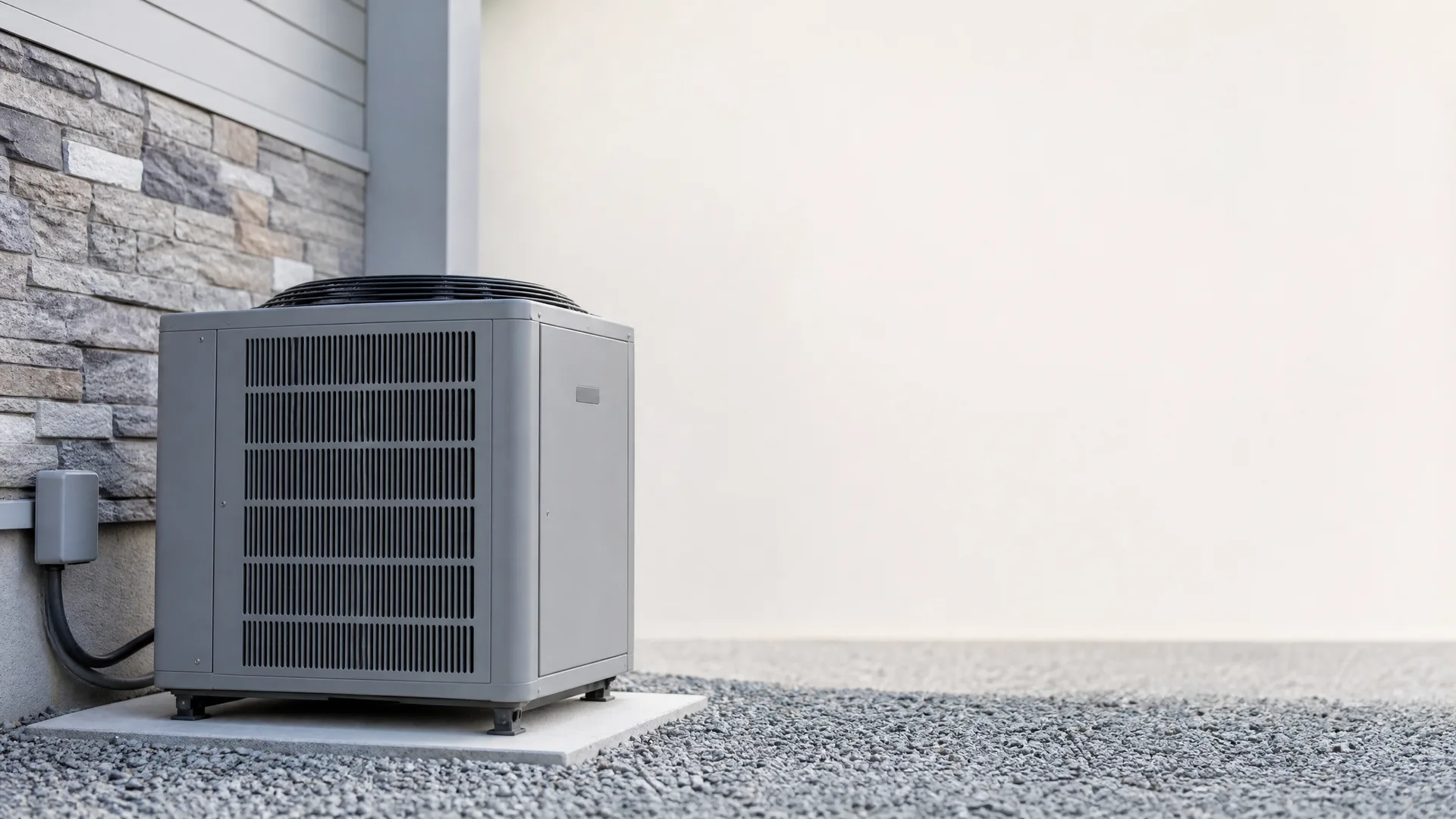
A gray outdoor condenser unit on a concrete pad beside a house with stacked stone and horizontal siding, surrounded by gray gravel and a plain light wall.

The outdoor unit shuts itself down

A heat pump outside in the cold builds frost on its coil. It runs a defrost cycle to clear that off, and during defrost the outdoor fan stops while the system reverses. If you walk out and see the fan not spinning, that may be defrost, not a failure. Give it twenty minutes. If the unit is still silent after that and the thermostat shows no call for heat, something upstream of the outdoor unit is holding it off.

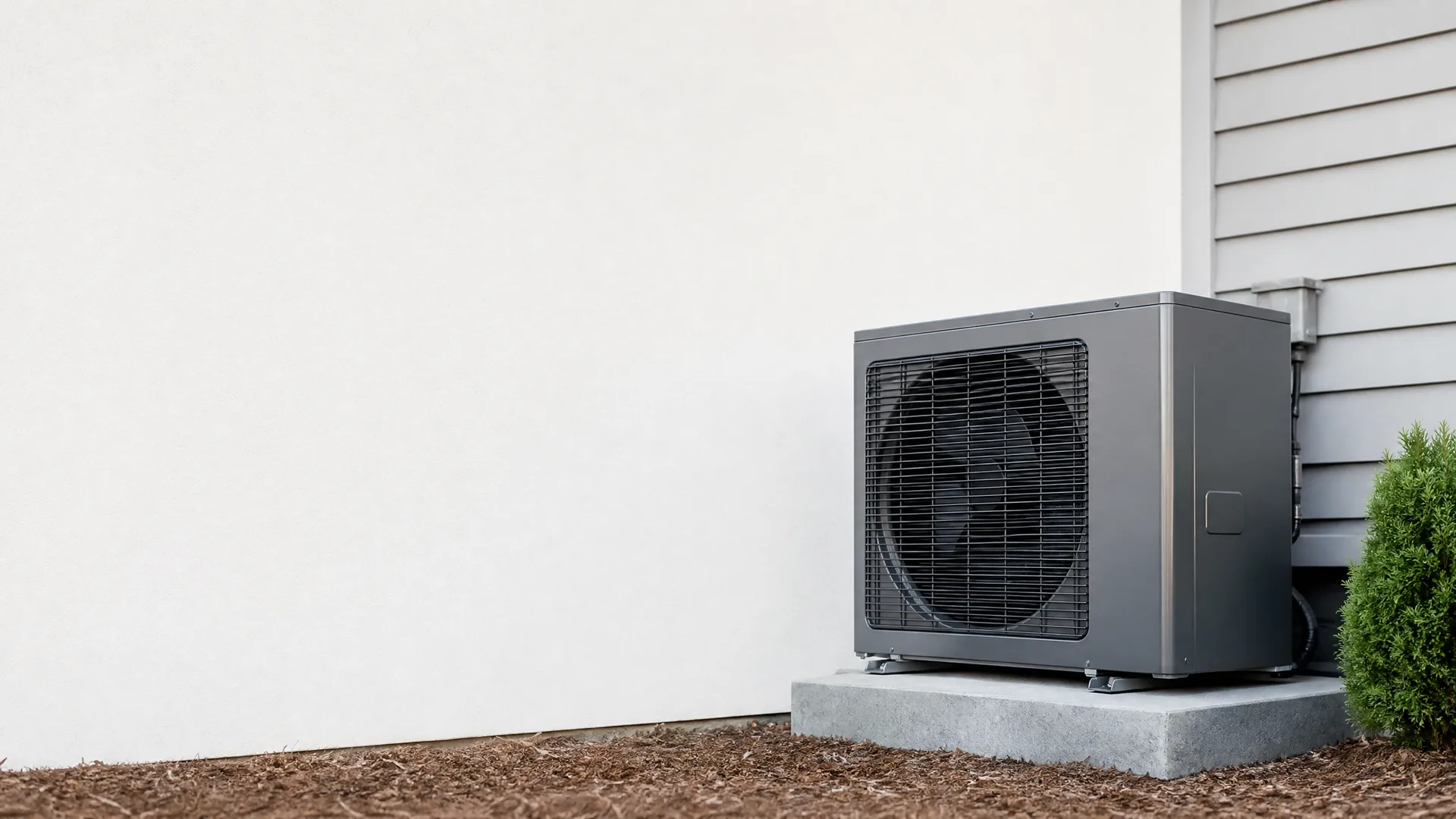
A dark gray outdoor heat pump unit sits on a concrete pad beside a white stucco wall and lap-sided house corner, with mulch and a small shrub in the foreground.

Electric heat means no pilot light

Washington homes mostly heat with electricity, and a heat pump has no gas valve and no pilot to relight after an outage. When power comes back, most heat pumps restart on their own once the thermostat calls again. If yours stays dark, the control board may not have reset, or a float switch on the indoor coil has tripped from condensate backing up, which cuts power to the unit until that drain clears.

Fix It Now or Call Someone

Call a contractor

  • A breaker that trips again right after you reset it points to a short somewhere in the system, not a one-time overload.
  • If the outdoor unit stays silent and the indoor air handler does nothing either, the control board or transformer may have failed.
  • A thermostat with a blank screen even after you check the breaker usually means a wiring or low-voltage fuse problem a contractor needs to trace.
  • When the unit hums but the fan won't spin, a capacitor has likely failed and the compressor can be damaged if it keeps trying to start.
  • A unit that worked fine last winter and now won't start at all, with no frost or ice anywhere on it, is dead for a reason you can't see from outside.
  • If you smell anything burnt near the indoor unit or outdoor unit, that's a job for someone licensed, not a second try at the breaker.

Check it yourself first

  • Look at your breaker panel before anything else. Heat pumps draw a heavy surge on startup and tripping is common, especially on a cold morning.
  • Check that your thermostat is set to heat and the temperature is set above the room reading. It sounds obvious, but it's often that simple.
  • If the outdoor fan isn't spinning but the coil is covered in frost, that's likely a normal defrost cycle. Give it twenty or thirty minutes.
  • Look for a float switch near the indoor unit if it has one. A full condensate pan will shut the whole system down until it's drained.
  • Replace the thermostat batteries if it takes them. A thermostat that's dim or unresponsive sometimes just needs new batteries, nothing more.
  • Check that the outdoor unit isn't buried in snow or blocked by anything stacked against it, since airflow matters for it to run at all.
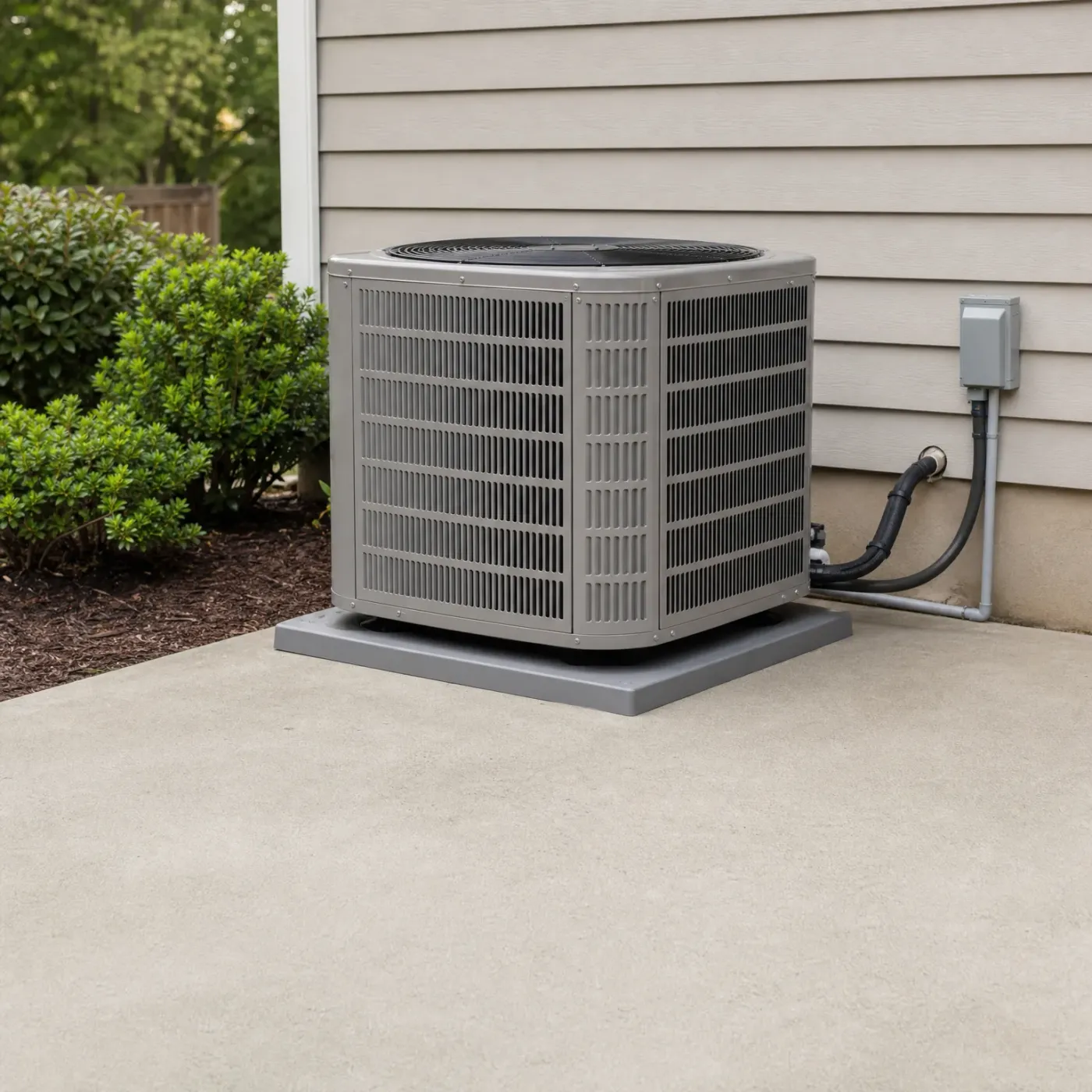
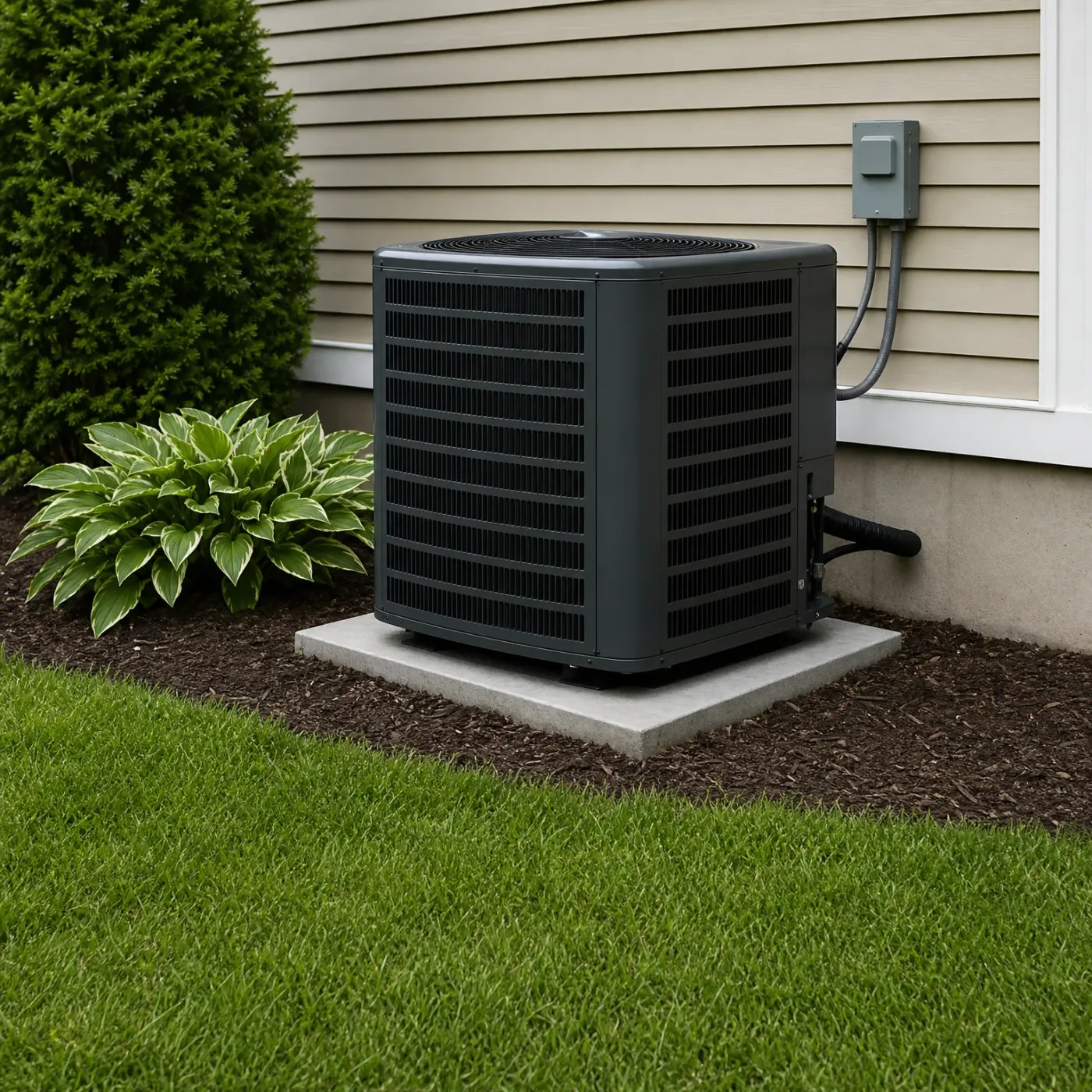
A dark gray outdoor condenser unit on a concrete pad beside a house with beige horizontal siding, with a gray electrical disconnect box and conduit on the wall, mulch beds, a hosta plant, a shrub, and mowed lawn in front.

Running clean

A heat pump kept clear of leaves and clippings pulls air through easily and cycles on when the thermostat calls for it. The disconnect box stays accessible, the pad stays level, and the coil underneath that top panel stays open enough to shed heat or pull it in without a fight.
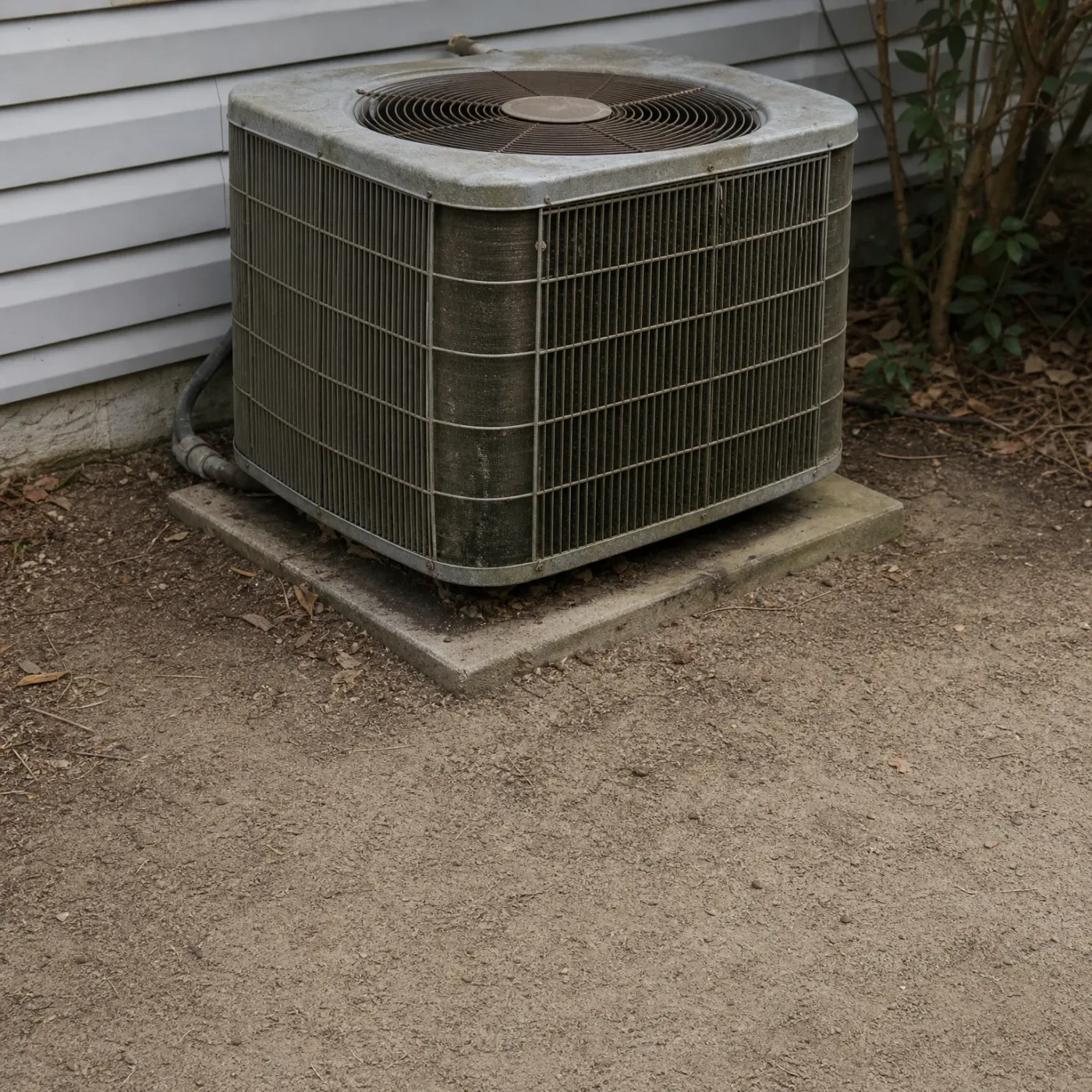

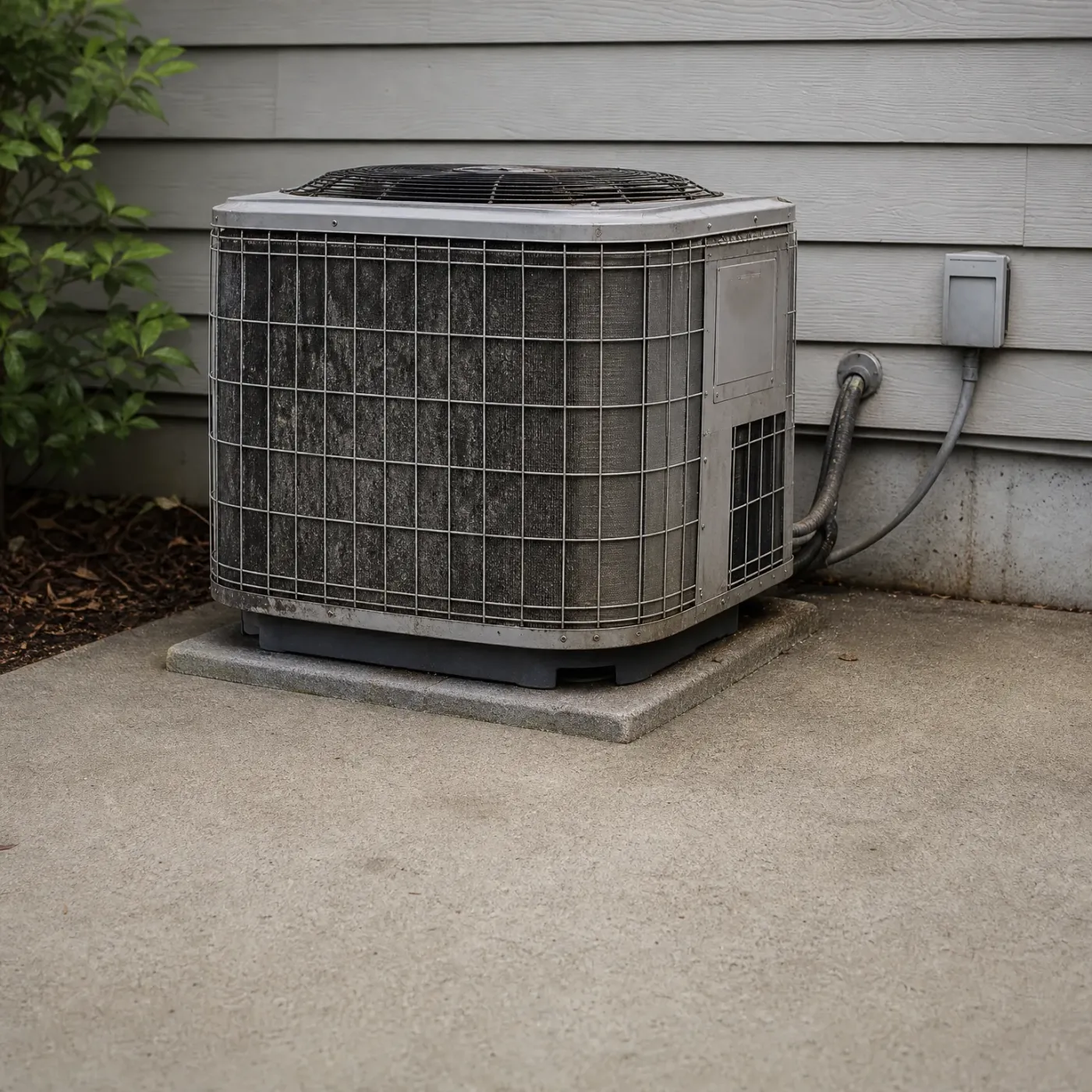
A weathered outdoor condenser unit on a concrete pad beside a house with light horizontal siding, surrounded by bare dirt and a shrub.

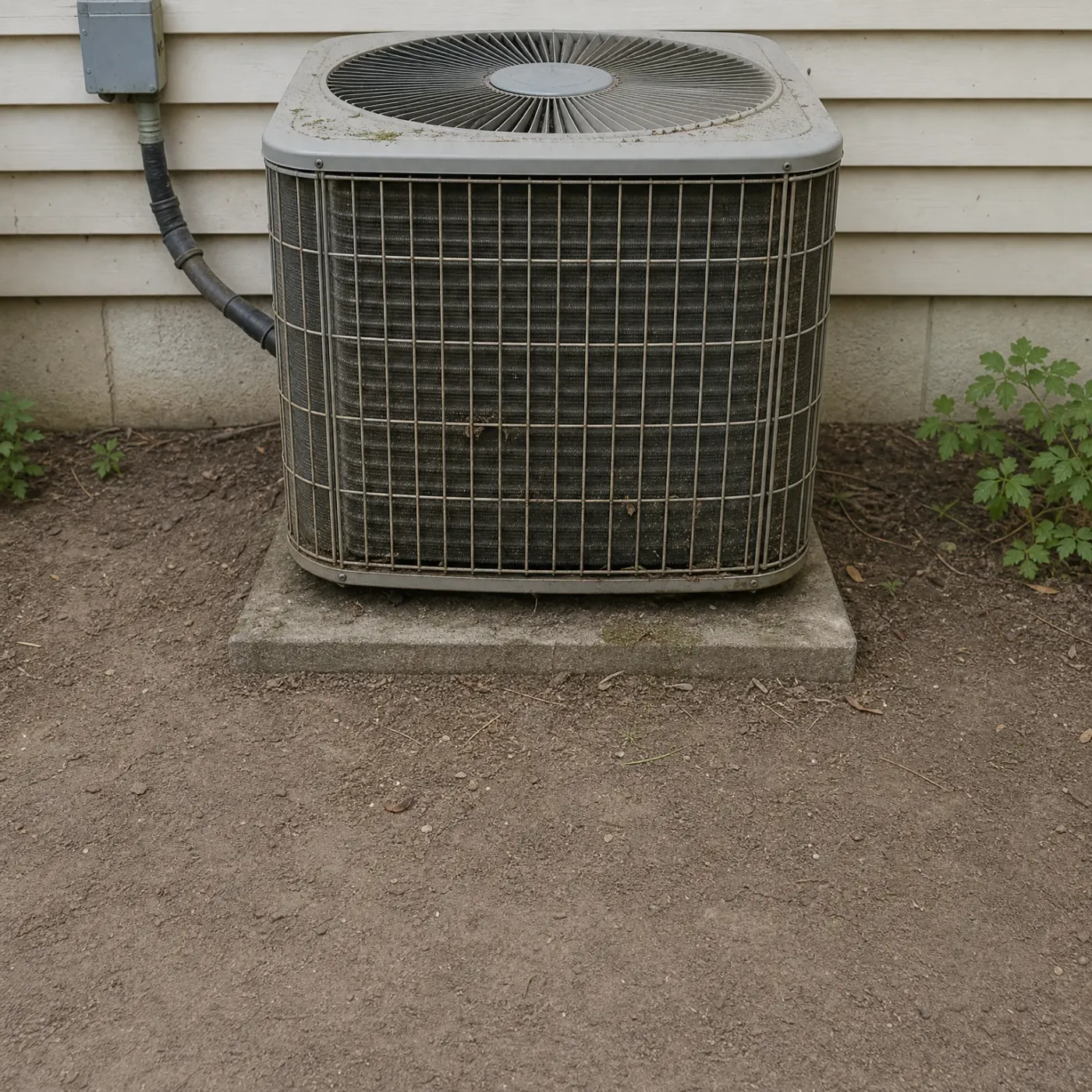
Caked in grime

When the grille and top panel are coated like this, the coil underneath is choked too. The unit may still try to start, but it can trip on high pressure or overheat protection before it gets going. A line caked in dirt is also harder to inspect for the refrigerant leak that grime like this can hide.

A woman with long blonde hair in a light blue shirt leans back on a beige sofa with her eyes closed, in a softly lit living room with cushions and a blurred plant and shelf in the background.
A woman with long dark hair in a gray knit sweater sits on a gray sofa with a cushion, looking toward a window in a living room with framed pictures and a lamp in the background.
A woman with long dark hair in a light grey knit sweater sits on a sofa indoors, looking to her right, with a framed landscape picture, a potted plant and a curtained window behind her.
A woman with long dark hair leans back against a gray sofa with her eyes closed, in a living room with a curtained window, a potted plant, and a dark screen in the background.

Get the right pro for your heat pump

Your request goes to one pro, not a list of companies.

Asking costs nothing, and the choice to hire stays yours.

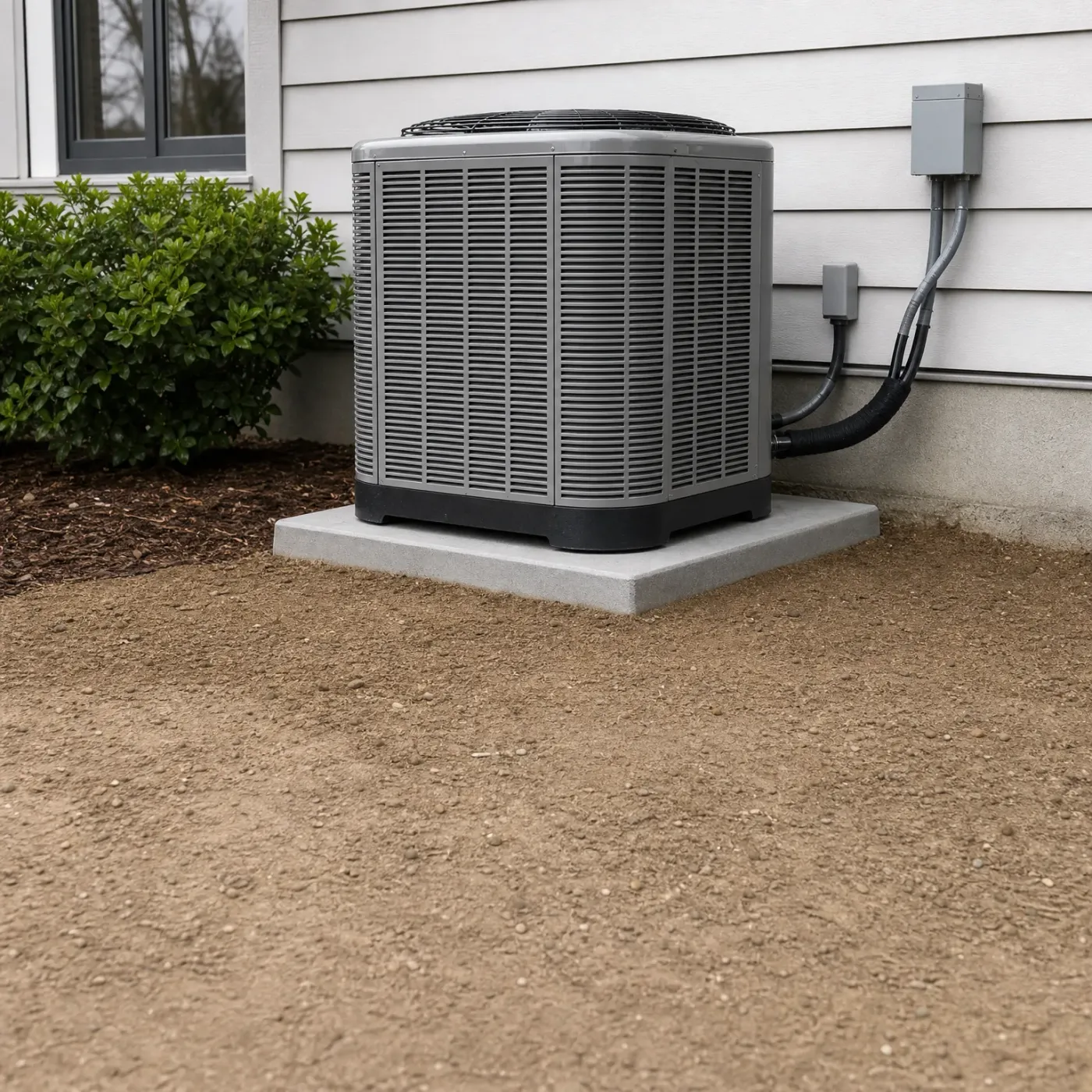
A gray outdoor condenser unit on a raised pad beside a house with horizontal lap siding, with refrigerant lines, conduit and an electrical disconnect box on the wall, and shrubs on a mulch bed to the left.

Clear and running

This unit sits clean on its pad, lines and conduit running straight to the disconnect on the wall. Nothing blocks the coil or the airflow around the cabinet. A unit kept like this starts when the thermostat calls for it.

An outdoor air conditioner condenser unit on a gray composite pad beside a house with horizontal lap siding, with refrigerant lines and a conduit running to a wall-mounted disconnect box, and a shrub at left.

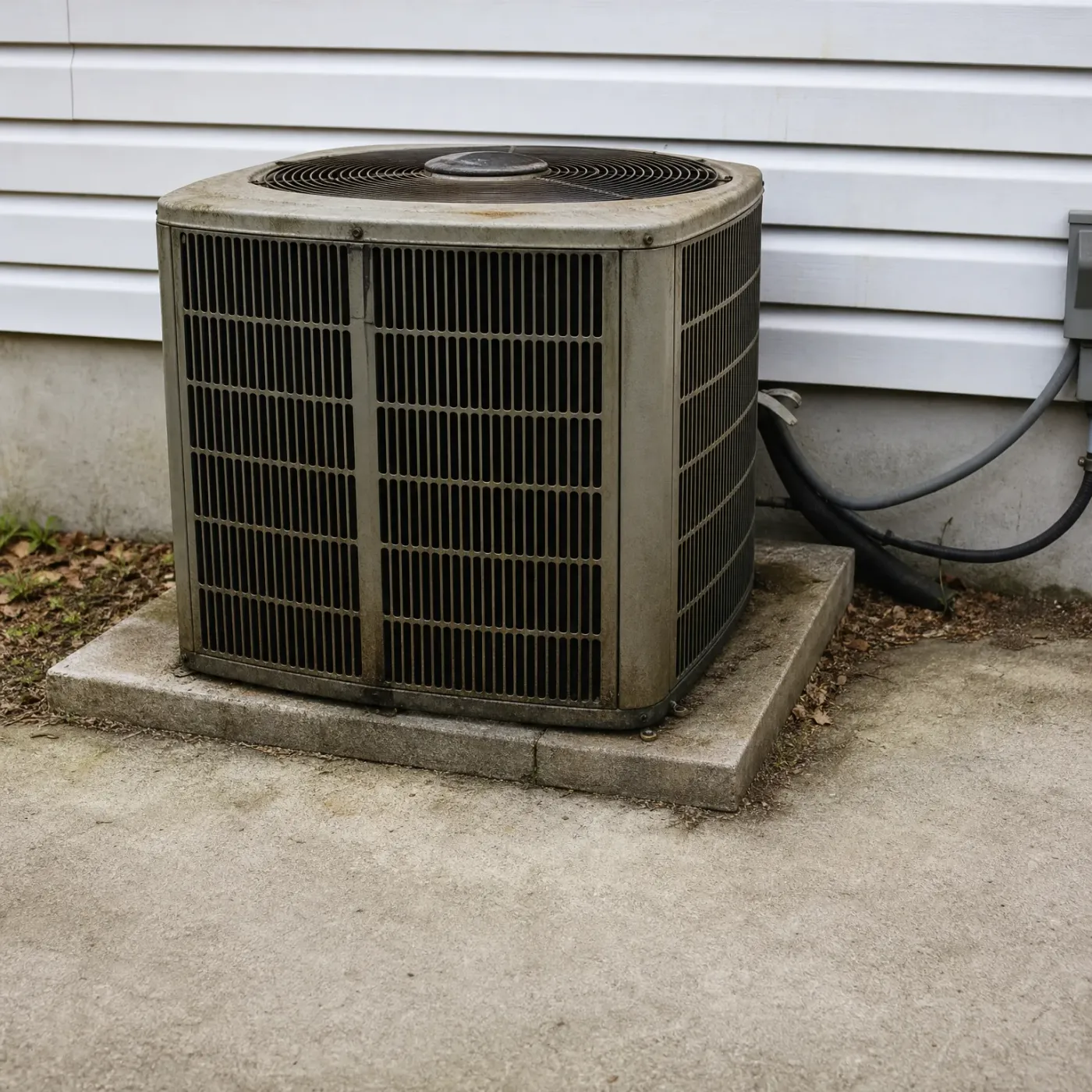
Caked in grime

This one is covered in dirt and buildup, the coil fins packed underneath that housing. A coil that dirty chokes airflow, and the unit can trip its own safety switch and shut down rather than run that way. That's worth a call to a contractor before you reset anything again.

A weathered outdoor condenser unit on a concrete pad beside a house with white horizontal vinyl siding, with refrigerant lines and conduit running to a wall-mounted electrical box.
Before you get your heat pump repair
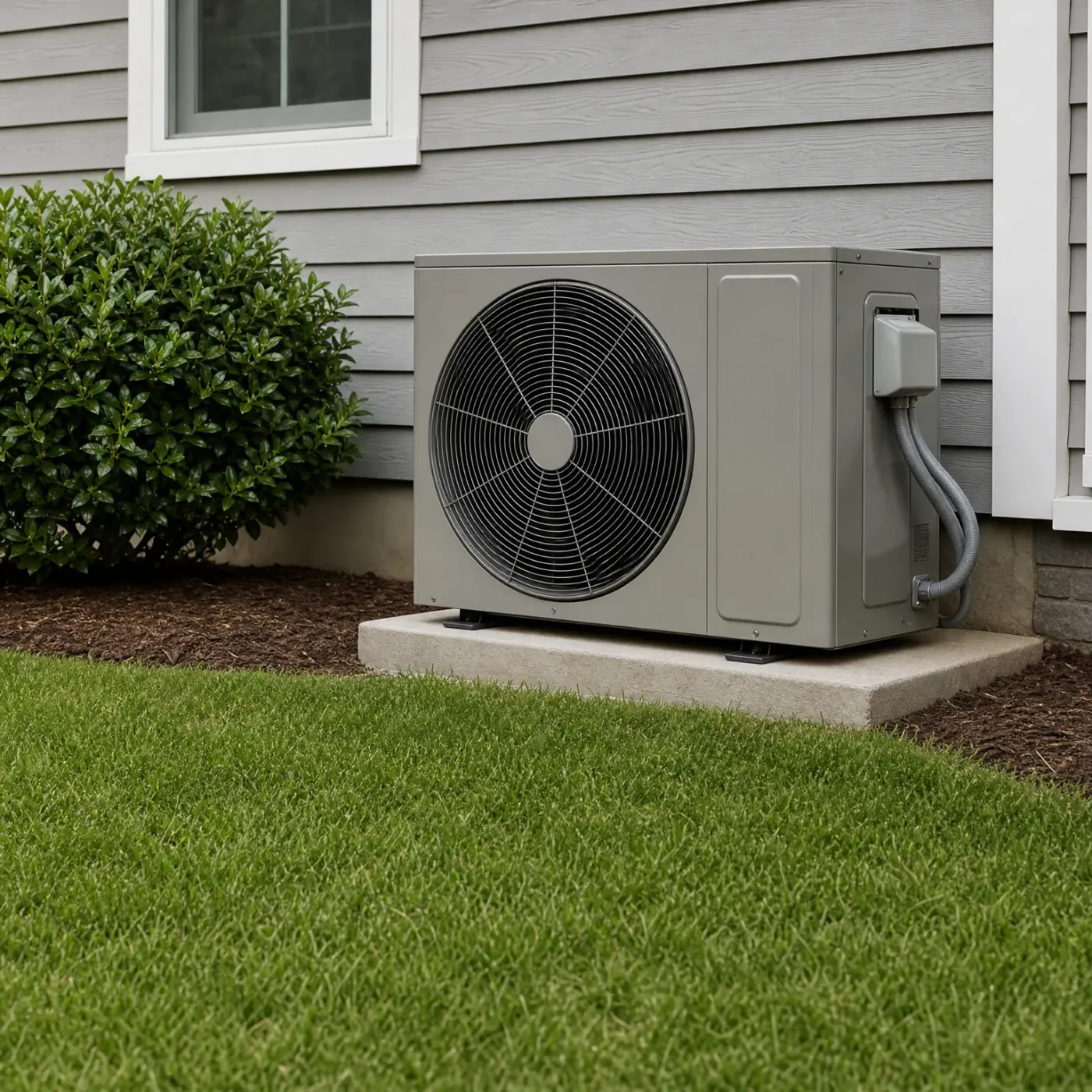
A gray outdoor heat pump unit with a large fan grille sits on a concrete pad beside a house with horizontal lap siding, next to a green shrub, mulch bed, and lawn.
After you get your heat pump repair

Your thermostat doesn't run on the same power as the rest of your house. It works off a low voltage circuit, stepped down by a transformer inside the air handler, and that transformer has a small fuse on its board. If that fuse blows, the screen can go dark even though your breakers are fine and the outdoor unit has power waiting for a signal that never comes. Backup batteries matter too. If they're dead, some thermostats lose their display and stop sending any call at all. Before the outdoor contactor closes, the thermostat has to send a call for heat or cool. Check what mode it's set to. Emergency heat bypasses the outdoor unit on purpose and runs only the electric strips inside, so the outside unit staying silent is normal in that mode, not a sign of failure. And if power was out recently, don't be surprised by a few quiet minutes. Many thermostats hold the compressor off for five minutes after any interruption before letting it start.

What happens before it starts

  • The thermostat runs on a low voltage circuit, usually 24 volts, stepped down by a transformer inside the air handler.
  • A blown fuse on that transformer board will leave the thermostat screen dark or unresponsive even though the main power is fine.
  • Heat pumps need a call for heat or cool from the thermostat before the contactor in the outdoor unit will ever close.
  • Many thermostats run on batteries as backup, and dead batteries can drop the display and stop any signal from reaching the outdoor unit.
  • A heat pump set to emergency heat skips the outdoor unit entirely and runs only the indoor electric strips, which can look like the system is dead outside.
  • Some thermostats have a five minute compressor delay built in after any power interruption, so it can sit silent for a few minutes before starting on its own.
A gray outdoor condenser unit on a concrete pad beside a white horizontal-siding house, with refrigerant lines and conduit running to a wall-mounted disconnect box, bare soil in front and a green shrub at left.
A clean coil like this lets air pass through freely, so the unit starts and runs without tripping on overload.
An outdoor air conditioning condenser unit on a concrete pad beside a house with light horizontal siding and a concrete block foundation, with bare soil and small green plants around it.
Dust packed into the fins makes the unit work harder to start, and in a lot of cases it won't start at all.
  1. The thermostat sends a low voltage call for heat or cool.

  2. The control board in the air handler gets that signal.

  3. The board energizes the contactor in the outdoor unit.

  4. The contactor closes and sends power to the compressor.

An older woman with short gray hair in a cream cable-knit turtleneck sweater smiles while looking to the side in a wooden kitchen, with a round loaf of bread on a board in the foreground and a lit candle by a dark window.
A woman and a child wrapped together in a knitted gray blanket on a couch, with the child's head resting on her shoulder and a lit table lamp and houseplant in the background.
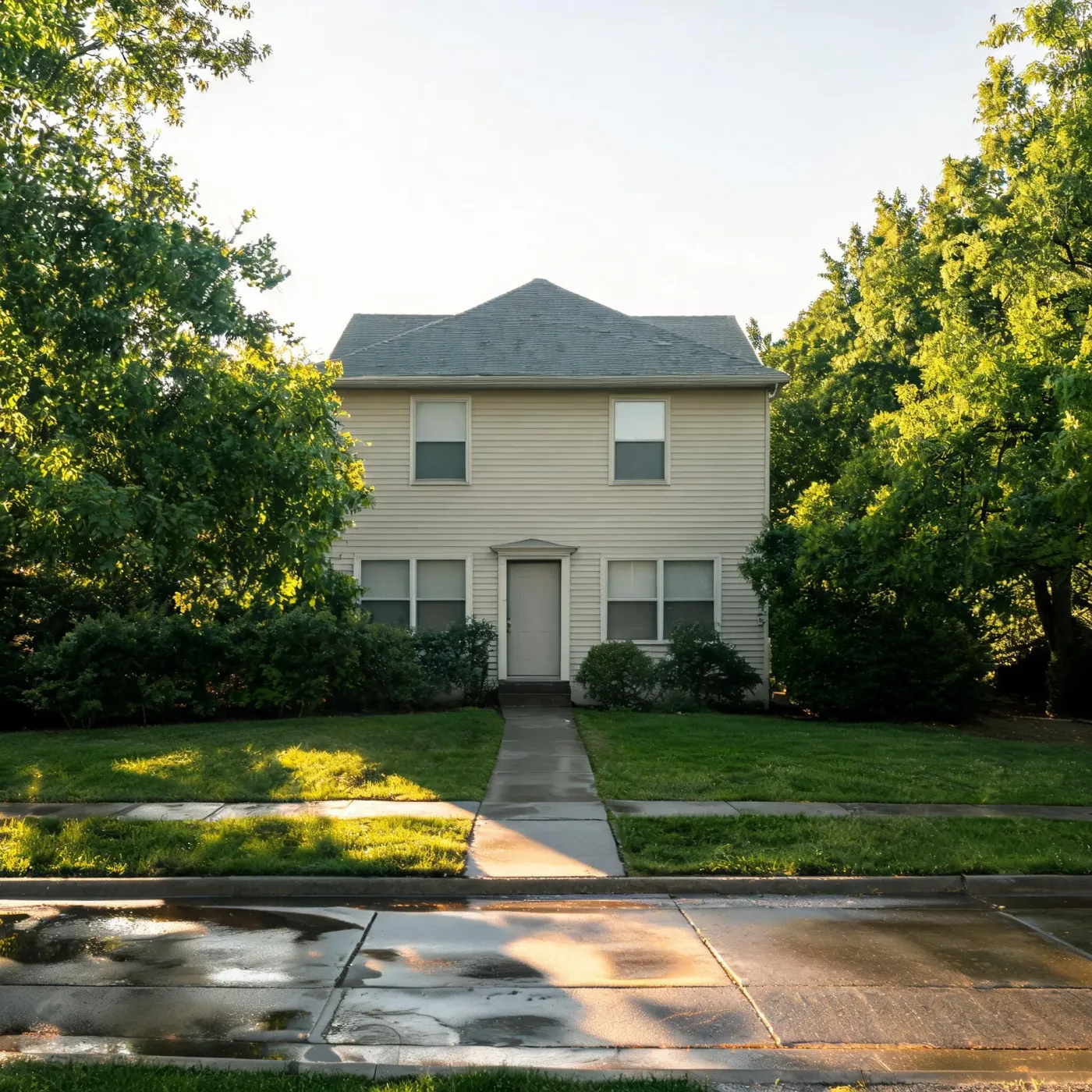
A two-story cream-colored house with horizontal siding and a gray hipped roof, flanked by large green trees and shrubs, with a concrete walkway crossing a lawn to a wet street in the foreground.

Summer air in Washington sits at a dew point around 53°F, based on NOAA averages for June, July and August. That's dry enough that your heat pump isn't fighting much moisture when it's running in cooling mode. But dry summer air doesn't change what happens to the unit once the weather turns. Most of the failures that leave a heat pump dead at the thermostat come from the cold months, when frost builds on the outdoor coil and the system has to run defrost cycles to clear it. If yours won't start at all, the summer humidity here isn't the cause. Look at what the unit's been doing since the weather cooled.

NASA POWER T2MDEW county cells weighted by homes

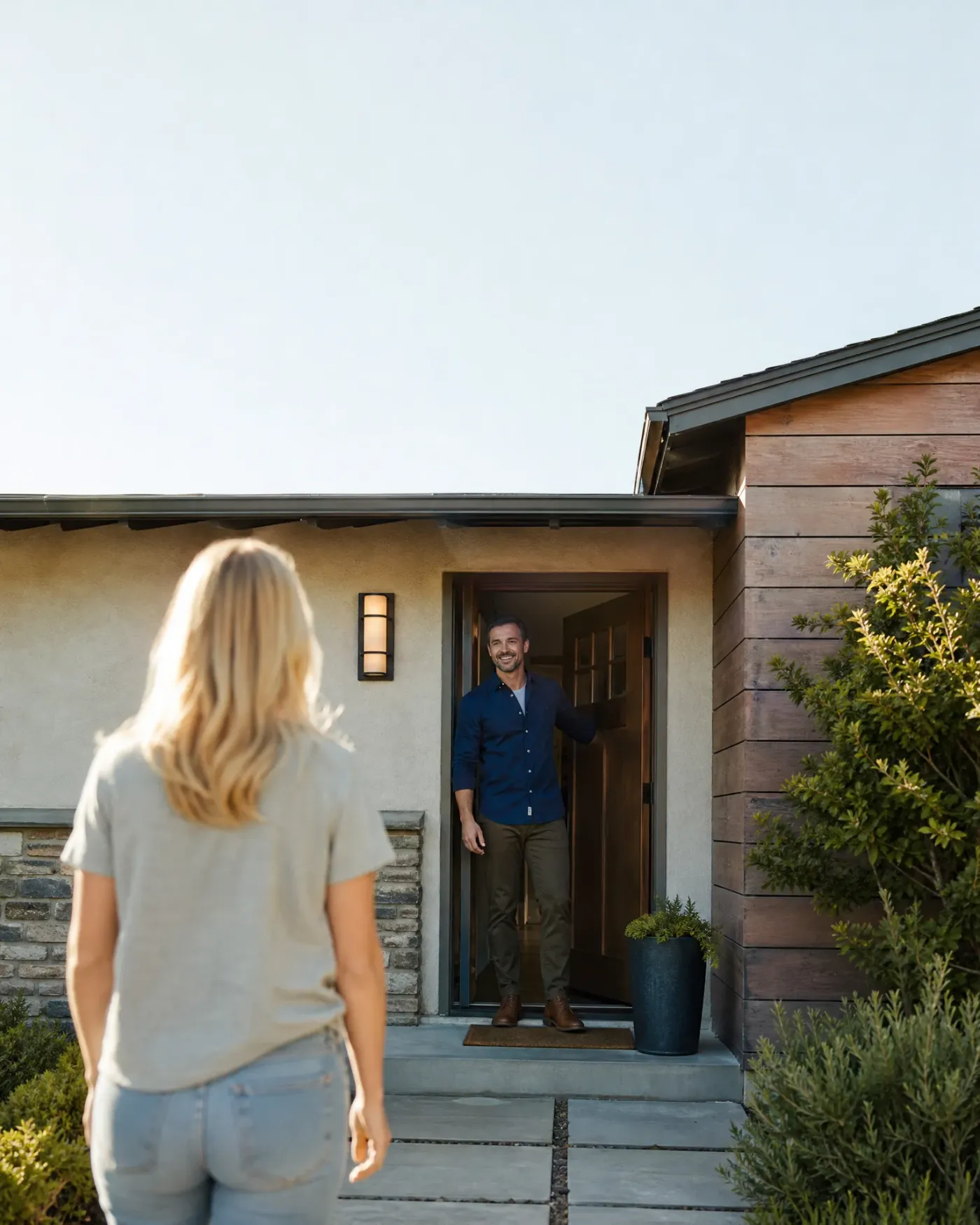
A man in a dark blue shirt stands in an open front doorway of a stucco and wood-clad house, facing a blond woman seen from behind in the foreground on a stone walkway.

A heat pump that won't start usually has one clear cause

A breaker, a safety switch, a blown low voltage fuse, a thermostat with no signal getting through. None of that is a mystery once someone opens the panel and starts checking. Most of what keeps a heat pump from turning on in a Washington home traces back to one of those points, and most of them get fixed the same day someone looks.

Finding which one it is takes someone who works on these systems through the winter here and knows where to look first. A contractor matched to your home can walk through the panel, the transformer, the outdoor unit, and tell you straight what stopped it. You'll be connected with one licensed contractor local to you, not a handful competing for your call, so the person who reaches out is the one who'll actually be doing the work and knows what tends to fail on these units once the cold sets in.

Interior corner of a living room with a beige upholstered sofa and dark cushion in the foreground, a ceramic vase of leafy branches on a dark side table by a curtained window, a framed picture on the wall, and a wood-surround fireplace at right.
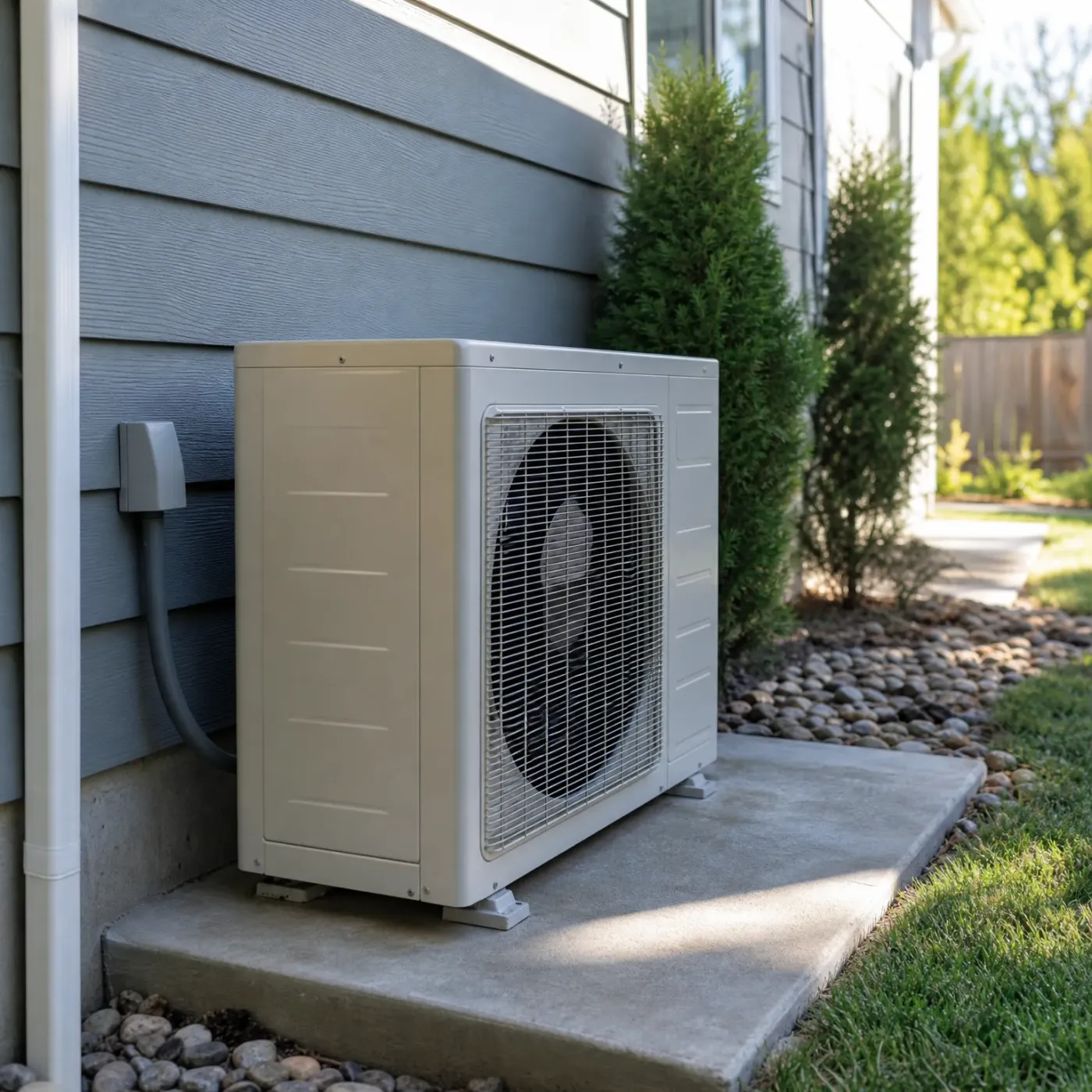
A beige outdoor heat pump or air conditioner condenser unit on a concrete pad beside a gray horizontal-siding house, with a disconnect box and conduit on the wall, shrubs, river rock and lawn nearby.

A pro who works on heat pumps

Get a heat pump pro

The pro who reaches out is licensed in Washington.

No fee to send it, and nothing to sign.