Tell us about the job
Takes about a minute. No obligation.
On a repair call here, a contractor starts with the refrigerant circuit and the defrost board, not the electrical panel or the air handler cabinet. Homes in Adams County, WA run heat about nine months a year, from September through May. A heat pump running that kind of heating load cycles its reversing valve and its outdoor coil through cold air repeatedly, and the defrost controls take the hardest share of that work. By the time a unit shows a fault, the compressor has logged a season count that surfaces wear in specific, predictable places. A contractor who skips straight to the symptom without checking those components will miss the underlying condition that drove the failure.
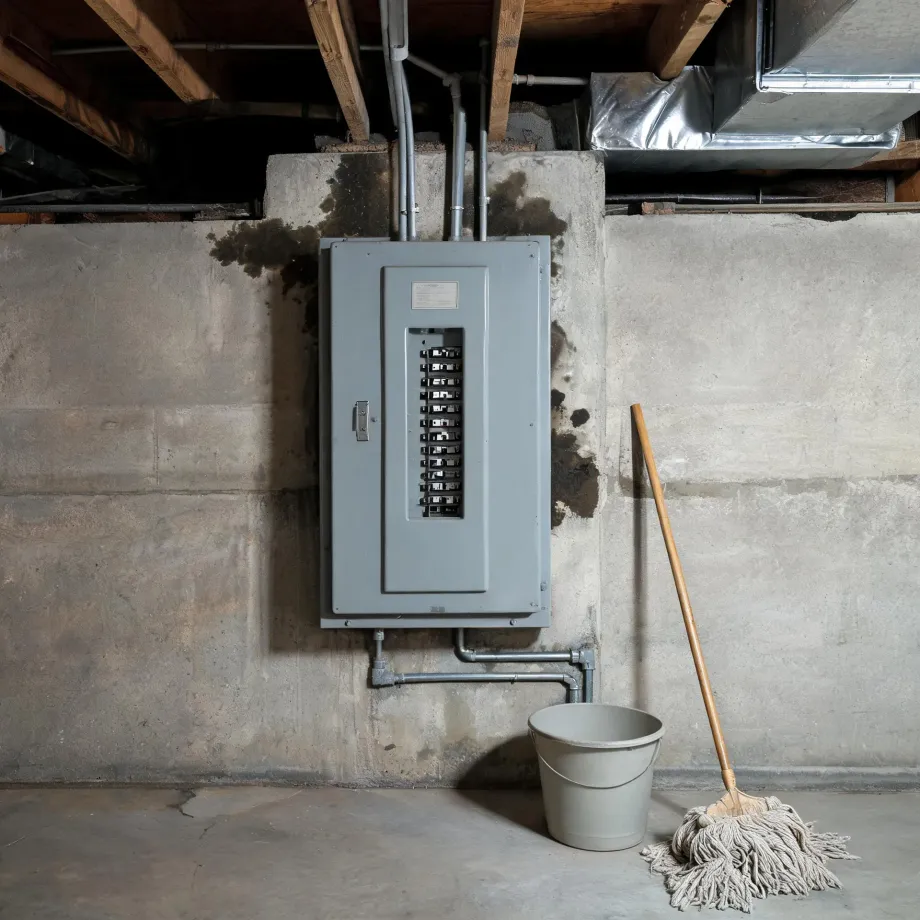
Stock built for one generation of heating and cooling and then fitted with a heat pump puts that system under conditions the original envelope was not designed to relieve. Half the homes in Adams County, Washington were built in 1977 or earlier (2020-2024 ACS 5-year). A heat pump opened inside a house from that era often shows compressor wear and refrigerant line degradation that moves faster than the equipment's rated lifespan would predict, because the structure around it holds heat and cold in ways that keep the system working harder than the manufacturer assumed. When a contractor pulls the covers, what they find reflects those accumulated hours, and the parts that need sourcing are often for a unit that has simply been asked to do more than it was sized to handle.
The Parts of a Heat Pump a Contractor Checks First
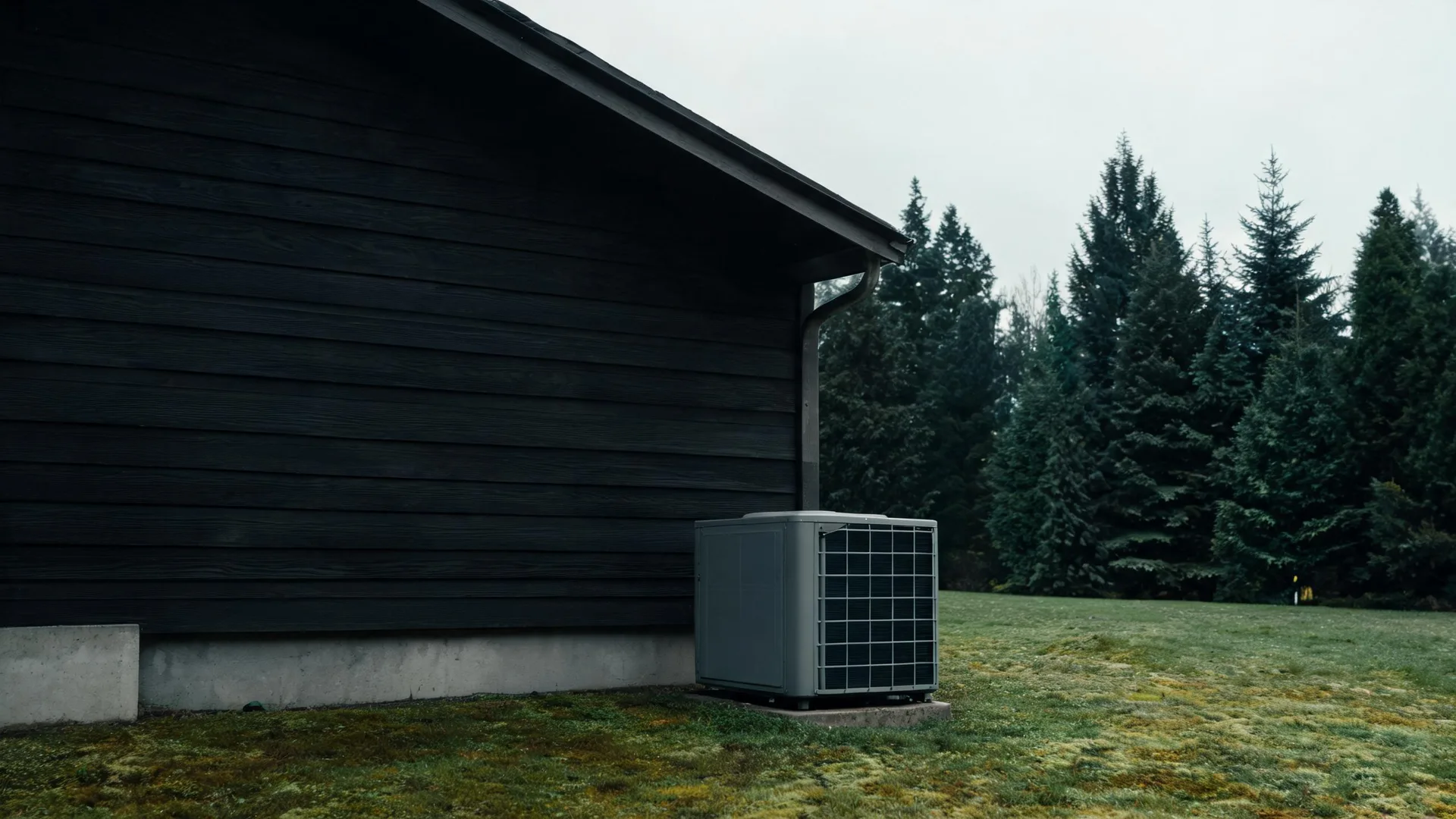
The outdoor unit sits on a pad beside the house and holds the compressor and condenser coil, both of which are common starting points when a heat pump stops heating or cooling properly. The compressor pressurizes the refrigerant; when it fails, the system runs but moves no heat. The condenser coil transfers that heat to or from the outside air, and a bent, dirty, or leaking coil will show up fast in how the system performs.
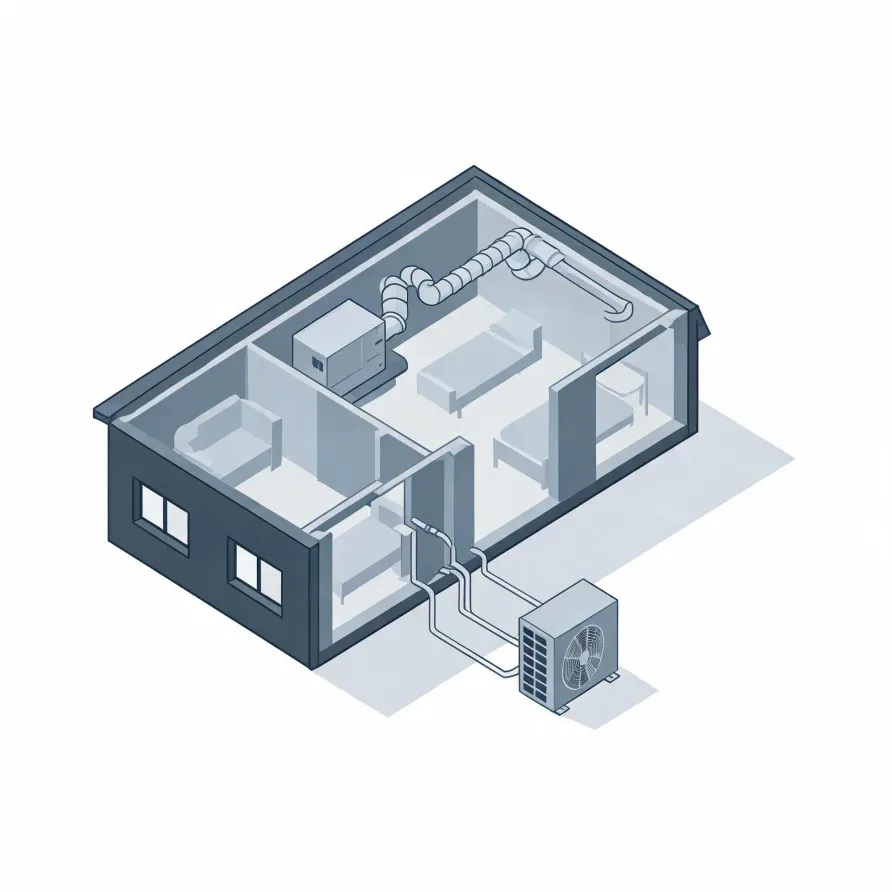
Inside the house, the air handler pushes conditioned air through the home and contains the evaporator coil, the blower motor, and the reversing valve that switches the system between heating and cooling modes. The refrigerant lines run between the two units, and the expansion valve controls refrigerant flow through the indoor coil. A contractor also checks the thermostat and electrical controls, since a failed capacitor or a bad sensor can mimic a much larger problem.
The drawing shows a typical heat pump layout, and a licensed contractor determines which components and conditions apply to your specific house.
Get matched in Adams CountyAdams County, Washington, by the numbers
103 severe weather events were recorded in Adams County, Washington between 2015 and 2024.
NOAA National Centers for Environmental Information, Storm Events Database, bulk CSV export, events 2015-01-01 through 2024-12-31.Half the homes in Adams County, Washington were built in 1977 or earlier (2020-2024 ACS 5-year).
U.S. Census Bureau, 2020-2024 American Community Survey 5-Year EstimatesAdams County, Washington holds 6,926 housing units (2020-2024 ACS 5-year).
U.S. Census Bureau, 2020-2024 American Community Survey 5-Year EstimatesOwners occupy 69.3% of the occupied homes in Adams County, Washington (2020-2024 ACS 5-year).
U.S. Census Bureau, 2020-2024 American Community Survey 5-Year EstimatesCodes & Standards Covering Heat Pump Repair in Adams County, Washington1 rules & standards
What Adams County, Washington Requires for HVAC Repair Work
Washington requires contractor registration rather than an HVAC licence: every contractor must register with the Department of Labor and Industries, and advertising, bidding or working as a contractor without that registration is a gross misdemeanour.
Weather Stress on HVAC Equipment in Adams County
Heat pump systems respond directly to what the climate puts them through. Extreme weather events drive harder run cycles, accelerate wear, and push equipment toward the kinds of failures that need a contractor's attention.
103 severe weather events, 2015–2024. Source: NOAA National Centers for Environmental Information, Storm Events Database.